


Fcafotodigital/Getty Images
As illustrated by the biggest produce recalls in U.S. history, which included enoki mushrooms and spinach, nutritious vegetables also carry a substantial risk for foodborne illness. In fact, research has shown that you are more likely to get food poisoning from contaminated vegetables than meat, due in part to people's tendency to eat veggies raw. When it comes to celery, the biggest complaint about the watery veggie is that it lacks a discernible flavor. However, celery's more serious offense is contributing to several food recalls over the years, which we've compiled here.
Major retailers, like Walmart and Whole Foods, have been impacted by tainted produce, while a Texas celery recall in 2010 turned deadly. These instances illustrate the dangers of pathogenic contamination, which can lead to mild yet unpleasant symptoms or more serious infections that require prompt medical care. That doesn't mean you should avoid eating celery and other healthy vegetables, but it does highlight the importance of sanitary manufacturing operations and quality control. Based on recall counts, it might seem like contaminated foods are a bigger problem now than ever before. Yet advanced detection technology and preventative action are behind the increase, which shows that American consumers are safer than in years past.
Listeria-contaminated chopped celery was connected to 5 deaths
Diana Akhmetyanova/Shutterstock
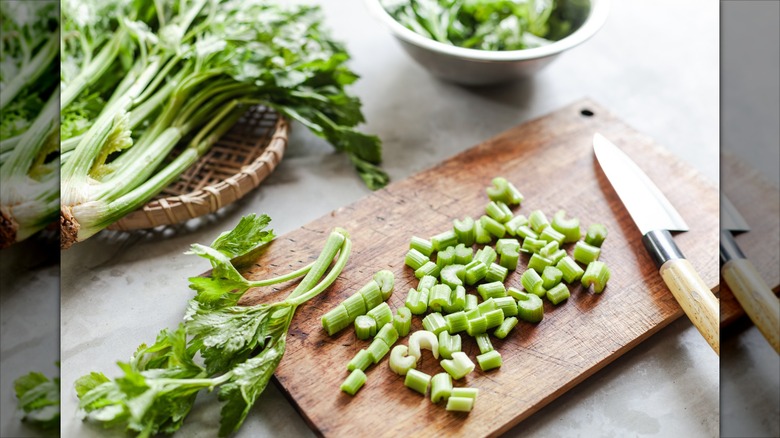
Voluntary recalls occur when manufacturers determine their products are in violation of FDA statutes, and they take action by alerting consumers and retailers. The majority of food recalls are voluntary, but government agencies can step in if a significant threat is posed. That's exactly what happened in October 2010, when a lethal listeria outbreak involving celery led to 10 illnesses and five deaths in Texas. The pre-cut celery was traced back to a company called Sangar Fresh Cut Produce, which the Texas Department of State Health Services demanded cease production. The recall affected 10 months' worth of products.
The products involved in the recall were not distributed directly to consumers but were provided to restaurants, hospitals, and schools. While it was reported that the five individuals who succumbed to listeria infections had major pre-existing health issues, conditions at the production plant were subpar. Inspectors found multiple problems, including poor handwashing hygiene and leaks in production areas. They also suspected that the tainted celery spread bacteria to other products in the plant. Sangar Fresh Cut Produce was subsequently subject to a wrongful death lawsuit filed by the widow of the deceased and was ordered to pay $1.1 million in damages as a result. In 2010, the company suspended operations indefinitely.
Walmart's celery recall affected 28 states
PJ McDonnell/Shutterstock
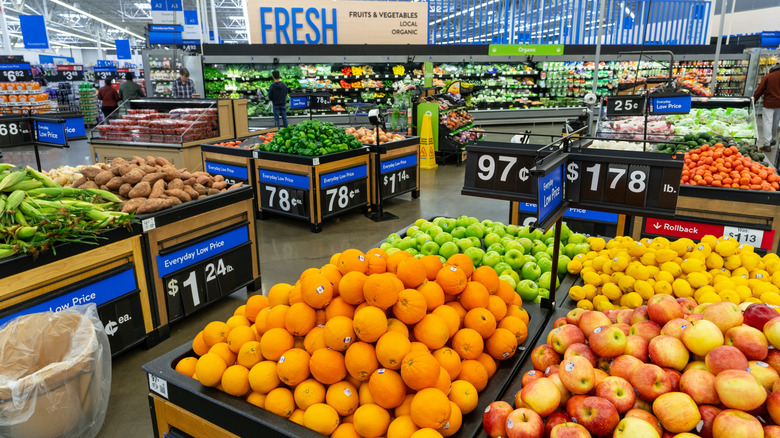
As reported by the FDA in April 2025, a recall of pre-cut celery sold at Walmart affected consumers throughout 28 states. The celery was produced by a California-based company called Duda Farm Fresh Foods, which enacted a voluntary recall after random celery samples from a Georgia Walmart tested positive for Listeria. The recall involved 1,587 cases of celery and implicated Walmart stores in the following states: Alabama, California, Colorado, Delaware, Florida, Georgia, Hawaii, Iowa, Illinois, Indiana, Kansas, Kentucky, Maryland, Michigan, Missouri, Montana, North Carolina, New Jersey, New York, Ohio, Pennsylvania, South Carolina, Tennessee, Texas, Virginia, Wisconsin, West Virginia, Wyoming, and Washington, D.C.
While most of the country was impacted by this recall, there were no reports of illness or hospitalizations connected to the contaminated vegetables. According to Mayo Clinic data, most healthy adults with listeria infections experience mild symptoms like upset stomach and diarrhea, which typically resolve within a few days after onset. However, high-risk individuals (including young children, older or immunocompromised adults, and pregnant people) can develop serious, life-threatening effects. Walmart experienced two other major food recalls in early 2025, involving broccoli florets and chicken curry empanadas, respectively.
Organic celery recalled at Whole Foods due to E. coli risk
Anakumka/Shutterstock
E. coli was cited in a 2024 celery recall affecting products sold in Whole Foods. Included in the recall were snack packs of celery and carrots, as well as packs of carrot sticks, manufactured by F&S Fresh Foods. These products were distributed to Whole Foods locations in Arizona, California, Hawaii, Idaho, and Nevada. The Mayo Clinic reports that E. coli is a common cause of foodborne illness, often causing diarrhea and stomach cramps. Like other bacterial infections, symptoms are usually temporary, but small children, senior adults, and other vulnerable individuals can develop serious complications, such as kidney failure.
The recall was initiated when the manufacturing company received word from its supplier that the carrots used in these pre-packaged products were possibly contaminated. While there were no reports of illness linked to the recalled items produced by F&S, Whole Foods' 365 organic whole carrots were linked to a larger, ongoing recall involving the same E. coli strain that sickened 39 people, with 15 requiring hospitalization and one person succumbing to their illness. Whole Foods has also experienced other major recalls involving peanut-based products, ground beef, and other items.
E. coli found in celery and onion diced blend in Costco rotisserie chicken salad
Costco's rotisserie chicken has a cult following, as customers can't get enough of the chain's juicy, well-seasoned bird. Along with selling whole rotisserie chickens, the warehouse retailer also incorporates this tasty item into other dishes, such as the Kirkland Signature rotisserie chicken salad. While this prepared food sounds downright delicious, it was at the center of a November 2015 recall due to an E. coli-contaminated celery and onion blend used in the recipe (per the CDC). The vegetables were provided to Costco by Taylor Farms Pacific.
Testing conducted by the Montana Department of Health discovered possible contamination of the celery and onions, which prompted the recall. The tainted salad sickened 19 people and led to five hospitalizations. Of the hospitalizations, two of the individuals experienced a type of kidney failure associated with E. coli infections. Fortunately, no deaths were confirmed. Illnesses were reported in seven states: California, Colorado, Missouri, Montana, Utah, Virginia, and Washington. The majority of the infections occurred in Montana, Utah, and Colorado.
Celery peanut butter cups recalled for Salmonella contamination
MSPhotographic/Shutterstock
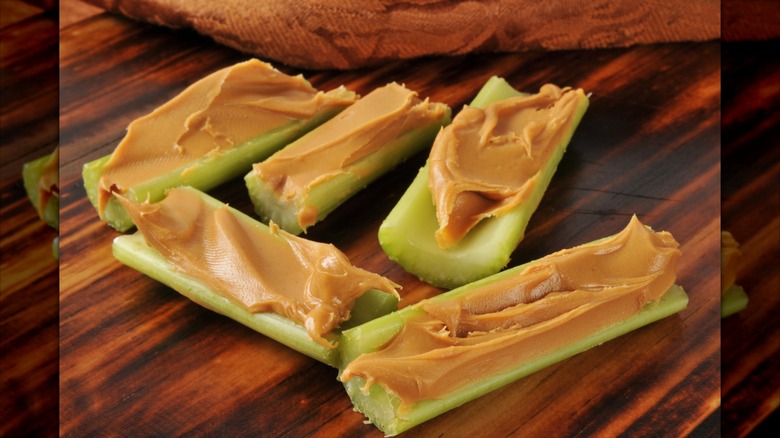
Peanut butter and celery are a classic combo (and one of our dangerously easy two-ingredient appetizers), but one manufacturer's version of this popular pairing landed it on the wrong side of food safety regulations. Back in May 2022, a company called Mary's Harvest Fresh Foods issued a recall of its Celery Peanut Butter Cups (and Apple Peanut Butter Cups) due to possible Salmonella contamination, according to the FDA. Over 300 pounds of products were pulled from store shelves, but the full scope of the recall involved items distributed throughout Oregon and Washington from February 2022 to May 2022.
Unlike the other recalls on our list, celery wasn't the source of Salmonella in this case. Rather, it was accompanying individual servings of Jif peanut butter that were subject to a recall by manufacturer J.M. Smucker Company after Salmonella was detected in a Lexington, Kentucky production facility. The tainted peanut butter was distributed to 12 states: Arkansas, Georgia, Illinois, Massachusetts, Missouri, New York, Ohio, North Carolina, South Carolina, Texas, Virginia, and Washington. It was responsible for a Salmonella outbreak that caused illness in 14 people, including two hospitalizations. The Jif recall occurred on May 20, 2022, and totaled 12,058,292 cases of peanut butter. Mary's Harvest Fresh Foods pulled its snack packs from store shelves four days later.

 Arabic
 French
 Spanish
 Portuguese
 Deutsch
 Turkish
 Dutch
Dutch
 Italiano
 Russian
 Romaian
 Portuguese (Brazil)
 Greek
Greek