


There’s an annual tradition of popular science articles looking forward to astronomical events to watch for in the coming year. There’s always at least one, and sometimes several, eclipses that might be worth traveling to, some meteor showers not overwhelmed by the full Moon, and sometimes an anticipated comet or conjunction.
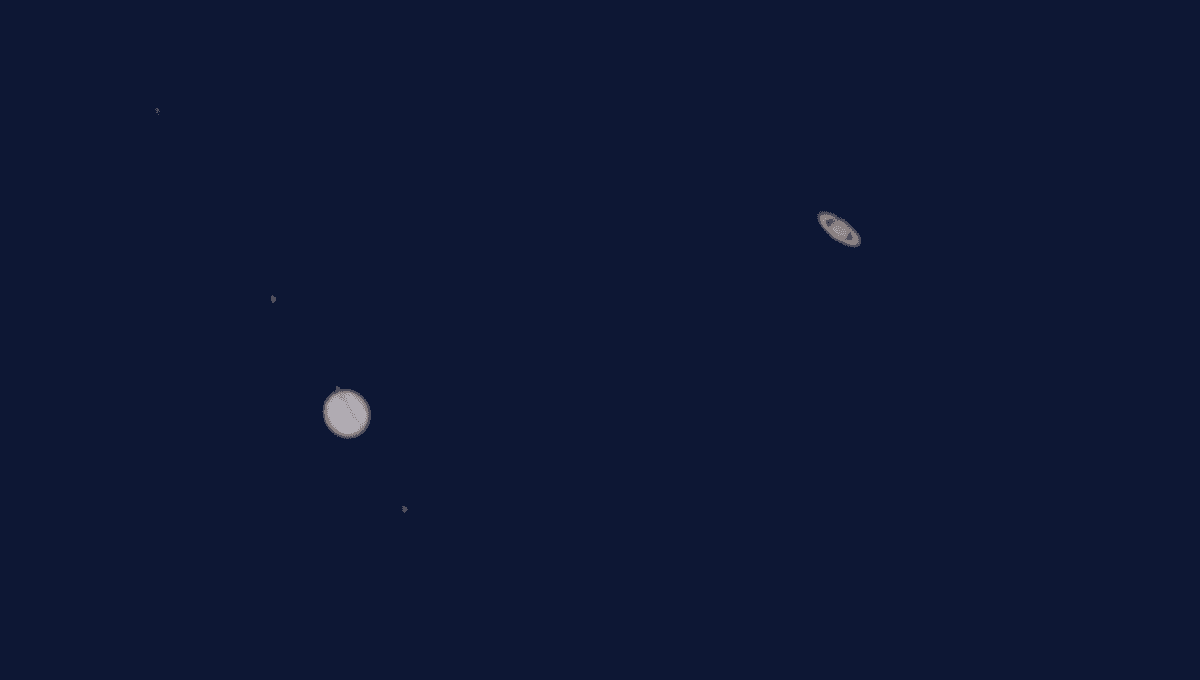
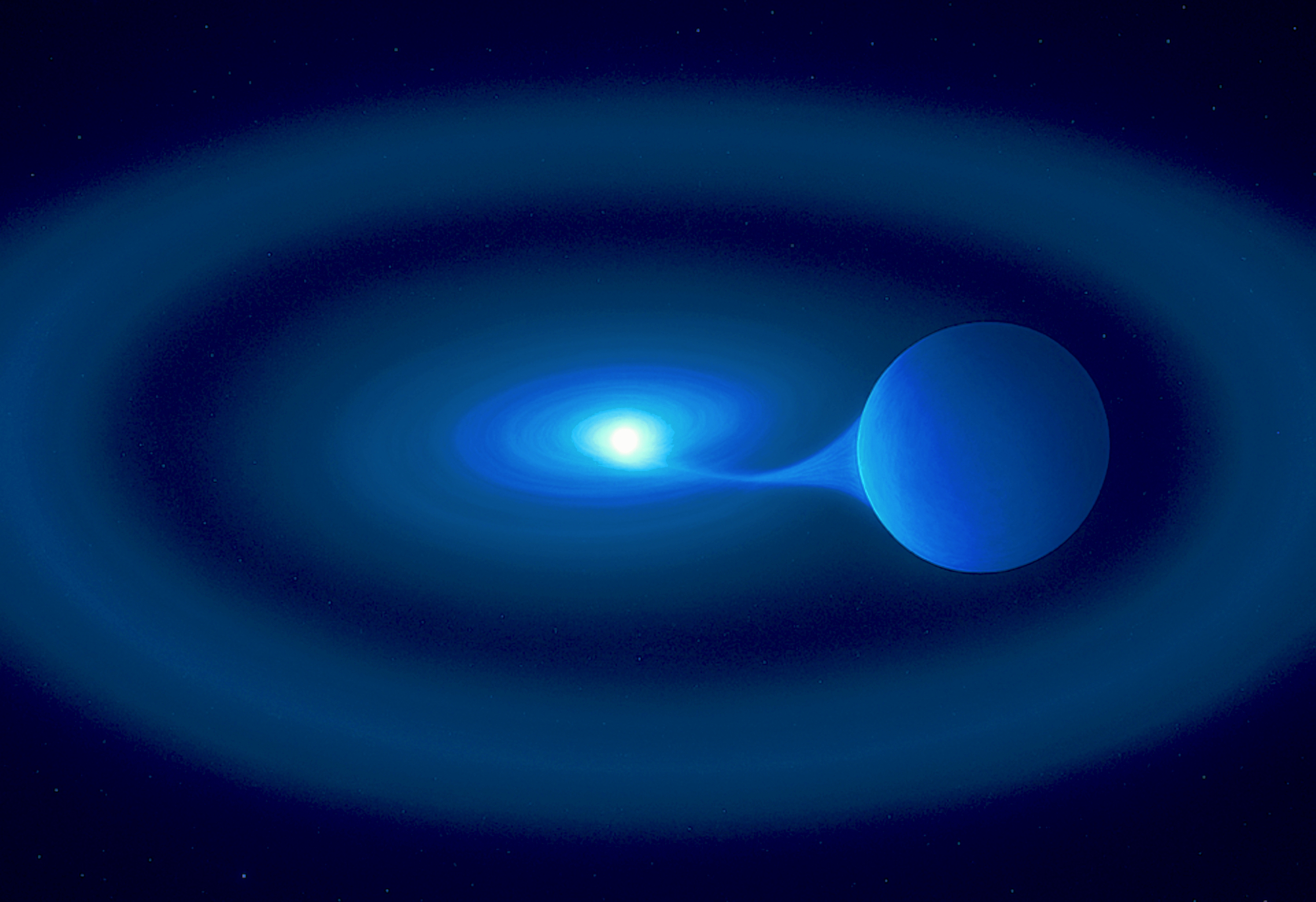
The rest of this article is behind a paywall. Please sign in or subscribe to access the full content. This year, we thought we’d look a little further into the future. We’re not talking about events like Betelgeuse going supernova, which is probably about 100,000 years off, but things that are expected to happen this century, within the lifetimes of many people reading this post. When times are grim, it’s nice to have something to look forward to. We don’t have to wait too long for the first big event, although it will provide the least spectacular visuals of those on this list. On April 13, 2029, the asteroid 99942 Apophis will pass 32,000 km (20,000 miles) from Earth, less than a tenth of the distance to the Moon. When first discovered, there were fears that Apophis would hit Earth, and while it's too small to cause a mass extinction, at about 370 meters (1,214 feet) wide, Apophis could certainly create widespread destruction. Additional data allowed us to refine its orbit and know that will not occur this century. There are still plausible scenarios where Apophis hits in the not-too-distant future, and most planning for planetary defense uses Apophis as the model of what needs to be diverted or destroyed. The 2029 passage will allow professional astronomers to calculate its orbit far more precisely, telling us when, if ever, we need to worry about its return. For amateurs, on the other hand, it will be a rare chance to spot such a large asteroid passing so close, something that is thought to happen only once every 800 years. For about half the world, no optical equipment will be required to see it, provided you’re away from city lights. There might be some rolling of eyes among the over-50s about this one, since the most famous comet’s last visitation to the inner Solar System was a bitter disappointment to most. However, astronomers knew beforehand that a flop was likely, since the Earth was very badly positioned during the 1986 visitation, a fact far too many media accounts and ads for home telescopes left out. Halley's Comet as seen in 1986. Image credit: NASA/W. Liller Halley’s 2061 return should be a different matter. Not only will the comet probably appear almost 10 times as bright, but it will have a close pass of Venus that should look particularly impressive. We passed the halfway mark between visits, where Halley’s Comet passed its furthest distance from the Sun, two years ago. A Facebook event expressing an intent to witness the return might have been a joke, but the millions who signed up suggests there are plenty of people with one eye on the calendar. Unlike some of the other events discussed below, we don’t know the timing of V Sagittae’s explosion. Nevertheless, astronomers are confident that sometime, probably in the last two decades of this century, professionals and amateurs alike are in for a treat. Currently a faint star in the insignificant constellation of Sagitta (not to be confused with Sagittarius), V Sagittae has been getting brighter since Russian astronomer Lidiya Tseraskaya noticed something was odd about it in 1902. There are two competing theories about what V Sagittae is composed of, but both anticipate impressive events to come. For example, Professor Bradley E. Schaefer from Louisiana State University predicts that in 2083, give or take a decade, V Sagittae will appear as bright to us as Sirius. Schaefer’s prediction is based on the understanding that it consists of a white dwarf and main sequence star locked in a tight orbit, the format that creates novae. In such circumstances, the white dwarf draws material from the outer layers of its companion, which spiral in until enough hydrogen has built up to initiate fusion, causing a sudden brightening that lasts weeks or months. What makes V Sagittae special, according to astronomers with this interpretation, is that the main sequence star is more massive than the white dwarf – in contrast to all the novae we have observed. Artist's impression of the white dwarf at the heart of V Sagittae snacking on its companion. Image credit: University of Southampton The two are spiraling towards each other much more rapidly than other examples, and the closer they get, the more material will be transferred, leading to exponential brightening. According to Dr Pasi Hakala of the University of Turku and colleagues, this unusual nova will be just a foretaste of a supernova “visible during the daytime” from Earth when the two stars merge. Other astronomers argue, however, that V Sagittae’s characteristics don’t fit this model, and instead it represents a main sequence and Wolf-Rayet star that are almost touching. There’s no doubt, however, that the orbital period is decreasing as the stars close in on each other, and that eventually this has to lead to something big. When two planets appear to pass each other in the sky, it is known as a conjunction. Fast-moving planets like Mercury have conjunctions with every other planet quite frequently, but Jupiter and Saturn move at a statelier pace. When they get near each other, it is known as a Great Conjunction. As the two most popular sights in a backyard telescope besides the Moon, getting the pair together in a single field of view is something to cherish. Even to the naked eye, the pair looks particularly impressive when close. Great Conjunctions are more common than returns of Halley’s Comet, happening every 20 years, so many lifespans will include four or five. Sometimes, however, the planets line up too close to the Sun to be seen. The Great Conjunction of 2000 was one such example. The 2020 Great Conjunction was an outstanding sight in small telescopes in the Southern Hemisphere, being the closest approach between the two planets from our perspective for 800 years. However, it took place close enough to the Sun that there was only a narrow window each evening for viewing before the pair set, and things got harder the further north you were. Consequently, many people missed out if they weren’t able to travel. Naturally, clouds meant many missed out even at theoretically suitable locations. The next two Great Conjunctions, in 2040 and 2060, will leave more apparent distance between the planets, but the 2060 event will at least take place far enough from the Sun that everyone will get a decent chance to see it, even if it does mean getting up before dawn. The 2040 conjunction itself will be a bit of a fizzer, but it will be preceded in September by a short period where Jupiter and Saturn are already approaching each other, and will be joined by the other visible planets, creating a magnificent naked-eye sight. However, it’s March 2080 that younger amateur astronomers should be looking forward to. The closest approach will be even closer (by a whisker) than 2020, and the extra distance from the Sun in the sky means opportunities for viewing worldwide. There will, of course, be plenty of other astronomical highlights in the rest of the century; we just don’t know when they will be. We can be certain there will be some great shows put on by comets currently lurking too far out for us to see. Some new meteor showers, or even storms, may emerge that will outshine anything since the Leonids last put on a show in 2001 and 2002, but forecasts are currently so uncertain, we’ll wait for more confidence before adding them to a future list. The long drought of supernovae in the Milky Way has to end sometime – maybe this century. There’s also a chance of a double spectacle in 2032 if asteroid 2024 YR4 hits the Moon, but exciting as that is, the chances are still just a few percent.A visit from Apophis
The return of Halley’s Comet
.jpg "Comet 1P/Halley as taken March 8, 1986 by W. Liller, Easter Island, part of the International Halley Watch (IHW) Large Scale Phenomena Network.")
V Sagittae’s explosion – late this century
Great Conjunctions – particularly 2080
Everything we can’t predict

 English
 Arabic
 French
 Spanish
 Portuguese
 Deutsch
 Turkish
 Dutch
Dutch
 Italiano
 Russian
 Portuguese (Brazil)
 Greek
Greek