


 PUBLISHED
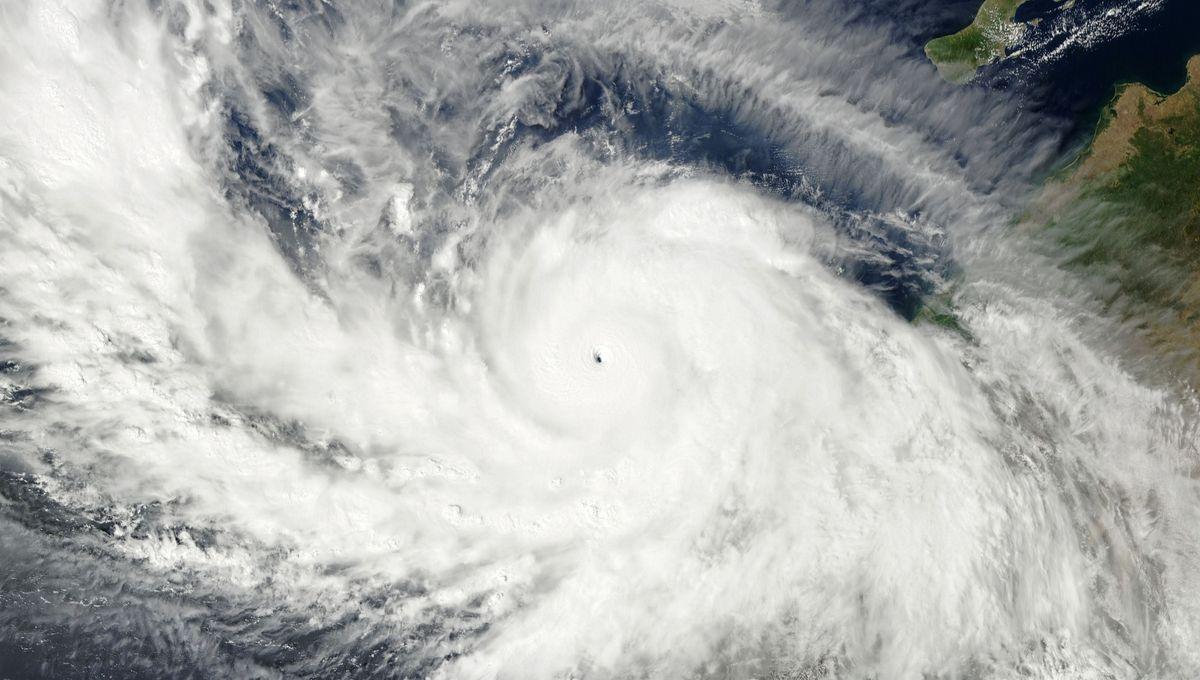
Category 5: It’s the top tier of hurricane intensity, a storm status serving as a warning of imminent destruction and danger to life. But with a warming climate and scientists predicting that hurricanes are likely to only get stronger, is it still enough? Is it time to introduce something even higher – a Category 6?
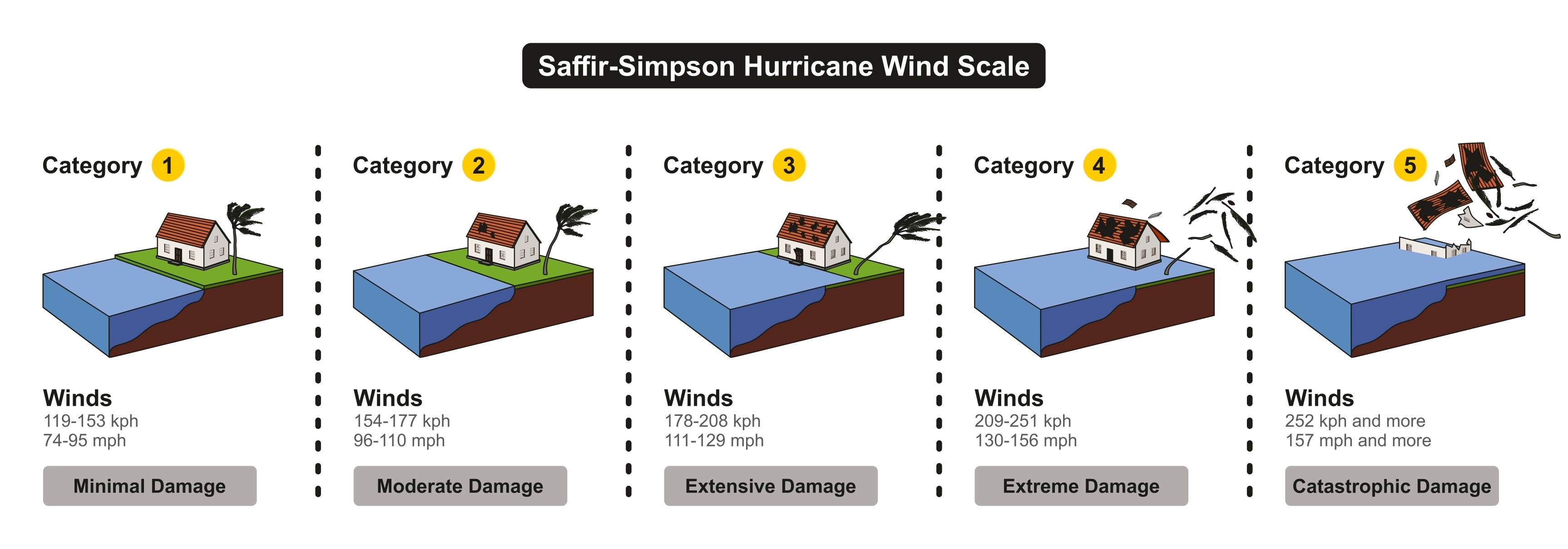
The rest of this article is behind a paywall. Please sign in or subscribe to access the full content. Hurricanes are currently categorized on the Saffir-Simpson Hurricane Wind Scale, which rates storms on a scale of 1-5 based on their maximum sustained wind speed. Category 5 is currently the highest category, given to hurricanes that have maximum sustained winds of 252 kilometers (157 miles) per hour or higher. The scale also estimated the potential damage caused by wind, with Category 5 storms associated with “catastrophic damage” that leaves affected areas rendered uninhabitable for “weeks or months”. The Saffir-Simpson Hurricane Wind Scale. Image credit: udaix/Shutterstock.com Category 5 currently has no upper boundary, but some research has suggested that hurricanes have strayed so far into the category that it’s about time we introduced one, called Category 6. This isn’t a new idea; some scientists have been calling for a new category to be introduced for several years, and with the climate continuing to change and a spate of record-breaking storms in recent years, those calls have only been getting louder and more frequent. “It’s an argument that has been made several times, and I think it’s a good argument,” Dr Tom Matthews, a senior lecturer in environmental geography at King’s College London, told BBC Science Focus. “We do need a new category because we’re extending so far into Category 5 on the Saffir–Simpson scale that it’s misleading to call it a Category 5.” Last year, a study from researchers at the Lawrence Berkeley National Laboratory and University of Wisconsin–Madison added further weight to this argument, having found that, at the time, at least five storms since 2013 had wind speeds exceeding 309 kilometers (192 miles) per hour, or the boundary into Category 6 – well above the defining speed of Category 5. Some argue that the additional category would also help better inform authorities and the public about the dangers of major hurricanes, although others said that knowing about wind speed alone isn’t enough. Hurricane Katrina, for example, was a Category 3 when it made landfall, but it was the storm surge that proved most devastating. “Frequently, people use the storm’s category to decide whether to evacuate,” Professor Jennifer Collins, a hurricane researcher at the University of South Florida’s School of Geosciences, explained in a statement. Collins co-authored a recent study arguing that storm surge and flood risk should be included in hurricane classification. “That’s incredibly dangerous because if they hear it’s only a tropical storm or Category 1, too often no alarm bells go off, and they see no cause for concern.” On a similar point, James Kossin, one of the authors of the 2024 study, said in a statement: “Tropical cyclone risk messaging is a very active topic, and changes in messaging are necessary to better inform the public about inland flooding and storm surge, phenomena that a wind-based scale is only tangentially relevant to. While adding a 6th category to the Saffir–Simpson Hurricane Wind Scale would not solve that issue, it could raise awareness about the perils of the increased risk of major hurricanes due to global warming,” “Our results are not meant to propose changes to this scale, but rather to raise awareness that the wind-hazard risk from storms presently designated as Category 5 has increased and will continue to increase under climate change.” Kossin’s comments on the future of hurricanes seem likely to be the case, at least on the basis of a new study recently presented at the American Geophysical Union’s 2025 Annual Meeting. Led by I-I Lin, a chair professor in the Department of Atmospheric Science at the National Taiwan University, the study found that most of the storms that could be designated Category 6 occurred in certain “hotspots”, the largest of which sits east of the Philippines and Borneo in the Western Pacific. These hotspots contain warm water both at the surface and deeper down in the water, giving storms less of an opportunity to cool down and reduce their intensity. But that’s not all. “The hot spot regions have expanded,” said Lin in a statement. Some of that is down to natural fluctuations in temperature, Lin and colleagues found, but a hefty 60 to 70 percent chunk is down to human-caused climate change. While not every storm that forms in the hot spots will turn into a Category 6, continued climate change and the expansion of these areas mean that they are more likely to occur. Lin is a keen proponent of the addition of Category 6, having first argued that there should be one back in 2014. Officially recognizing the category, Lin believes, could help with better planning for such storms in both hotspots and beyond. “We really think there is a need just to provide the public with more important information,” Lin concluded.How are hurricanes currently categorized?
What is Category 6, and why do some scientists think we need it?
Are stronger hurricanes becoming more likely?



 Arabic
 French
 Spanish
 Portuguese
 Deutsch
 Turkish
 Dutch
Dutch
 Italiano
 Russian
 Romaian
 Portuguese (Brazil)
 Greek
Greek