


 PUBLISHED

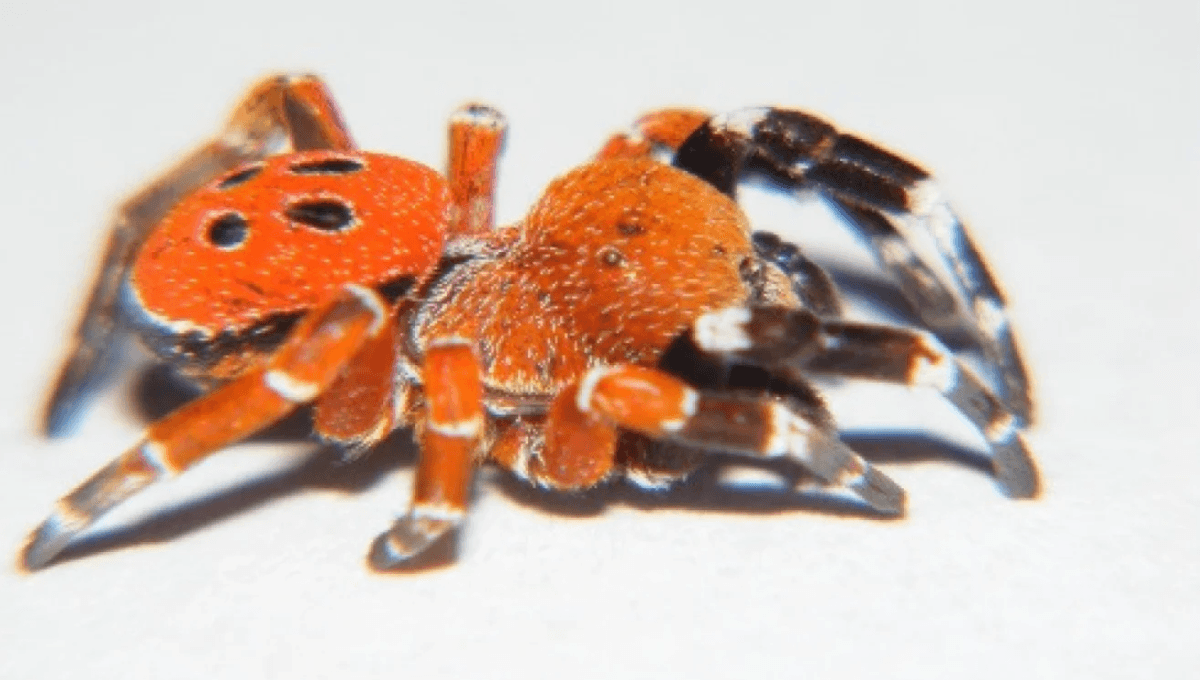
There are some seriously beautiful spiders in the world, but the species we currently have a crush on is Eresus rubrocephalus, a kind of ladybird spider. It’s not just any ladybird spider, however, with unique traits scientists have never seen in its genus.
The rest of this article is behind a paywall. Please sign in or subscribe to access the full content. The new-to-science species was first described in September 2025 from specimens found in a cork oak tree (Quercus suber) forest in Morocco. The investigating scientists noticed that it had a strikingly red head unlike other known spiders within the ladybird genus Eresus, causing them to question if they were looking at a new species. So named for the black dots on their red bodies, ladybird spiders typically have black heads covered in small black hairs. Describing it as a “red-colored oddball,” they saw that this new spider had red hairs covering its head and front body and even had red chelicerae (mouthparts). Ladybird spiders also usually have circular-shaped black dots on their bodies, whereas this new spider appeared to have dots more like a tear drop. Further differences were seen in the male reproductive anatomy, as it had a deep U-shaped groove and a curved terminal tooth on its pedipalps, which is a specialized appendage used to transfer sperm. Genetic analysis also revealed differences that exceeded the threshold for naming a new species, and so Eresus rubrocephalus was born. The species name is a hat tip to its unusually red head, with “rubro” taken from the Latin ruber for red, and cephalus being the Greek for head. It's discovery is a significant one because it’s a reminder that Earth’s biodiversity is far from fully cataloged, and there are even discoveries to be made among animal groups scientists thought they knew well. Ladybird spiders are among the most recognizable spiders in the world, and yet we’re only just getting to know new members of the genus. It could be argued that we’re living in a golden age of science with new species being described all the time, but it’s nice to be reminded that there’s still plenty out there to discover. And speaking of red-colored oddballs, did you hear about the world’s first CRISPR-edited spider that produces glowing red silk from its spinneret? Scientists were able to achieve this aesthetic quirk by injecting unfertilized oocytes in female spiders with a gene-editing system that included a red fluorescent protein gene sequence. When these female spiders then mated with males, their resulting offspring fired a kind of silk never seen before. A big year for red spiders, clearly. The study is published in the journal Animals.


 English
 Arabic
 French
 Portuguese
 Deutsch
 Turkish
 Dutch
Dutch
 Italiano
 Russian
 Romaian
 Portuguese (Brazil)
 Greek
Greek