


“Miracle” Rhinoceros Calf’s Chonky Weight Gain Offers Hope For Species
“Miracle” Rhinoceros Calf’s Chonky Weight Gain Offers Hope For Species
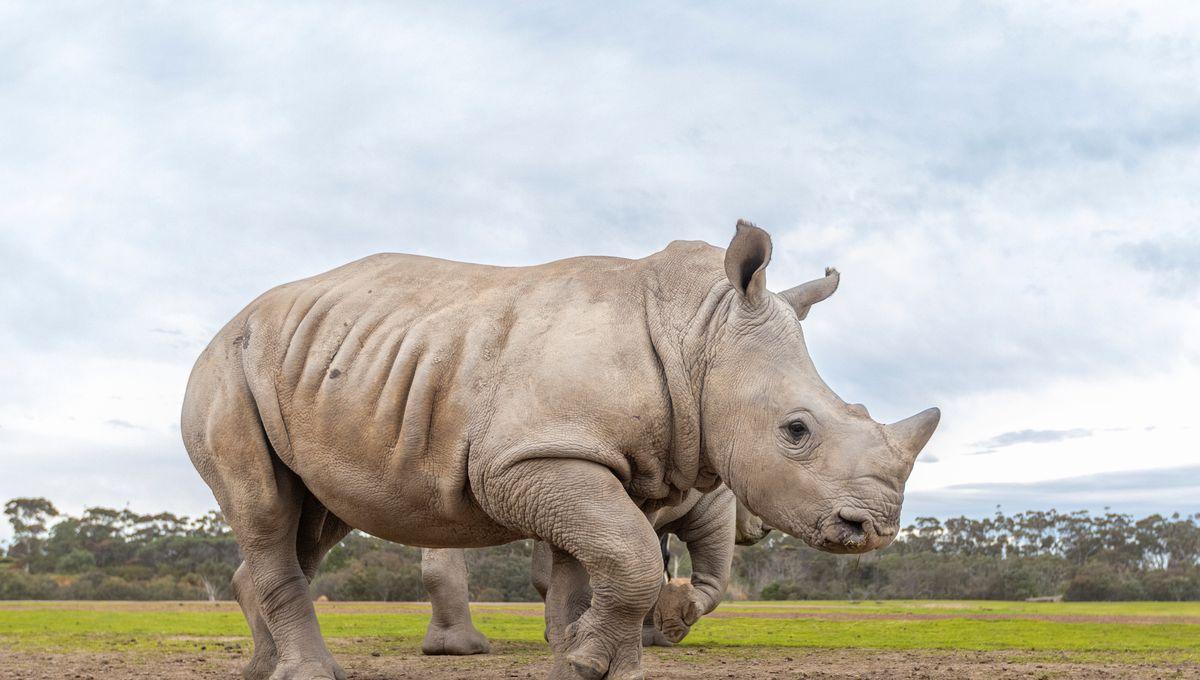
Werribee Open Range Zoo is celebrating their rhinoceros calf’s crossing of the 1 tonne threshold earlier this month. For a calf born underweight with big doubts over his survival, the milestone would be an achievement under any circumstances. The fact that Jabulani has done it with a mother expected to need plenty of assistance represents a major boost for the southern white rhinoceros captive breeding program.
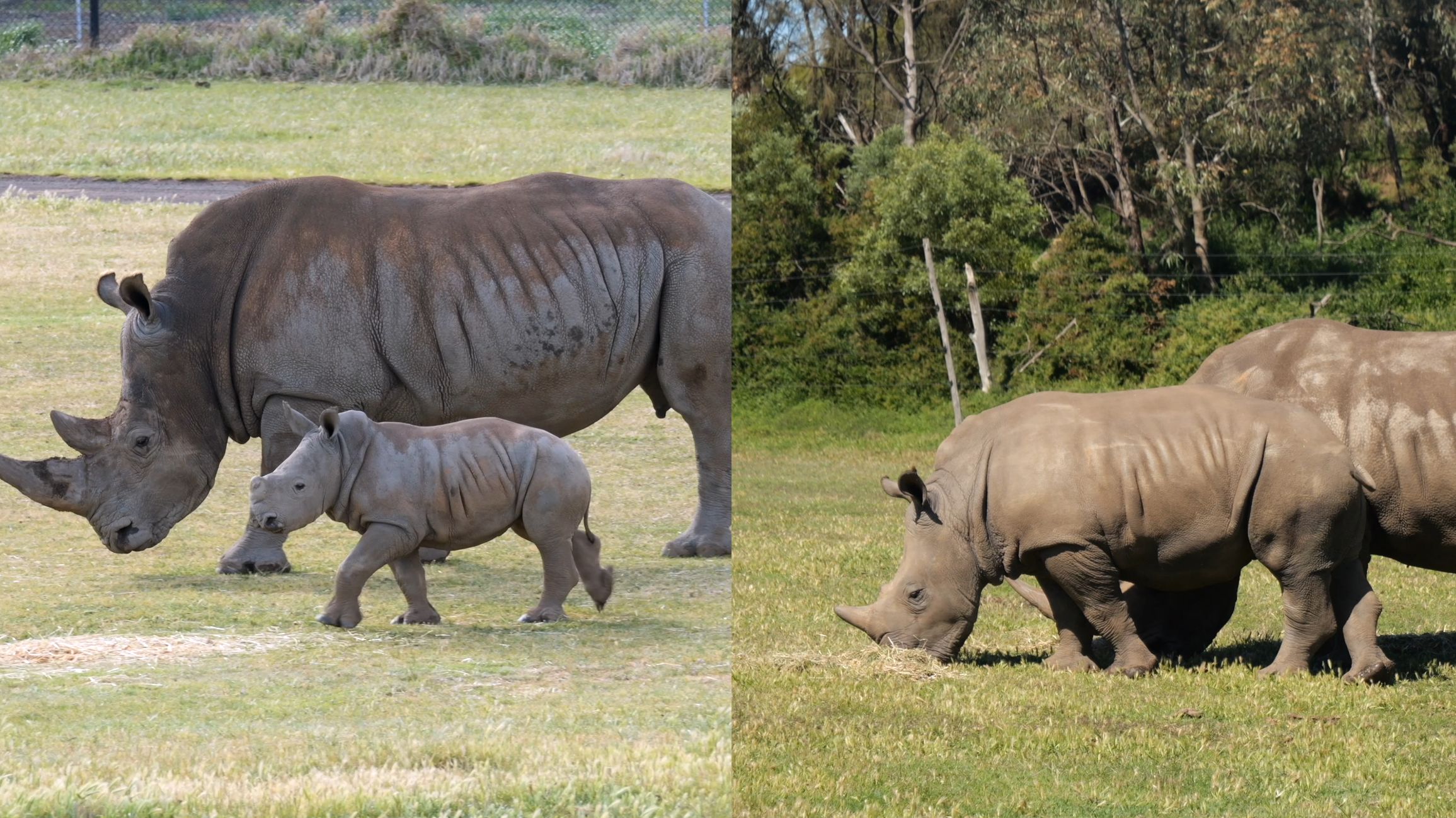
The rest of this article is behind a paywall. Please sign in or subscribe to access the full content. The southern white rhino (Ceratotherium simum simum) population is in better shape than its northern counterpart, which is now represented by just two females and some frozen embryos. Nevertheless, poaching for horns, climate change, and habitat loss are putting the species under severe pressure in the wild, making captive breeding programs a vital backstop to their survival. For unknown reasons, rhinos don’t breed easily in captivity, but Werribee Open Range Zoo has had more success than most when it comes to producing young. Nevertheless, there was considerable pessimism about whether Kipenzi, Jabulani’s mother, would be able to contribute to the species’ future. Kipenzi’s mother had been unable to raise her, forcing zoo staff to bottle feed her. Remarkably, keeper Debbie Jones told IFLScience that rhino milk powdered formula is available, and Kipenzi grew. However, without direct experience of maternal care, there were fears Kipenzi would not know how to treat her own calf, which intensified when she accidentally squashed her first child five days after birth. Even getting Kipenzi pregnant again seemed unlikely. Werribee only has two adult males, one of whom is Kipenzi’s father, and therefore not allowed to breed with her to maintain genetic diversity. The other male, Kifaru, was certainly keen, with Jones telling IFLScience, “He follows her around all the time, but she doesn’t find him good boyfriend material.” Jabulani’s aunts are much more susceptible to Kifaru’s charms, but at a decade after their last births, they might be getting beyond breeding age. Despite all this, Kipenzi did permit another successful mating. However, at 55 kilograms (120 pounds) at birth, Jabulani was well below the typical weight for white rhinos born in captivity, with Jones saying others at Werribee have been 60-85 kilograms (132-187 pounds) at birth. Combined with Kipenzi’s anticipated lack of rearing capacity and past failure, Jabulani’s prospects looked poor. Jabulani with his mother at just 2 days old. Image credit: Rick Hammond/Werribee Open Range Zoo “Jabulani was pretty small when he was born, he was just ‘feet and ears’ back then, but compared to now, he looks just like a miniature rhino at a thousand kilograms,” fellow keeper Lance Weldhagen said in an emailed statement. Instinct took over, and Jones says Kipenzi has proven a great mum. Sixteen months after birth Jabulani is still getting some of his nutrients from her, despite now being so large she has to lie on his side for him to suckle, rather than feeding standing up as rhinos normally do. For the last eight months Jabulani has combined grass with milk for maximum growth. Jones told IFLScience she’s “sure Kipenzi would love to wean him,” but can’t resist when Jabulani cries when she won’t let him feed. The combination of maternal care and grass has seen Jabulani reach the tonne mark faster than any of his predecessors at Werribee, despite his unpromising start, leading the zoo to label him a “miracle calf.” “Jabulani’s daily food consumption of 20 kilograms is the equivalent of around 100 Big Macs – but minus the fat content of a Big Mac – he’s on a grass diet, so a lot healthier!” Weldhagen said. “Southern white rhinos have a very wide mouth which acts like a lawnmower, he puts his head down and mows the grass and there’s definitely a lot of chomping and lip-smacking that goes along with it.” The fact Kipenzi was able to do so well despite having been hand-raised herself is an encouraging sign for a species where increasing numbers of mothers are now being raised that way. It may also be true that it takes a village to raise a calf, although with rhinos the collective noun is a crash. Jones told IFLScience the rhino family structure normally resembles that of elephants, with a herd of females and young, and adult males getting occasional visiting rights. However, at Werribee, Kifaru gets to interact with the crash far more frequently than would occur in the wild, and Jabulani loves to engage in play sparring matches with his father, as well as with his aunts, no doubt adding some muscle to that bulk. Kifaru is showing paternal skills never called on in the wild by letting his son – with a horn a third the size of his – get a few wins in. “We’ve never had a multi-generational group together before,” Jones said. What a difference 20 kilograms of food per day can make! Image credit: Alex Storer/Werribee Open Range Zoo Once Jabulani stops suckling, the keepers hope Kipenzi’s love of being a mother will overcome her dislike of Kifaru as a mate. If not, a swap with another zoo might find her a match more to her liking. However, Jones noted, “Transporting rhinos is not easy. We don’t sedate them, so it takes months to get them happy with their crates before they can be moved.” 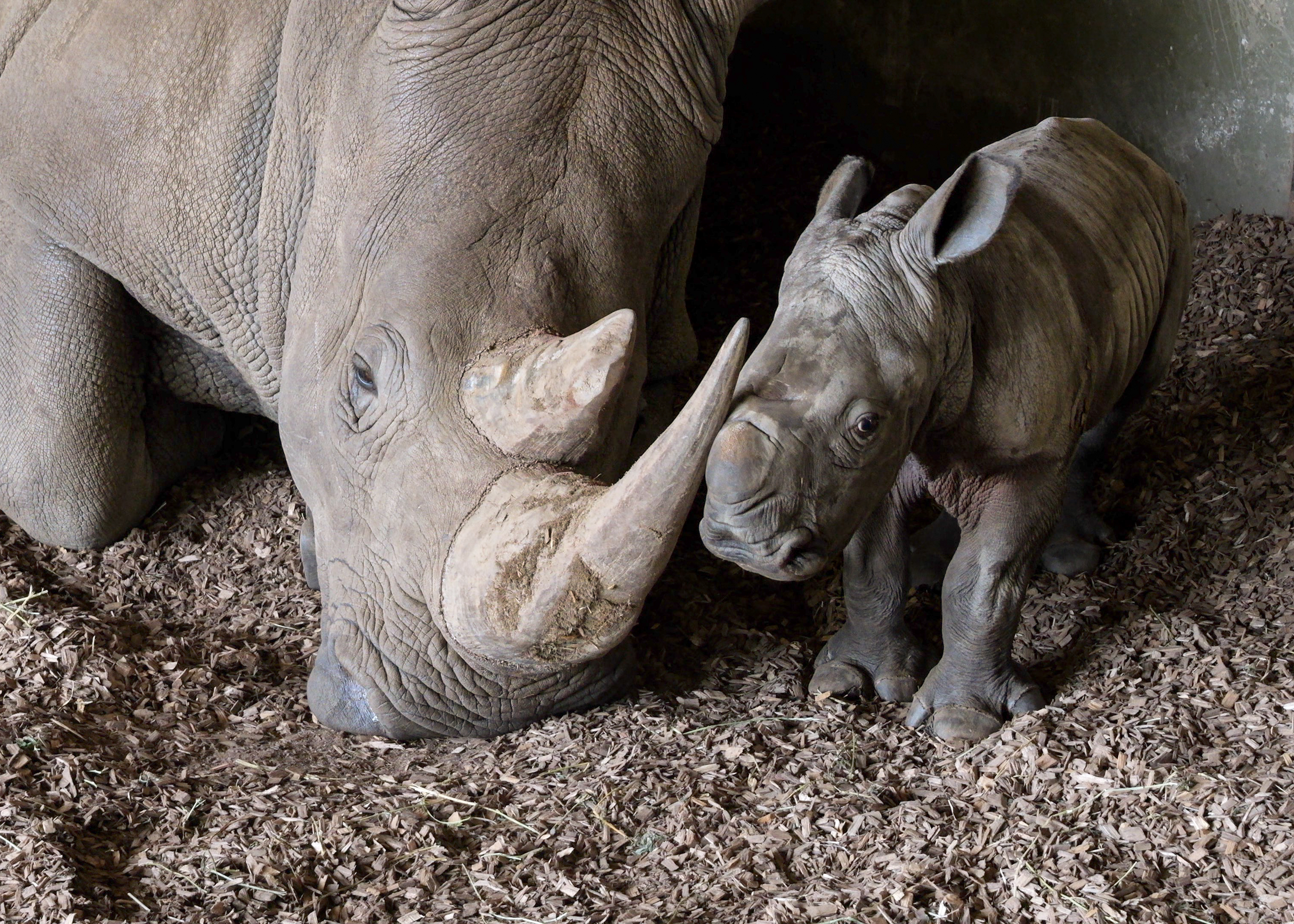

 English
 French
 Spanish
 Portuguese
 Deutsch
 Turkish
 Dutch
Dutch
 Italiano
 Russian
 Romaian
 Portuguese (Brazil)
 Greek
Greek