


This Unusual Plant Might Be One Of Evolution’s "Weirdest Experiments"
This Unusual Plant Might Be One Of Evolution’s "Weirdest Experiments"
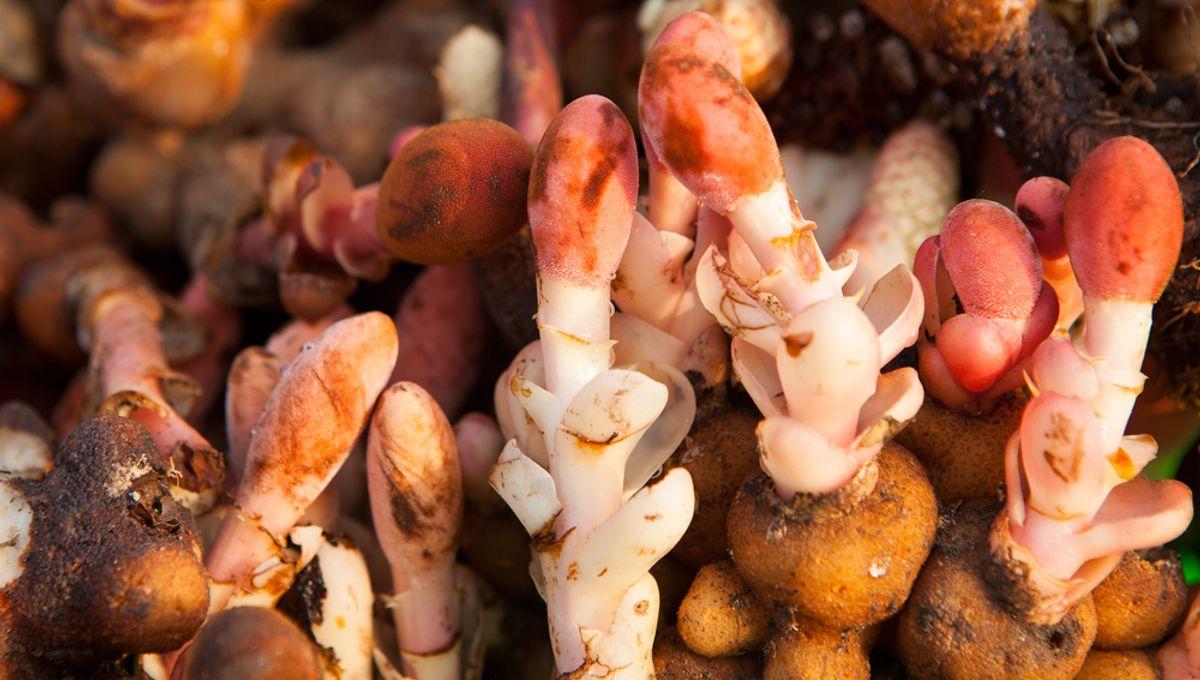
You would be forgiven for thinking this is a mushroom. It wears a cap, it lives in the undergrowth and it lacks chlorophyll, the pigment responsible for photosynthesis and for plants being green.
The rest of this article is behind a paywall. Please sign in or subscribe to access the full content. But despite appearances, it is a species of flowering plant belonging to the balanophoraceae family – a group able to survive and reproduce without sunlight or sex. “Many people equate plants with photosynthesis, yet Balanophora illustrates that being a plant does not require being green,” co-author Kenju Suetsugu, a botanist at Kobe University, Japan, told IFLScience. Balanophoraceae, though extremely rare, can be found hiding in the Taiwanese mountains and the lush subtropical forests of Okinawa. It is a family of parasites that bond to tree roots and survive by eking out nutrients collected by the host plant. To find out how this unusual plant adapted to its alternative lifestyle, researchers analysed the genome of seven species of balanophoraceae from 12 populations located in Taiwan and Japan. Intriguingly, they discovered that the plastid genome of balanophora plants is extremely reduced. These genomes are involved in many essential processes, from energy regulation and resource storage to cellular communication and photosynthesis. And yet, despite the dramatic reduction in the plastid genome, the plants appear able to carry out many key processes, including the production of amino acids. In this way, balanophoraceae shares key similarities with Plasmodium, the parasite responsible for malaria, which also boasts a reduced plastid genome. According to the researchers, this reduction would have occurred before the diversification of balanophoraceae 100 million years ago, during the mid-Cretaceous, making balanophoraceae one of the oldest parasitic lineages. “Parasitism enables survival and reproduction in habitats where light is limiting and allows the plant to shift investment away from leaves and photosynthetic structures toward belowground parasitic organs and reproduction,” said Suetsugu. In contrast, “once a lineage becomes strongly host dependent in deeply shaded forest understories, the benefits of maintaining photosynthetic machinery diminish while its metabolic costs remain high.” But that’s not all. Some species of balanophoraceae have a fascinating ability to reproduce by themselves - a capacity that is not particularly common in the plant world. This may have enabled the species to spread across Japan’s islands without the need for outside help in the form of pollinators or nearby mates. Next, the team hopes to broaden their research and study other species of parasitic plants. “By comparing these lineages, we hope to determine whether plants that have given up photosynthes represent an evolutionary dead end or whether they are actively exploring new ecological strategies,” said Suetsugu. This study was published in the journal New Phytologist.

 English
 Arabic
 French
 Spanish
 Portuguese
 Turkish
 Dutch
Dutch
 Italiano
 Russian
 Romaian
 Portuguese (Brazil)
 Greek
Greek