


Why Is Christmas Called Xmas?
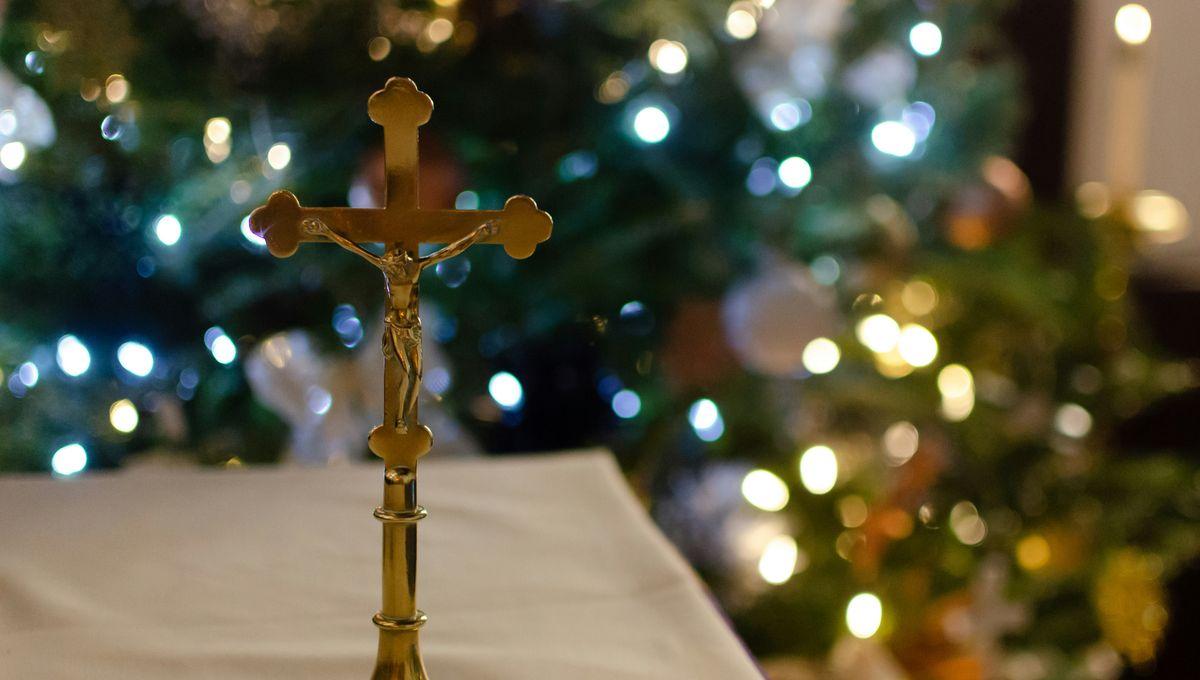
People Are Curious Why Christmas Is Shortened To Xmas
Xmas is sometimes pictured as a lazy and disrespectful shorthand of the word Christmas; a “politically correct” attempt to erase the name of Christianity’s messiah and replace it with a woke, secular letter. However, that couldn’t be further from the truth.
The rest of this article is behind a paywall. Please sign in or subscribe to access the full content. Getting needlessly mad over the use of Xmas is a decades-old Christmas tradition. In December 1957, the Church League of America’s magazine News and Views published an article called “X=The Unknown Quantity”. The idea was later seized upon by Gerald L. K. Smith, a notoriously antisemitic clergyman and political agitator once described as the “most infamous American fascist.” Smith denounced Xmas as a “blasphemous omission of the name of Christ” and claimed that the “X is referred to as being symbolical of the unknown quantity.” He then spiraled into conspiracy theories, asserting that the United Nations, at the behest of “world Jewry,” had supposedly “outlawed the name of Christ.” Clearly, Smith needed to touch up on his knowledge of Christian history. In Greek, the original language of the New Testament, Christ’s name is written as Christos (Χριστός), beginning with the Greek letter chi (Χ) – not the Roman X we use today, but visually identical. From as early as the first centuries of Christianity, scribes used this letter as a reverent abbreviation for Christ’s name, particularly in manuscripts where space was limited. The symbol was sacred, not lazy shorthand. Christianity was outlawed and persecuted in the Roman Empire, so it's said that early followers would use the Chi-Rho sign (☧) – similar to an X and P in today’s alphabet – to covertly mark their places of worship, tombs, and other important locations. One of the earliest known uses of the word “Xmas” in English dates back to 1021 CE, when an Anglo-Saxon scribe jotted down “XPmas” as a way to save space on his precious parchment. As the centuries passed, the P was dropped and the word “Xmas” appeared more often, along with other variants. In 1551, during the reign of King Edward VI of England, the term “X’temmas” (a clear variant of Xmas) appears in an official letter written by the king himself. There’s also a poem from 1799 by Samual Taylor Coleridge that reads: “My Xstmas Carol is a quaint performance.” So, next time you see someone freak out over the use of Xmas, you can gently remind them that the “X” has been representing Christ, respectfully and unapologetically, for centuries upon centuries.Why is Christmas called Xmas?

 English
 Arabic
 French
 Spanish
 Portuguese
 Deutsch
 Turkish
 Dutch
Dutch
 Italiano
 Russian
 Romaian
 Portuguese (Brazil)