


 PUBLISHED

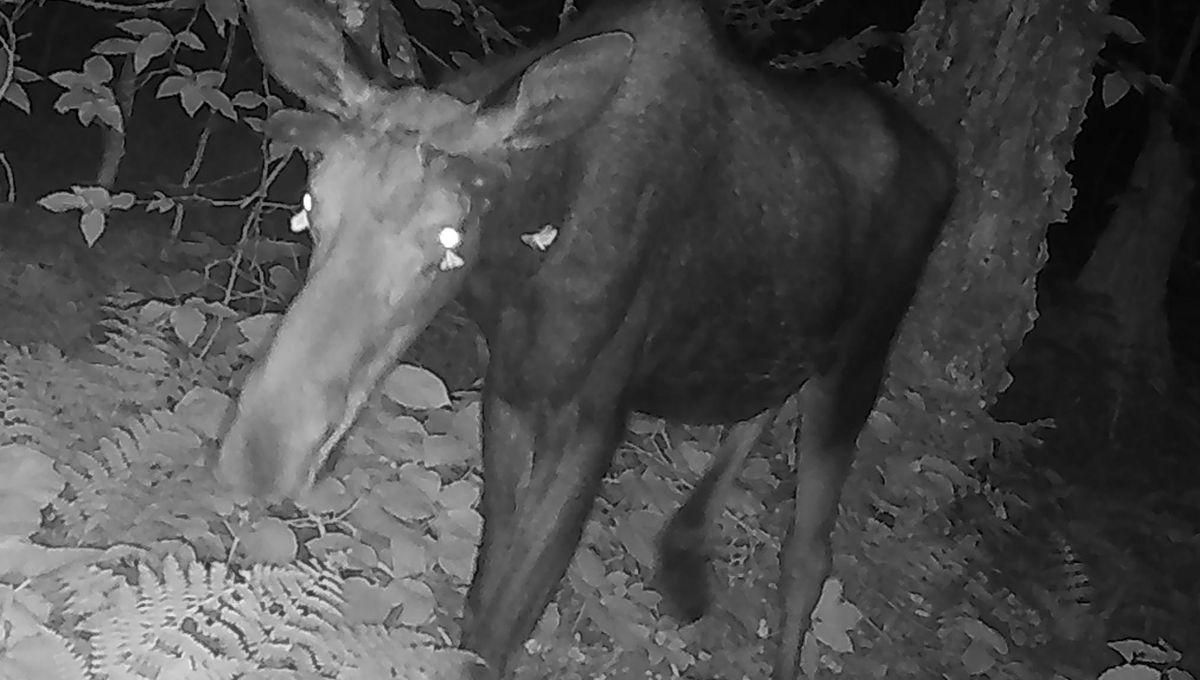
Previous observations have seen butterflies and moths drinking the tears of animals such as turtles and crocodiles in the Amazon or other tropical areas. However, in Green Mountain National Forest, USA, a camera trap has captured images of some moths slurping up the tears of a moose in only the second record of this behavior farther north.
The rest of this article is behind a paywall. Please sign in or subscribe to access the full content. Most species of butterflies and moths typically get their nutrients from the nectar of flowers. Some supplement this diet by acquiring other nutrients and minerals from soil, dead animals, or even human sweat in a behavior known as “puddling”. Apart from one record of a moth drinking the eye secretions of a horse, no observed lepidoptera have been seen drinking eye secretions from an animal outside of the tropics – until now. The behavior of drinking tears or eye secretions is known as lachryphagy. A trail camera captured 80 images of a bull moose (Alces americanus americanus) with moths on its face drinking its tears. The images were taken between 1:44 am and 1:48 am on June 19, 2024. What is remarkable is that these 80 images are the only ones showing lachryphagy out of more than 247,000 images taken of moose behavior across nearly 500 sites in Maine, Massachusetts, New Hampshire, and Vermont. Both the moose being drunk from and the moths doing the drinking represent new species in which the behavior is known to occur. While the moth species couldn't be exactly identified, experts think that based on the size and shape from the images, the species likely belongs to the family Geometridae. The team acknowledge that while this is a very rare behavior, the moths could act as a vector for disease transmission – such as keratoconjunctivitis, which can cause eye lesions and have significant health impacts for moose. However, moths have not been documented spreading diseases in other species from tear-drinking, so the possibility remains fairly remote. The study is published in Ecosphere.


 English
 Arabic
 French
 Spanish
 Portuguese
 Deutsch
 Turkish
 Dutch
Dutch
 Russian
 Romaian
 Portuguese (Brazil)
 Greek
Greek