


 PUBLISHED
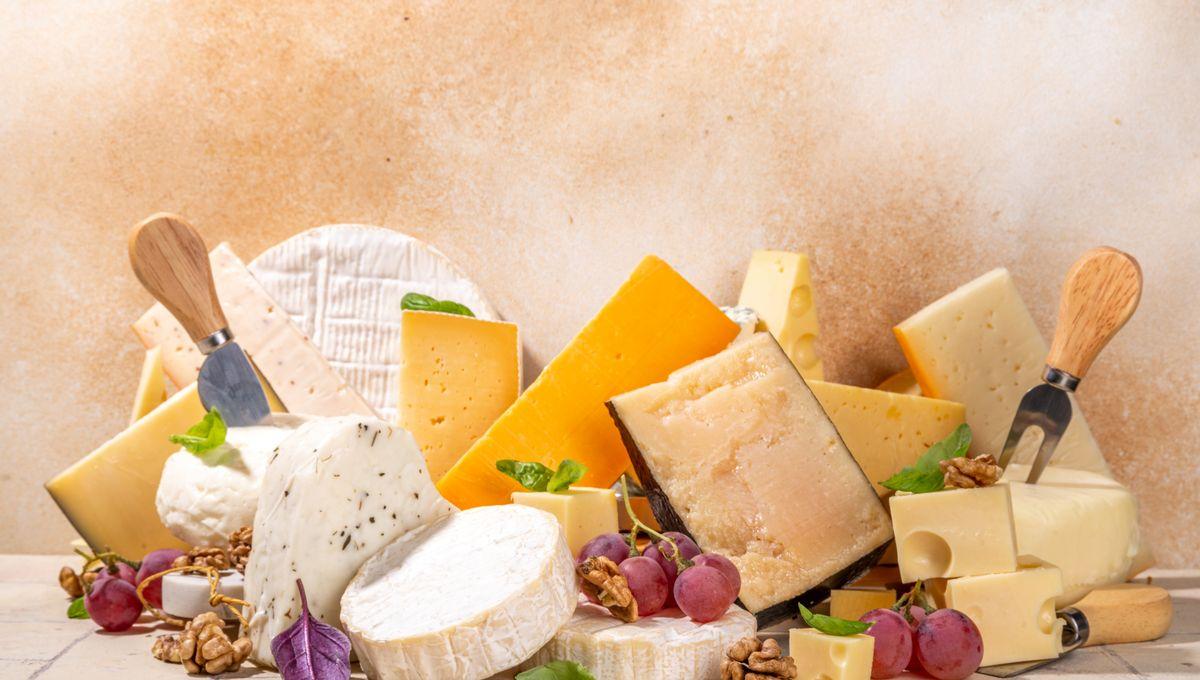
It’s the headline every dairy lover has been waiting to read: eating more high-fat cheese and cream is linked with a lower risk of developing dementia.
The rest of this article is behind a paywall. Please sign in or subscribe to access the full content. At least, that’s what a new study seems to say. “For decades, the debate over high-fat versus low-fat diets has shaped health advice, sometimes even categorizing cheese as an unhealthy food to limit,” said Emily Sonestedt, a nutritional epidemiologist at Lund University, Sweden and lead researcher on study, in a statement last week. But “[we] found that some high-fat dairy products may actually lower the risk of dementia, challenging some long-held assumptions about fat and brain health,” she explained. For cheese fans, it probably sounds too good to be true – and, according to some experts, it might be. So, what’s the catch? For all that this study has some criticisms, its scale is not one of them: it used data from 27,670 people over a minimum of 18 years, starting in the early 1990s. Participants, all of whom were aged 45 to 73 and living in Sweden, were asked to complete a written questionnaire and an interview about their diets, as well as a seven-day food diary. Later, in 2014 and 2020, the researchers followed up, using the Swedish National Patient Register to identify which of the participants had developed dementia. Then, they analyzed the data for links between specific types of dairy consumption and dementia risk. The results, at first glance, seem fairly clear. Of those people who reported consuming at least 50 grams of high-fat cheese per day – that’s about 1.76 ounces, or a little more than a cup as defined by the USDA – about one in 10 developed dementia by 2020. Of those who consumed less than 15 grams per day – about half an ounce, or one-third of a cup – more than one in eight had developed dementia. In other words: higher cheese intake was linked to a decrease in dementia incidence. Of course, there are a whole lot of confounding variables there – things like smoking and alcohol consumption; BMI and blood pressure; marital and educational status; comorbid conditions like diabetes, which is a known risk factor for dementia, stuff like that – but even once the team accounted for all that, there was still a 13 percent lower risk of developing dementia for those who ate more high-fat cheese. That number was even higher for vascular dementia in particular, with high-fat cheese-eaters appearing to have a 29 percent lower risk of that subtype. Cheese wasn’t the only dairy that seemed to show a protective effect against the disease. People who consumed 20 grams or more of high-fat cream per day had a 16 percent lower risk of dementia compared to those who ate none. That’s the equivalent of about 1.4 tablespoons of heavy whipping cream per day. And it really is high-fat cheese and cream that counts: “While eating more high-fat cheese and cream was linked to a reduced risk of dementia, other dairy products and low-fat alternatives did not show the same effect,” Sonestedt pointed out. “These findings suggest that when it comes to brain health not all dairy is equal.” It’s a result that’s not totally surprising, even if it may sound counterintuitive. Higher total dairy intake has previously been linked to a lower incidence of dementia in Asian and African populations, and a few retrospective studies – as opposed to prospective, which this one was – have suggested the same may be true for Europeans too. The problem is, a few studies have also suggested no link whatsoever. And, if some of the criticisms of this new study are to be believed, this new one might just be about to join them. Let’s get a few things out of the way right now: even best-case, this study isn’t as simple as “go gorge yourself on cheddar, and you’ll never get dementia.” First, and most importantly, it’s an observational study – so we simply cannot infer causation. To take an illustrative example: perhaps the higher-fat dairy has a protective effect against dementia – or perhaps, as preventive and lifestyle medicine specialist David Katz suggested to CNN, “the real risk factor for dementia is worse health/chronic disease, and […] the turn to lower-fat dairy may have been a ‘self-defense’ strategy among those who knew themselves to be at elevated risk for adverse health outcomes.” We just don’t know. Then there’s the fact that it was entirely carried out in Sweden. That has an impact, but maybe not the one you’re thinking of: Swedish cows are more likely than US cows to be grass-fed, which results in milk with higher omega-3 fatty acids. There’s a lot of evidence that these have protective effects against future dementia risk – but here, it means that Swedish cream and cheese might simply be more brain-healthy than American equivalents. Also, the way we eat the cheese may play a part. “People in Sweden and the US eat roughly the same amount of cheese per person, but the type is different,” Sonestedt told CNN last week. “In Sweden it is mostly hard, fermented cheeses, while in the US a larger share is processed cheese or cheese eaten in fast-food contexts.” Of course, maybe it’s something about the cheese that survives processing – calcium, or a vitamin like K or B12. We just don’t know. “We would like to see our findings replicated in more countries and populations before drawing firm conclusions,” Sonestedt said. It’s also worth pointing out the methodological limitations of the study. Participants were asked whether they had “substantially changed” their diet about five years in – but other than that, the very start of the experiment was the only time their dairy intake was actually assessed. And as in-depth as that process may have been, it was still based on self-reporting – which, for a variety of reasons, is notoriously unreliable. Overall, these limitations mean that the results should be “interpreted with caution,” Tian-Shin Yeh, a physician and nutritional epidemiologist at Taipei Medical University in Taiwan, told the New York Times – cautioning that the study cannot show an “inherently neuroprotective” effect for cheese and cream. The weirdest problem with this study, though, runs a little deeper. The fact is that, even if all of those limitations turn out to be negligible, the result itself may just… not be all that impressive. “Their finding for cheese was at the margin of statistical significance and they looked at multiple foods, so this might be just due to chance,” leading nutrition researcher Walter Willett, professor of epidemiology and nutrition at Harvard T.H. Chan School of Public Health and professor of medicine at Harvard Medical School in Boston, told CNN. “I’m not running out to buy a block of cheese.” And a closer look at the results and methodology hint that the real risk factor for dementia may not be lower high-fat cheese intake, but just chronic poor health. In an editorial accompanying the study, Yeh pointed out that the benefits of high-fat dairy were most evident when they replaced foods of “clearly lower nutritional quality, such as processed or high-fat red meat.” With that in mind, “it is not so much that high-fat cheese is inherently neuroprotective, but rather that it is a less harmful choice than red and processed meats,” Yeh wrote. In total, then? It’s a good first step – but don’t go thinking that block of cheese is a healthy snack just because of this study. “More research is needed to confirm our study results,” Sonestedt admitted in the statement, “and further explore whether consuming certain high-fat dairy truly offers some level of protection for the brain.” The study is published in the journal Neurology.What does the study say?
Like Swiss cheese
Not so impressive after all?

 English
 Arabic
 French
 Spanish
 Portuguese
 Deutsch
 Turkish
 Dutch
Dutch
 Italiano
 Russian
 Romaian
 Portuguese (Brazil)