


Key Takeaways
- Liability for mailbox damage by a snow plow depends on fault and insurance coverage. It could fall on a contractor, the town, or the homeowner.
- Homeowners should quickly report damage to their insurer and the responsible party, including necessary evidence.
- Gathering thorough evidence helps determine responsibility and speed up resolution.
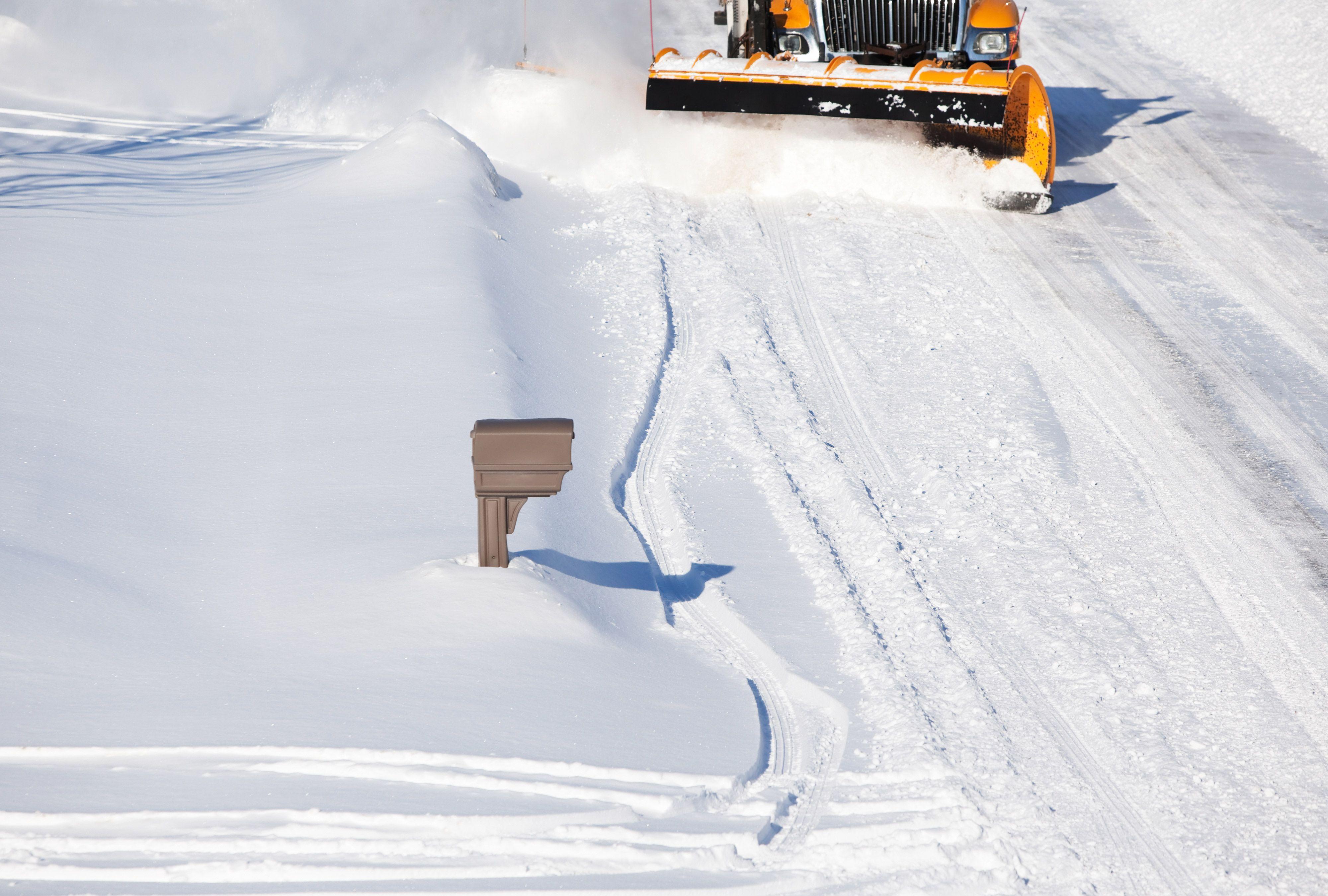
When temperatures dip and snow begins to fall, snowplows are essential to keeping the world running. Without them, residents in much of the northern region of the country would be completely shut up in their homes during the winter months. However, plowing through a thick blanket of snow, which inevitably hides everything beneath it, naturally comes with some risk, and many homeowners’ mailboxes are the first thing to take a direct hit.
Below, we’ve explained who is responsible for repairs if a snowplow dents your mailbox, and spoken to an insurance broker about the ins and outs of the process, including how to report the damage, what evidence to collect, and when it may be helpful to involve the police.
Katie Scheuer is an independent insurance broker with World Insurance Associates in South Dakota.
Who Is Responsible if a Snowplow Dents Your Mailbox?
If a snowplow damages your mailbox or any other part of your property, it may seem clear who is responsible for paying for the damage. However, Katie Scheuer, an independent insurance broker with World Insurance Associates in South Dakota, explains that it's not always cut-and-dry, as numerous factors determine whether the liability falls on the town, the contractor, the homeowner, or another entity.
"It depends on who is legally responsible (liable) and what the insurance policy covers," offers Scheuer, breaking down the typical liability and resulting payment responsibility as follows:
- The contractor. If a contractor caused it through negligence, their General Liability (CGL) policy usually pays.
- The town. If the town caused it (public works, utilities, etc.) through negligence, the town’s liability insurance or self-insurance may pay.
- No one. If no one is at fault (e.g., storm damage, accidental break not tied to negligence), the homeowner’s insurance usually pays under the homeowner’s policy (subject to a deductible).
The above information is general guidance based on how standard homeowner's insurance and standard liability policies usually work. "Local laws, contracts, and actual policy language can change outcomes, but this is the standard framework," explains Scheuer.
How to Report Snowplow Damage
In the event of snowplow damage, Scheuer advises homeowners to report it to their insurance agent or the claims line of their insurance carrier, and to provide a detailed description of the incident, including when it occurred and who was involved.
"Most ISO (Insurance Services Office) policies require prompt notice of loss, so the homeowner must report it quickly," she notes.
Next, she advises homeowners to report the damage to the alleged responsible party, whether it be the town or a contractor, providing a written notice including photos and a detailed timeline of the incident.
What Evidence Is Needed?
To aid in quickly receiving payment and proving who is responsible, the more evidence a homeowner can collect related to the snowplow damage, the better. Here's the evidence that Scheuer recommends gathering:
- Photos and videos. Scene of the damage, before and after pictures if available, and any other helpful photos.
- Written description of events. Write down the date, time, and what happened, plus list the names of any witnesses.
- Repair estimates or invoices.
- Any correspondence with the contractor or town. Provide emails, texts, notices, and any other correspondence.
- Police report (if applicable). Provide the police report when necessary, such as when the situation involves injury, vehicle or equipment damage, or suspected negligence.
- Contracts or permits. Provide any relevant contracts and permits, any contractors, and who was responsible for the work being done.
Related
When to Involve Police
Regarding police involvement, Scheuer says that it depends heavily on the situation, explaining that homeowners should expect police to create a report if a vehicle or heavy equipment caused the damage, if public property is involved, if there's a safety hazard, or if the homeowner requests documentation.
However, Scheuer explains that police typically do not determine financial liability, negotiate with the contractor, order the town to pay, or act as claims adjusters. In some cases, police may verify that the scene is safe, document the incident, provide a report for insurance purposes, or direct the homeowner to the appropriate municipal department, such as public works, code enforcement, or a utility authority.

 English
 Arabic
 French
 Spanish
 Deutsch
 Turkish
 Dutch
Dutch
 Italiano
 Russian
 Romaian
 Portuguese (Brazil)
 Greek
Greek