


Key Points
- Do a garden cleanup to eliminate food sources and hiding spots.
- Install fencing to protect large areas or use tree guards for newly planted trees.
- Use deterrent sprays in combination with other methods and reapply often.
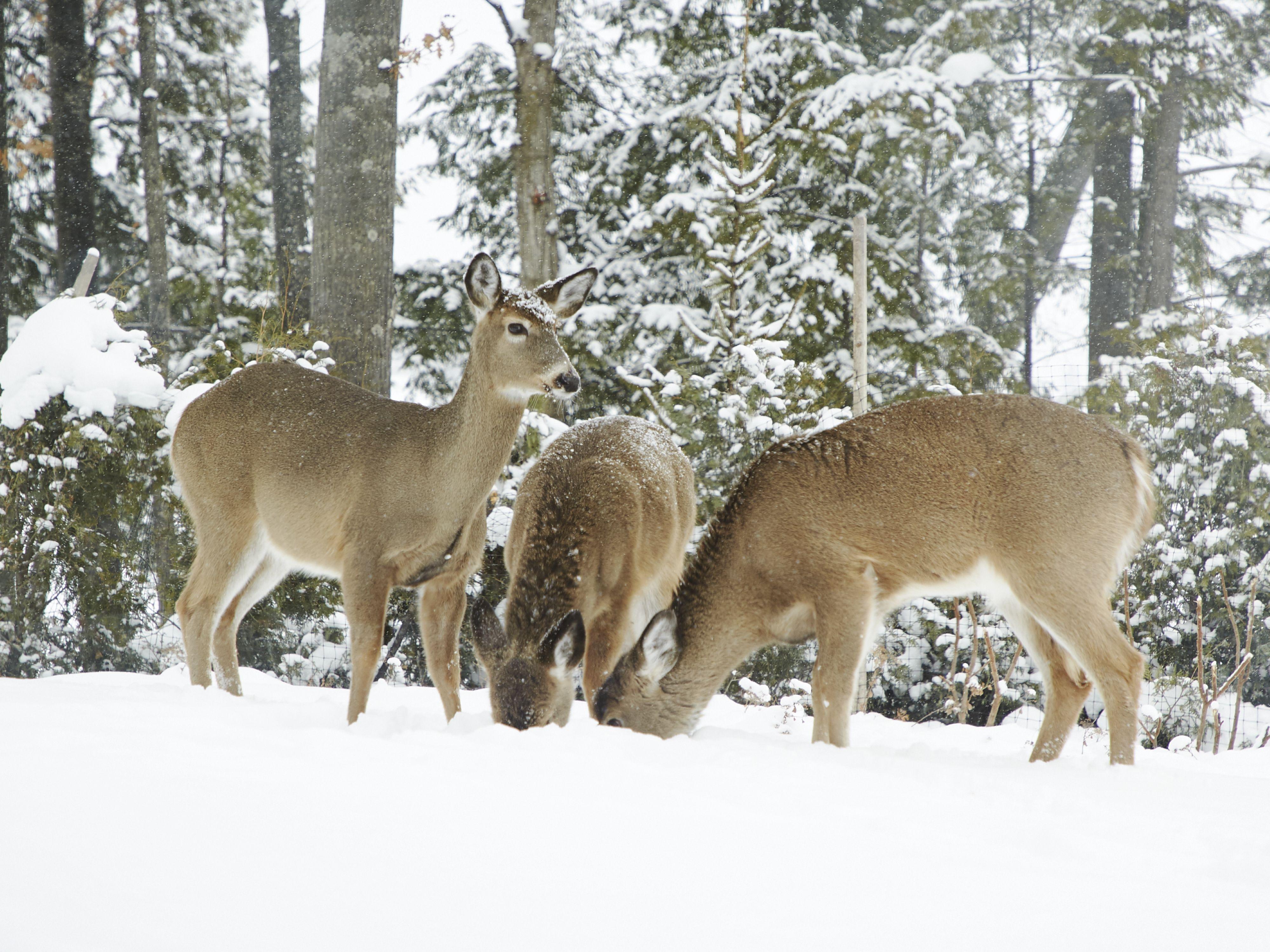
Just because snow is covering the ground doesn’t mean your plants and trees are safe from deer or rabbits. Although these creatures often do the worst damage to plants during the growing season, in winter, they may also strip tree bark, girdle fruit trees, and nip off tender buds and perennial shoots, leaving you with damaged or bloomless plants next season.
Scarred tree bark, pelleted droppings, and animal tracks are some of the signs that rabbits or deer may be hanging out in your yard. Here are 8 humane ways to keep hungry wildlife at bay and safeguard your precious plants.
1. Perform a Garden Cleanup
Rabbits and deer are more likely to visit yards that offer easy sources of food, especially in winter when tender plants are hard to find. Reduce those food sources by doing a thorough garden cleanup once the growing season is over.
Rake up windfallen fruit and pull up and dispose of spent veggie plants that may invite hungry visitors. Trim low-hanging branches that attract deer browsing. Compost bins are also attractive because they are filled with goodies; make sure to seal them tightly, which also keeps rodents out.
Tidying up your garden does not mean you cannot leave the leaves, which boost ecological health, keep them out of landfills, and help biodiversity. Simply rake fallen leaves into garden beds or use them as mulch around trees.
2. Remove Hiding Spots
Deer aren’t likely to seek permanent shelter around your home, but rabbits sometimes take up residence in crawlspaces beneath houses and other outbuildings. The best way to thwart this is to check around your property for potential sheltering spots and to seal holes and crevices with wood, hardware cloth, or another sturdy material. Just make sure to check crawlspaces thoroughly before closing them to ensure that you don’t accidentally seal any animals in.
3. Add Tree Guards
Although rabbits will sometimes nibble on tree bark in winter, deer are more likely to do serious damage to young trees, either by stripping tree bark away with their teeth or gouging holes in the bark with their antlers. While older trees are somewhat better equipped to recover from deer browsing, if the bark is girdled all the way around the tree, it will die.
To prevent this, install sturdy tree guards around the base of newly planted fruit and ornamental trees. Make sure the tree guards extend at least 5 feet up the tree or to the tree’s lowest branches.
Denny Schrock
4. Install Fencing
Adding fencing around your entire yard, sections of it, or individual plants and trees is pricey, but it's the most reliable way to keep deer and rabbits out. Deer fences should be at least 8 feet tall to deter jumping. Shorter double fences (two 4-foot fences spaced 4 feet apart) are also effective against deer.
Rabbit fences should be at least 3 feet above the soil line and buried at least 6 inches deep to keep rabbits from digging underneath.
5. Use Deterrent Sprays
There are a number of deterrent sprays that potentially repel deer and rabbits. Sprays made from garlic oil, capsaicin or hot sauce, humanely-sourced predator urine, or putrescent egg solids are particularly popular; they are sprayed directly on plants and trees. However, none of these products is 100% effective, and they work best if you switch them up from time to time and reapply them after rain or heavy snow.
To make a DIY deer deterrent spray, mix 1 egg, ½ cup of milk, and 1 tablespoon of dish soap into 1 gallon of water, or a hot pepper spray by stirring 2 tablespoons of hot sauce into 1 gallon of water.
Related
6. Use Motion-Activated Scares
During the warmer months, motion-activated sprinkler systems can do wonders for deterring deer and smaller pests. After the ground freezes and water stops flowing, to scare deer and rabbits away, consider installing motion-activated floodlights directed at the plants you’d like to protect.
An alternative is to leave a radio on low and place it near your garden or orchard to scare deer and rabbits off. If you cannot position it safely inside a potting shed or other outbuilding where it is protected from the elements, you may need to take precautions to protect the radio from water damage.
7. Experiment with Other Deterrents
Aside from deterrent sprays and motion-activated floodlights, other deterrents potentially reduce deer and rabbit damage, though they are hit or miss. Some gardeners have great success repelling deer by simply placing bars of strongly-scented soap in nylon stockings and hanging the stockings out in their gardens or orchards.
Stockings filled with dog or human hair, windchimes, pie tins, or old CDs held aloft on a string, and fishing line installed around garden perimeters are also used to repel deer and rabbits. These methods work best if you move them around your space regularly and use them in conjunction with other deterrents.
8. Grow Resistant Plants
If they get hungry enough, rabbits and deer will eat just about any plant. To make your garden more resistant to wildlife damage, grow deer-resistant flowers, shrubs, and other plants that deer and rabbits don’t like to eat. Examples include highly fragrant plants such as most herbs, marigolds, and bee balm, and plants with coarse, prickly, fuzzy, or thorny leaves such as lamb's ear and yucca.
Plants like roses and hostas are particularly vulnerable to deer damage. If you want to make these plants more deer-proof, try companion planting them with fragrant perennial herbs, like lavender, thyme, and oregano.

 English
 Arabic
 French
 Spanish
 Portuguese
 Deutsch
 Turkish
 Dutch
Dutch
 Italiano
 Romaian
 Portuguese (Brazil)
 Greek
Greek