


Why Did the Jewish Leaders Not Go to Bethlehem When Jesus Was Born?
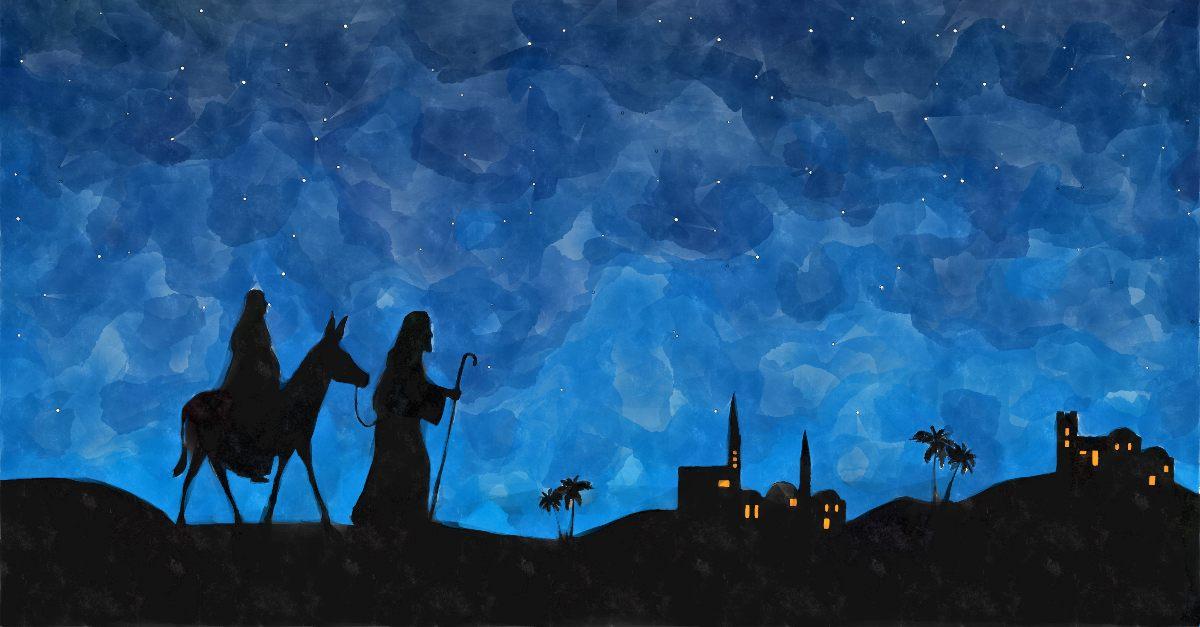
Why Did the Jewish Leaders Not Go to Bethlehem When Jesus Was Born?
1. Who knew the most about the prophecies of Jesus’s birth?
a. Wisemen
b. Fishermen
c. Joseph
d. Jewish religious leaders
2. Who was NOT present for Jesus’s birth?
a. Wisemen/astrologers
b. Jewish religious leaders
c. Shepherds
d. Sheep
I’m hoping we’re on the same page, but you can check your answers at the bottom of the article. I was today years old when I realized that though Jewish religious leaders were the most informed about the coming Messiah, they were conspicuously absent from His arrival. Sermons and pageants and carols focus on the people present for Jesus’s birth—not the people who no-showed despite the hand-written invitation. So, why didn’t the Pharisees and Sadducees sprint to the stable on the outskirts of Bethlehem that night? The most straightforward answer is—they got their signals crossed. Just as a compass points to magnetic North rather than true North, religious leaders’ spiritual GPS led them to the wrong location.
What Did the Jewish Leaders Know about the Messiah’s Birth?
I always wondered how Jewish people who studied scripture so carefully could miss the glaringly obvious interpretation of prophecy: Jesus is the Messiah. Yet, when I dove deeper, it was easier to understand the logic behind their conclusions.
For instance, Genesis 12:3 and 22:18 say of Abraham, “Through your seed all nations shall be blessed.” Christians interpret salvation through Jesus as the fulfillment of this prophecy. Jewish people believe Israel—as a nation—will bless the world, and they internalize these verses as a collective mission statement to bless others.
Now, read the following three passages as though a monarchy ruled your nation during its Golden Age.
The scepter will not depart from Judah,
nor the ruler’s staff from between his feet,
until he to whom it belongs shall come
and the obedience of the nations shall be his.
“I have installed my king
on Zion, my holy mountain.”
“The days are coming,” declares the Lord,
“when I will raise up for David a righteous Branch,
a King who will reign wisely
and do what is just and right in the land."
Looking at these passages, it is obvious why Jewish scholars of Jesus' time interpreted them to mean a literal king.
The Jewish Leaders’ Response to Christ’s Birth vs. the Magi and Shepherds
It is interesting to note that when describing the town of David, Luke 2:11 uses the Greek word ‘polei,’ a concrete, geographical term, where as ‘’alfei,’ the Hebrew term Micah uses, insinuates a tribal correlation.
Micah 5:2 is the only Old Testament prophecy that refers to the Messiah coming from Bethlehem. Jewish scholars understandably interpret this verse to mean the Messiah will come from David’s lineage, a symbolic geography.
When King Herod asked the chief priests where the Messiah would be born, though the chief priests provide what sounds like a confident answer, Bethlehem was not universally accepted as the Messiah’s birthplace by the Jewish people. Evidence of this fact is shown in the debate recorded in John 7:40-42.
The term ‘City of David’ is used 43 times in the Old Testament. Every. Single. Mention. Refers to Jerusalem as the City of David, not Bethlehem. David named Jerusalem ‘Zion’ and referred to the city as a fortress. Kings who descended from David were buried there.
To add to the confusion of the Messiah’s origin, Isaiah 7:14 says, “The ‘almah’ shall conceive.” Christians translate ‘almah’ as ‘virgin,’ while Jews take this to mean ‘young woman.’
So, if you lived in the first century B.C. and you could quote Scripture faster than your home address, your blueprint for the coming Messiah would be a king, born in Jerusalem. You’d likely hedge your bets by tracing David’s lineage of wealthy or predominant families that lived in Jerusalem, not a poor couple, rumored to be pregnant with a child out of wedlock, from a Podunk, backwater town like Nazareth.
Why Didn’t the Jewish Leaders Act on the Prophecies about the Messiah?
- Skepticism. The Messiah? In a manger? That’s laughable.
- Doubt. After all, Israel had not heard from God for hundreds of years.
- Pride. God would have told us before he told the Gentiles, right?
- Fear of change.
Any one of these feelings would belay the excitement of the Jewish religious leaders. The religious leaders stood to lose their entire way of life if what the Wise Men said was true.
Even after Jesus grew into an adult and all the facts lined up, for the high priest Caiaphas to acknowledge Jesus as the Messiah, he’d simultaneously be admitting to the entire Jewish nation that not only had he gotten the facts wrong, but every other religious leader was incorrect as well. An entire nation’s religious structure and spiritual understanding hung in the balance. Caiaphas says in John 11:50, “better … one man die for the people than that the whole nation perish.” The portrait of Nicodemus’s late-night visit to Jesus (John 3) suddenly comes into focus.
Belief for others didn’t come at so high a cost. The Wise Men were strangers from another country. No one in Israel knew them, looked to them for guidance, or relied on them. And the shepherds? Imagine the contrast between the Pharisees earning a six-digit salary and shepherds working below minimum wage. Imagine the chief priests’ indignation. We have to associate with shepherds? To see the Messiah? That can’t be right.
What Does Their Silence Reveal about Their Hearts?
I believe the apostle John highlights Niccodemus’s interaction with Jesus for multiple reasons. One, to show how atypical the interaction was, and two, to lend hope. John places a spotlight on Nicodemus and says, paraphrased, “This one gets it. And was brave enough to act on it.”
The chief priests’ fear, though justifiable, was tragic all the same. Their Messiah stood right in front of them and they couldn’t see him. Their magnetic North had pivoted them ten degrees in the wrong direction.
What pivots you in the wrong direction and distracts you from the Messiah standing before you? Social media? Politics? Money? Even holiness becomes an idol when appearance becomes a higher priority than grace. Maybe your family is hostile toward Jesus or, though they claim to be Christian, their hearts are far from Him. Maybe demands of your occupation conflict with what you know is right. The cost to follow Christ is still high, and not everyone is willing to pay the price.
This Christmas, I challenge you to sprint toward the manger and become a part of the nativity scene like your hope depends on it. I’ll see you there.
City of David References in the Old Testament:
- David Dubs Jerusalem the ‘City of David’ following his capture of the city and decision to take up residence there: 2 Samuel 5:7, 2 Samuel 5:9, 1 Chronicles 11:5, 1 Chronicles 11:7
- Bringing the ark to the City of David: 2 Samuel 6:10-16, 1 Chronicles 13:13, 1 Chronicles 15:1-1 Chronicles 15:29, 1 Kings 8:1, 2 Chronicles 5:2
- Solomon takes Pharoah’s daughter as a wife and brings her to the City of David:1 Kings 3:1, 1 Kings 9:24, 2 Chronicles 8:11
- Kings buried just outside Jerusalem, the City of David: Kings 2:10, 1 Kings 11:43, 1 Kings 14:31, 1 Kings 15:8, 1 Kings 22:50, 2 Kings 8:24, 2 Kings 9:28, 2 Kings 12:21, 2 Kings 14:20, 2 Kings 15:7, 2 Kings 15:38, 2 Kings 16:20, 2 Chronicles 9:31, 2 Chronicles 12:16, 2 Chronicles 14:1, 2 Chronicles 16:14, 2 Chronicles 21:1, 2 Chronicles 21:20, 2 Chronicles 24:16, 2 Chronicles 24:25, 2 Chronicles 27:9
- The Walls of The City of David: 1 Kings 11:27, 2 Chronicles 32:5, Nehemiah 3:15, Nehemiah 12:37, Isaiah 22:92, Chronicles 32:30, 2 Chronicles 33:14
Additional Monarchy Passages:
For to us a child is born,
to us a son is given,
and the government will be on his shoulders.
And he will be called
Wonderful Counselor, Mighty God,
Everlasting Father, Prince of Peace.
Of the greatness of his government and peace
there will be no end.
He will reign on David’s throne
and over his kingdom,
establishing and upholding it
with justice and righteousness
from that time on and forever.
The zeal of the Lord Almighty
will accomplish this.
In that day the Root of Jesse will stand as a banner for the peoples; the nations will rally to him, and his resting place will be glorious. In that day the Lord will reach out his hand a second time to reclaim the surviving remnant of his people from [the surrounding nations].
Multiple Choice Answers:
- d
- b
Photo Credit: ©iStock/Getty Images Plus/lukbar
This article is part of our catalog of resources about Jesus Christ and His life, teachings, and salvation of mankind! Discover more of our most popular articles about the central figure of Christianity:
When was Jesus Born? Biblical & Historical Facts
What Language Did Jesus Speak?
Why Is Christ Referred to as Jesus of Nazareth?
How Old Was Jesus When He Died?
What Did Jesus Look Like?
What was the Transfiguration of Jesus?
Jesus Walks on Water - Meaning & Significance
Why Is it Important That Jesus Was Jewish?

 English
 French
 Spanish
 Portuguese
 Deutsch
 Turkish
 Dutch
Dutch
 Italiano
 Russian
 Romaian
 Portuguese (Brazil)
 Greek
Greek