


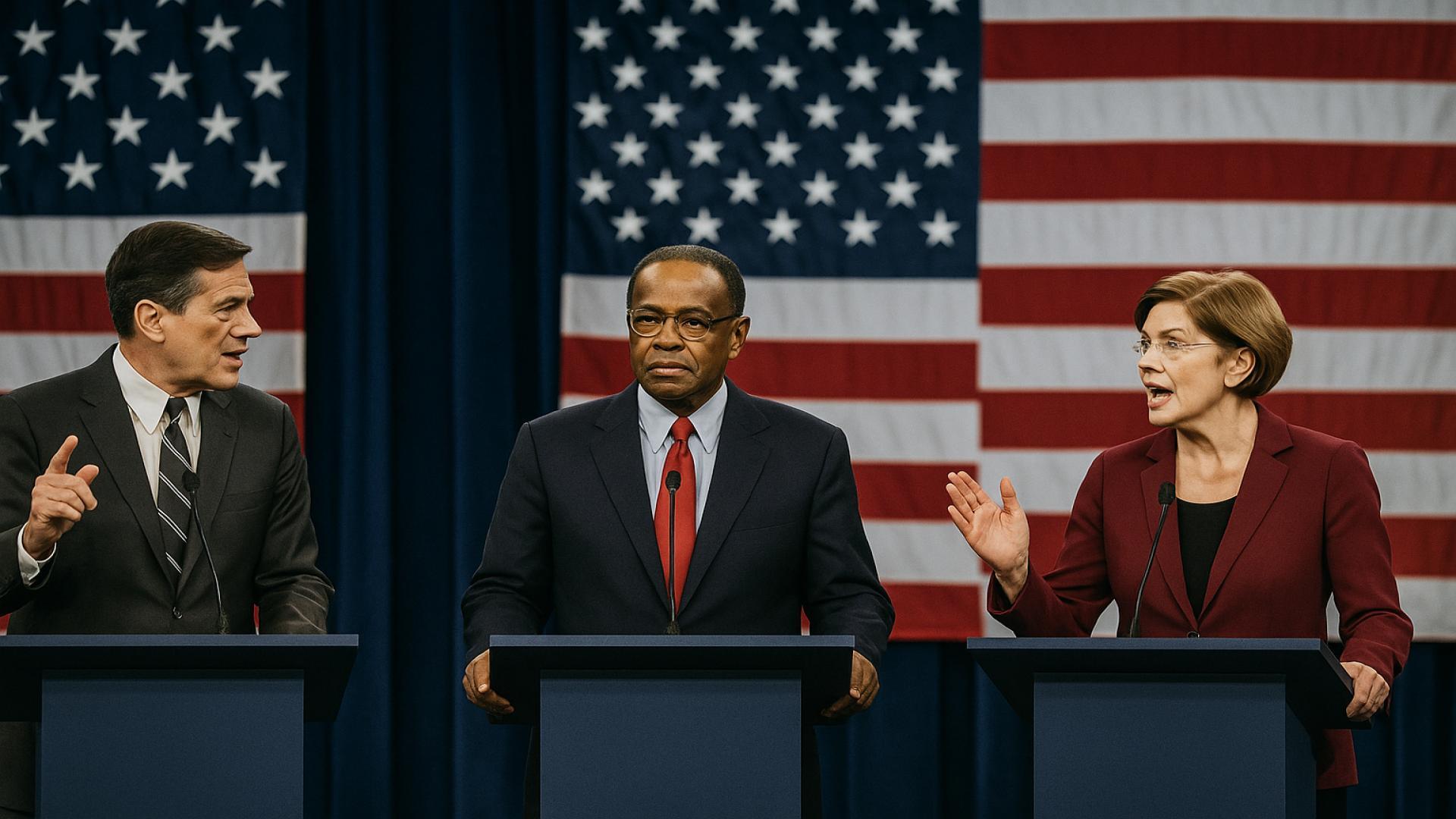
15 Presidential Candidates Who Changed the Race — and Still Lost

0
45

15 Presidential Candidates Who Changed the Race — and Still Lost - History Collection

4. Jesse Jackson (1984, 1988)

15 Presidential Candidates Who Changed the Race — and Still Lost
Jesse Jackson’s Rainbow Coalition campaigns unified diverse communities, advancing racial and economic equality in polit…

Jesse Jackson’s presidential campaigns in 1984 and 1988 introduced the “Rainbow Coalition,” uniting diverse groups—including African Americans, Hispanics, Asian Americans, Native Americans, and white progressives—to advocate for racial and economic equality. His 1984 campaign achieved historic milestones, winning five primaries and caucuses and securing over 3 million votes. Jackson’s efforts significantly increased minority voter registration and turnout, reshaping the Democratic Party’s approach to inclusivity. His influence is evident in the party’s subsequent embrace of diverse voices and progressive policies (history.com).

5. Eugene V. Debs (five-time Socialist candidate)

15 Presidential Candidates Who Changed the Race — and Still Lost
Eugene V. Debs rallies for workers’ rights and social justice during early 20th-century presidential campaigns.

Eugene V. Debs was a prominent labor leader and five-time Socialist Party candidate for the U.S. presidency between 1900 and 1920. His campaigns emphasized workers’ rights, social justice, and anti-imperialism, advocating for reforms such as nationalization of railroads and the abolition of the Senate. In 1912, Debs received nearly a million votes, about 6% of the popular vote, marking his most successful campaign. Despite electoral defeats, his advocacy significantly influenced American progressive policies, inspiring future labor movements and social reforms (washingtonpost.com).

6. Ralph Nader (2000)

15 Presidential Candidates Who Changed the Race — and Still Lost
Ralph Nader’s 2000 Green Party campaign spotlighted environmental issues, corporate influence, and electoral impact.

In the 2000 presidential election, consumer advocate Ralph Nader ran as the Green Party candidate, focusing on environmental issues and campaign finance reforms. He received 2.74% of the popular vote, amounting to nearly 2.9 million votes. His candidacy, particularly in Florida where he garnered 97,488 votes, is often cited as a factor in the narrow margin that led to George W. Bush’s victory over Al Gore. Nader’s campaign highlighted concerns about corporate influence in politics and the need for electoral reforms (en.wikipedia.org).

7. Shirley Chisholm (1972)

15 Presidential Candidates Who Changed the Race — and Still Lost
Shirley Chisholm campaigns for president in 1972, breaking barriers in race and gender politics.

In 1972, Shirley Chisholm made history as the first African American woman to seek a major party’s presidential nomination. Facing significant racial and gender discrimination, she campaigned under the slogan “Unbought and Unbossed,” advocating for civil rights and gender equality. Despite these challenges, Chisholm secured 152 delegate votes at the Democratic National Convention, demonstrating the viability of diverse candidates in national politics. Her groundbreaking campaign inspired future generations of marginalized Americans to pursue political leadership (si.edu).

8. William Jennings Bryan (1896, 1900, 1908)

15 Presidential Candidates Who Changed the Race — and Still Lost
William Jennings Bryan delivers his iconic “Cross of Gold” speech, energizing the Populist movement.

William Jennings Bryan, a charismatic orator and three-time Democratic presidential candidate, significantly influenced American politics in the late 19th and early 20th centuries. His 1896 “Cross of Gold” speech, advocating for the free coinage of silver, energized the Populist movement and challenged the gold standard, highlighting economic disparities between urban and rural America. Although he lost the elections, Bryan’s campaigns brought issues like bimetallism and anti-imperialism to the forefront, shaping Democratic policy for decades (britannica.com).

9. Al Smith (1928)

15 Presidential Candidates Who Changed the Race — and Still Lost
Al Smith’s historic 1928 campaign challenged anti-Catholic bias and energized urban immigrant voters.

In 1928, Al Smith became the first Catholic major party nominee for the U.S. presidency. His candidacy confronted widespread anti-Catholic sentiment, particularly in rural areas, while energizing urban Catholic and immigrant communities. Smith’s campaign highlighted issues such as Prohibition and urban development, broadening the Democratic base in cities like New York and Boston. Despite his loss to Herbert Hoover, Smith’s run paved the way for future minority candidates and challenged prevailing religious biases in American politics (britannica.com).

10. John McCain (2000, 2008)

15 Presidential Candidates Who Changed the Race — and Still Lost
John McCain campaigns on independent principles, challenging party norms and championing campaign finance reform.

John McCain’s presidential campaigns in 2000 and 2008 were marked by his “straight talk” approach, challenging Republican Party orthodoxy and advocating for campaign finance reform. In 2000, he gained national attention with his independent stance and criticism of the party establishment, though he ultimately lost the nomination to George W. Bush. In 2008, McCain secured the Republican nomination but was defeated by Barack Obama in the general election. Despite these losses, his campaigns set a precedent for ideological independence within the party (britannica.com).

11. Pat Buchanan (1992, 1996, 2000)

15 Presidential Candidates Who Changed the Race — and Still Lost
Pat Buchanan campaigns shift GOP discourse with populism, anti-globalism, and conservative culture war themes.

Pat Buchanan’s presidential campaigns in 1992, 1996, and 2000 introduced hardline populism, anti-globalism, and culture war issues into Republican contests. In 1992, his strong challenge to incumbent President George H. W. Bush, including a notable second-place finish in the New Hampshire primary, forced the GOP to address conservative concerns. His 1996 campaign, though less successful, continued to push the party rightward. In 2000, running under the Reform Party banner, Buchanan’s focus on nationalism and skepticism of international institutions influenced the party’s future direction (en.wikipedia.org).

12. Howard Dean (2004)

15 Presidential Candidates Who Changed the Race — and Still Lost
Howard Dean’s 2004 campaign pioneers digital fundraising and grassroots mobilization, transforming modern political st…

In 2004, Howard Dean’s presidential campaign revolutionized political strategy by pioneering digital fundraising and grassroots mobilization. Utilizing the internet, Dean’s campaign raised over $20 million through small online donations, demonstrating the power of digital platforms in political fundraising. The campaign also leveraged Meetup.com to organize local events, fostering a decentralized network of supporters. These innovative methods have since become standard in modern political campaigns (washingtonpost.com).

13. Mitt Romney (2012)

15 Presidential Candidates Who Changed the Race — and Still Lost
Mitt Romney’s 2012 campaign reshaped Republican debates on healthcare reform and post-recession economic policy.

Mitt Romney’s 2012 presidential campaign significantly influenced Republican policy debates, particularly on healthcare and economic recovery post-recession. His tenure as governor of Massachusetts, where he implemented a state-level healthcare reform, became a focal point during the campaign. Romney’s proposals for tax cuts, reducing government spending, and repealing the Affordable Care Act (ACA) shaped future party priorities, even after his loss to President Obama (cfr.org).

14. Theodore Roosevelt (1912, Progressive ‘Bull Moose’ Party)

15 Presidential Candidates Who Changed the Race — and Still Lost
Theodore Roosevelt’s 1912 Bull Moose campaign redefined American politics with bold progressive reforms.

In 1912, former President Theodore Roosevelt broke from the Republican Party to run as the Progressive Party’s candidate, commonly known as the “Bull Moose” Party. His candidacy introduced progressive reforms such as women’s suffrage, labor rights, and social welfare programs into the national conversation. By splitting the Republican vote, Roosevelt’s campaign facilitated Democrat Woodrow Wilson’s victory. His third-party run significantly altered the two-party dynamic, demonstrating the potential impact of alternative political movements on American politics (nps.gov).

15. Hubert Humphrey (1968)

15 Presidential Candidates Who Changed the Race — and Still Lost
Hubert Humphrey campaigns for president in 1968, advocating civil rights and Vietnam War resolution.

In the 1968 presidential election, Hubert Humphrey, then Vice President under Lyndon B. Johnson, became the Democratic nominee amid a nation grappling with civil unrest and divisions over the Vietnam War. His campaign emphasized civil rights and sought to end the conflict in Vietnam. Despite a late surge in support, Humphrey narrowly lost to Richard Nixon, influencing liberal policy discussions and the Democratic Party’s future direction (britannica.com).

Conclusion

15 Presidential Candidates Who Changed the Race — and Still Lost
Trailblazing presidential candidates whose campaigns transformed political strategies, party dynamics, and policy discou…

The presidential candidates highlighted in this article, despite not securing the presidency, have profoundly influenced America’s political landscape. Their bold ideas, innovative strategies, and distinctive personalities have reshaped party dynamics, policy debates, and campaign methodologies. For instance, Ross Perot’s 1992 campaign introduced digital fundraising and grassroots mobilization, setting new standards for political engagement (time.com). Similarly, Howard Dean’s 2004 run pioneered online fundraising and volunteer organization, laying the groundwork for future digital campaigns. These examples underscore that electoral defeat does not preclude a candidate from leaving a lasting impact; their legacies continue to shape future campaigns and policymaking, demonstrating that winning isn’t the only way to change history.

Suche
Kategorien
Mehr lesen
Spiele
Speculation about a new AMD Radeon GPU mounts, as Lisa Su CES keynote announced
Speculation about a new AMD Radeon GPU mounts, as Lisa Su CES keynote announced It's just...
Von Test Blogger6 2025-09-10 16:00:19 0 1KB
Spiele
Vermintide 2 is bringing back an iconic map from the first game, and it's not an April Fool's joke this time
Vermintide 2 is bringing back an iconic map from the first game, and it's not an April Fool's...
Von Test Blogger6 2025-10-23 18:00:24 0 714
Andere
Semiconductor Process Control Equipment Market Future Scope: Growth, Share, Value, Insights, and Trends
"Global Demand Outlook for Executive Summary Semiconductor Process Control Equipment...
Von Shweta Kadam 2025-12-15 07:36:20 0 154
Music
Paul Stanley Shares His Favorite Photo With Ace Frehley
Paul Stanley Shares His Favorite Photo With Ace FrehleyAmy Sussman, Getty Images / Getty...
Von Test Blogger4 2025-10-17 15:00:14 0 775
Spiele
Zombie game CrisisX is giving me a stitch just from looking at its massive map
Zombie game CrisisX is giving me a stitch just from looking at its massive map As an Amazon...
Von Test Blogger6 2025-08-15 18:00:13 0 1KB