


Fast, Ferocious, and Fearsome: Meet The Sun Spiders Of The Solifugae
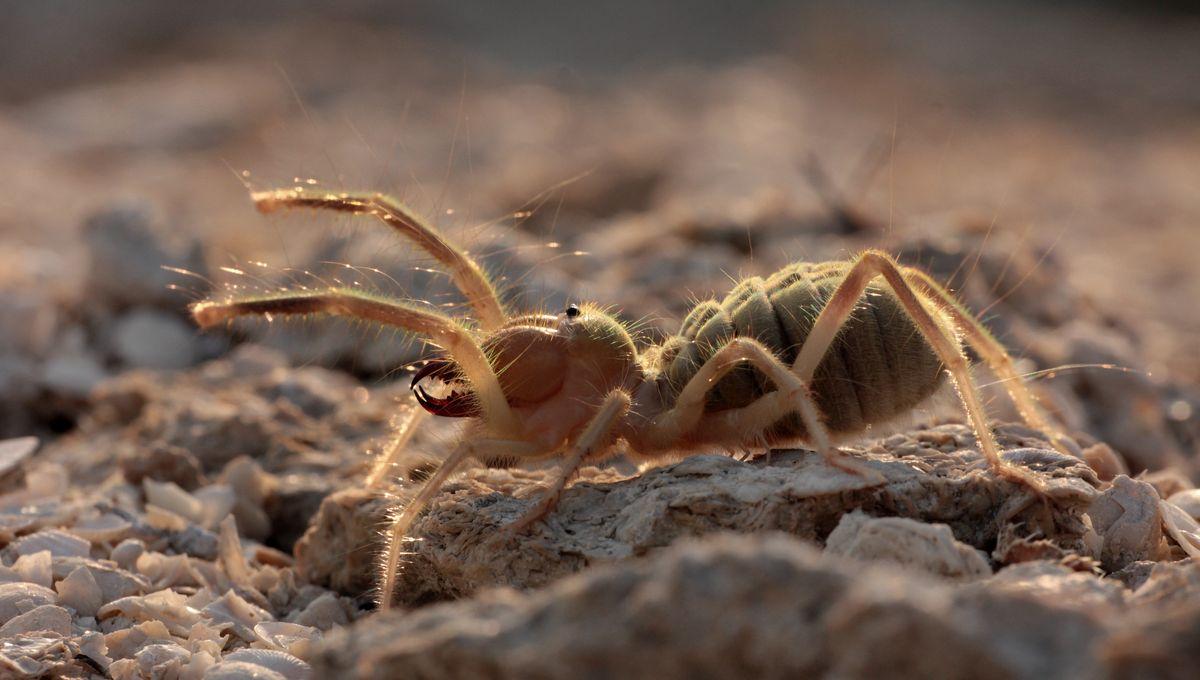
Fast, Ferocious, and Fearsome: Meet The Sun Spiders Of The Solifugae
Diving into the world of the arachnids is not for the faint-hearted – even fans of all things eight-legged might just think twice about the critters belonging to Solifugae.
“Here is an odd creature, a monstrous apparition. How weirdly fashioned, how ill-proportioned, how evil and forbidding in its hideous shape and coat of bristling hairs!” wrote the explorer and naturalist Dr Richard G W Hingston in his book Nature at the Desert’s Edge in 1925, describing the solifuges. But when we find something odd, it is often because we do not understand it. Solifugae is a taxonomic order that includes more than 1,200 known species, but the group is poorly understood, thanks mostly to their nocturnal hunting habits, difficulty in finding them, and keeping them alive in the lab. They have even been called the “neglected cousins” of the arachnids. So what do we know about them? These creepy crawlies are often referred to as sun spiders, camel spiders, and wind scorpions. However, they are neither true spiders nor scorpions – these belong to two other orders – though all are arachnids. The sunny part of their common name makes a bit more sense, as Solifugae are typically found in dry, hot regions, and their bodies have a golden hue. Solifuges are sometimes considered an indicator species for these desert environments, reflecting the wider health of their ecosystem. They are able to survive both very high temperatures during the day and the opposite during the night. The name Solifugae also refers to this warm habitat, stemming from two Latin words: sol, meaning "sun", and fugere, meaning "to flee", making their name "the ones that flee from the Sun." Some solifuge species can run extremely fast and even for extended periods of time. To be fair to Hingston, this can look quite bizarre; the critters hold their pedipalps out in front while running, giving them an un-spider-like appearance that seems as though they have five pairs of walking legs. And those "hairs" that Hingston refers to? They are actually stiff bristles known as setae. All the better to eat you with... Image credit: Dmitry Abezgauz/Shutterstock.com Their pedipalps also contain smooth adhesive pads that can either aid in prey capture or allow the creatures to run up vertical surfaces. In fact, solifuges are one of the dominant predators in their environments, with a high metabolic rate and jaws capable of a powerful bite. Typically, they feed on a range of invertebrate prey, including beetles, spiders, scorpions, and even other solifuges. On the flip side, they can also end up as prey themselves, getting snacked upon by a wide range of animals, including birds, reptiles, and mammals. There is little known about Solifugae reproduction and breeding habitats, but it is suggested that males have a finite sperm supply and do not produce sperm throughout their adulthood. Females have specialized muscles around their sperm storage areas, and it has been proposed that these muscles could allow the female some choice over using the sperm to produce offspring. With much still to learn about this frankly slightly freaky group of species, who knows what research will reveal about the solifuges in years to come?

 English
 Arabic
 French
 Spanish
 Portuguese
 Deutsch
 Turkish
 Dutch
Dutch
 Russian
 Romaian
 Portuguese (Brazil)
 Greek
Greek