


 PUBLISHED

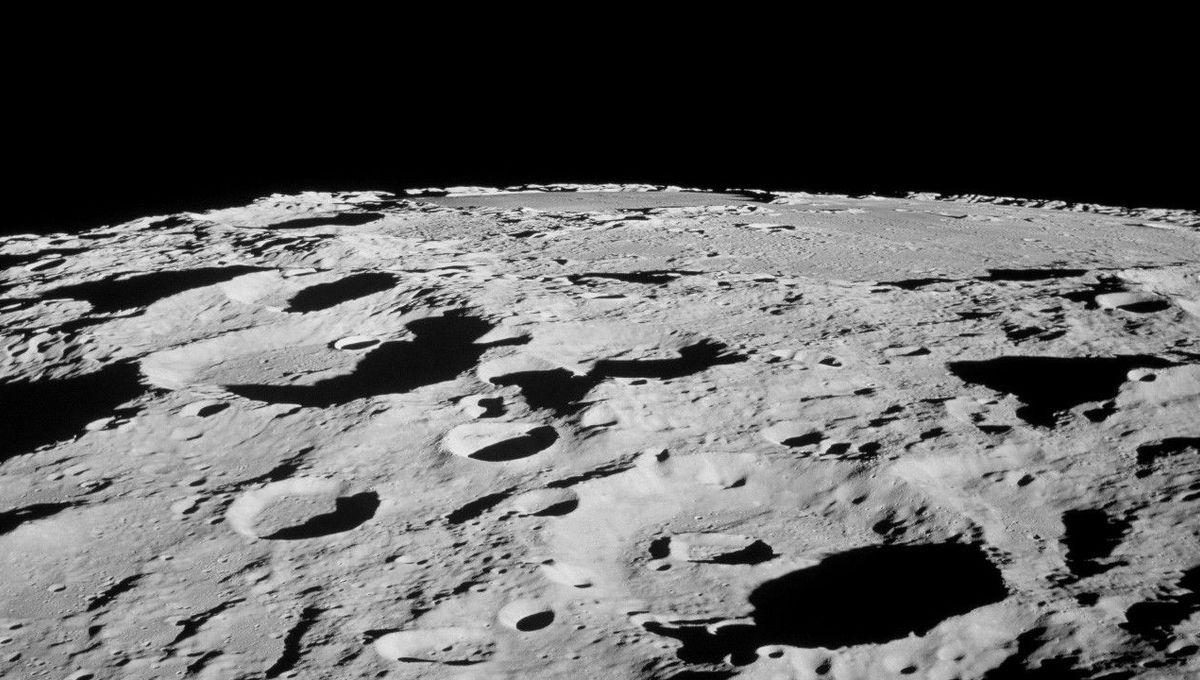
Skygazing astronomers have spotted a sudden, bold flash of light on the dark side of the Moon caused by an astronomical smash-up. The culprit is still being investigated, but it may have something to do with the one of the strangest space objects we know of.
The rest of this article is behind a paywall. Please sign in or subscribe to access the full content. The dramatic event was detected by the Armagh Observatory and Planetarium (AOP) in Northern Ireland at precisely 03:09 am UTC on December 12, 2025. It was spotted by Andrew Marshall-Lee, a final-year PhD student at the observatory, using the Armagh Robotic Telescope – and, remarkably, he saw it unfold "live" on his screen. "This makes it extra special (and saved me hours of processing the recordings later!). I reasonably think I could do many years observing these things and never see that again," Marshall-Lee told IFLScience. The tiny flash was the result of a small object, perhaps no larger than a golf ball, crashing into the Moon at breakneck speed. As the hurtling object met the lunar surface, its kinetic energy was instantly converted into heat and light, producing a short but sharp outburst that’s visible from Earth (with the help of a fancy telescope). “We are still working on constraining the size […] Typically, though, these are no bigger than 3-5 cm diameter. The point is that these meteoroids are moving very fast. The speed of impact gives the kinetic energy that is converted into heat and light. We are currently working around an assumption that it was around 35 km/s for this one (which is a typical speed for a Geminid meteor),” said Marshall-Lee. “We’ll need to wait until it’s possible to do follow-up observations to be certain, but our current work suggests it hit about 2 degrees north east of the Langrenus crater,” he added. Capturing such an event is rare; the flashes are small and last a fraction of a second, plus the Moon isn't a small place. According to the AOP, this is the first recorded lunar impact flash observed from the island of Ireland, and only the second ever recorded in the British Isles. It is likely the lunar impact flash was linked to the ongoing Geminid meteor shower, which runs from December 4-20 and peaked last weekend, although the AOP says they’re still investigating this lead. The shower is caused by streams of debris shed by the freak asteroid 3200 Phaethon (one of the strangest space objects we know of). As these tiny fragments plunge into Earth’s atmosphere, they burn up in brilliant streaks of light across the night sky. Some fragments, however, miss Earth and strike the Moon instead. With no atmosphere to shield it and slow down incoming debris, the lunar surface absorbs these impacts directly, producing brief flashes of light. There are still a few days left of the Geminid meteor shower, so the lunar surface might be in store for a few more collisions. Watch out!


 English
 Arabic
 Spanish
 Portuguese
 Deutsch
 Turkish
 Dutch
Dutch
 Italiano
 Russian
 Romaian
 Portuguese (Brazil)
 Greek
Greek