


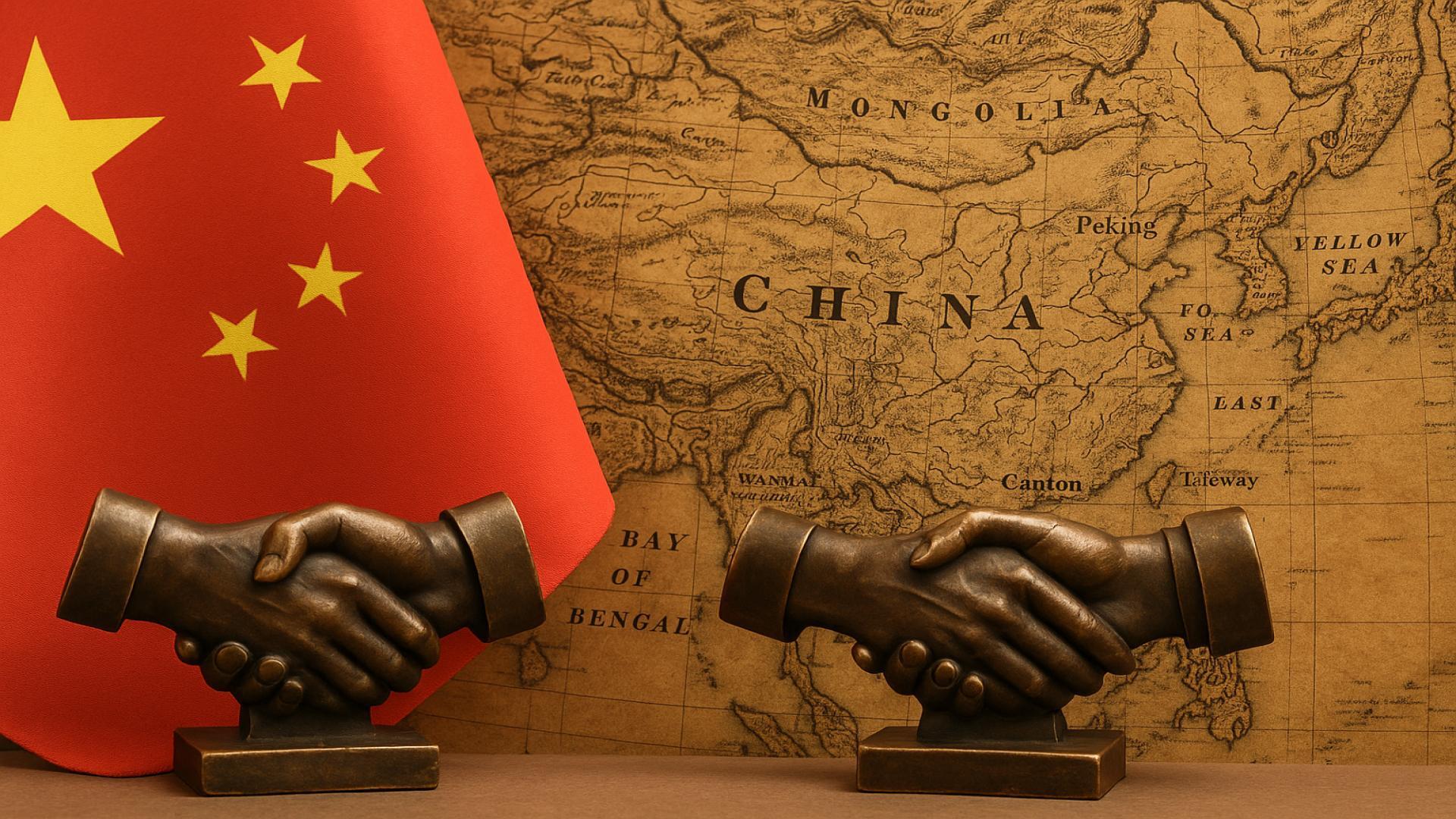
14 Historical Wounds That Continue to Shape China’s Foreign Policy

0
70

14 Historical Wounds That Continue to Shape China’s Foreign Policy - History Collection

2. The Opium Wars

14 Historical Wounds That Continue to Shape China’s Foreign Policy
British warships and diplomats force China into unequal treaties during the Opium Wars, reshaping history.

In the mid-19th century, Britain’s military interventions compelled China to accept opium imports, leading to significant social and economic upheaval. The First Opium War (1839-1842) and the Second Opium War (1856-1860) resulted in China’s defeat and the signing of unequal treaties, including the Treaty of Nanking and the Convention of Peking. These conflicts underscore a powerful narrative about foreign exploitation and laid the foundation for lingering distrust of Western intentions. For more details, refer to the Britannica article on the Opium Wars (britannica.com).

3. The Unequal Treaties

14 Historical Wounds That Continue to Shape China’s Foreign Policy
Western powers force China into unequal treaties, ceding territory and imposing extraterritorial rights.

Following China’s defeats in the Opium Wars, Western powers imposed a series of “unequal treaties” that severely compromised China’s sovereignty. The Treaty of Nanjing (1842) compelled China to cede Hong Kong to Britain and open five ports to foreign trade. Subsequent agreements, such as the Treaty of the Bogue (1843) and the Treaty of Wanghia (1844), granted extraterritorial rights to foreign nationals and imposed unfavorable trade terms. These humiliations are frequently referenced in political discourse, emphasizing the need to avoid future subjugation. For a deeper analysis, see the Encyclopedia Britannica article on Unequal Treaties (britannica.com).

4. The Loss of Hong Kong

14 Historical Wounds That Continue to Shape China’s Foreign Policy
Hong Kong’s colonial legacy fuels ongoing debates over Chinese sovereignty and national unity today.

Hong Kong was ceded to Britain in 1842 and later returned in 1997, but its colonial past still shapes Chinese concerns over sovereignty and unity. Issues arising from Hong Kong’s special status often resonate as reminders of past vulnerabilities. For a detailed account of Hong Kong’s history and its return to China, see The Guardian’s article on the ‘fragrant harbour’ that became Britain’s colonial prize (theguardian.com).

5. The Annexation of Taiwan by Japan

14 Historical Wounds That Continue to Shape China’s Foreign Policy
Taiwan’s cession to Japan in 1895 remains central to cross-strait identity and policy debates.

After the First Sino-Japanese War (1894-1895), China ceded Taiwan to Japan under the Treaty of Shimonoseki. The island’s enduring separation is a symbol of national fragmentation and a rallying point in present-day cross-straits policy. For a detailed account of Taiwan’s history and its annexation by Japan, refer to the Smithsonian Magazine article on how Taiwan became Chinese (en.wikipedia.org).

6. The Fall of the Qing Dynasty

14 Historical Wounds That Continue to Shape China’s Foreign Policy
Image Source: Pexels.

The collapse of the Qing Dynasty in 1912 marked the end of over two millennia of imperial rule in China. This sudden transition led to political fragmentation, with rival factions carving out territories and establishing competing governments. (Asia Society). The ensuing chaos and warlordism underscored the necessity for strong central authority and unity, lessons that continue to influence Chinese policymakers today.

7. Japanese Invasion and Occupation

14 Historical Wounds That Continue to Shape China’s Foreign Policy
Japanese occupation of China leaves lasting scars, shaping modern diplomatic tensions and historical memory.

Japan’s brutal invasion and occupation during the 1930s and 1940s resulted in millions of Chinese deaths, most notably during events like the Nanjing Massacre. The legacy of this era informs a vigilant, sometimes tense stance toward Japan in modern diplomacy. It remains a point of contention because many in Japan refuse to acknowledge their responsibility (ushmm.org).

8. The Nanjing Massacre

14 Historical Wounds That Continue to Shape China’s Foreign Policy
Image Source: Pexels.

Also known as the Rape of Nanjing, this atrocity committed by Japanese troops in 1937 remains a raw wound, impacting collective memory and bilateral relations. Calls for acknowledgment and apology persist to this day. For more coverage, see the BBC article on the Nanjing Massacre (bbc.com).

9. The Carving of Spheres of Influence

14 Historical Wounds That Continue to Shape China’s Foreign Policy
Foreign powers partition China into spheres of influence, fueling enduring concerns over sovereignty.

Throughout the 19th and early 20th centuries, foreign powers like Britain, France, Russia, and Germany carved ‘spheres of influence’ within China, violating its territorial integrity. This legacy shapes China’s sensitivity to perceived encroachment today. For more information, refer to the Wikipedia article on Spheres of Influence (Wikipedia.org).

10. The Korean War

14 Historical Wounds That Continue to Shape China’s Foreign Policy
Chinese troops cross the Yalu River, entering the Korean War to counter perceived border threats.

Although not directly victimized, China’s intervention in the Korean War (1950-1953) was prompted by perceived foreign threats at its border. The approach of United Nations forces toward the Yalu River, which forms the border between China and North Korea, was viewed as a significant security risk. In response, China deployed the People’s Volunteer Army to support North Korean forces, aiming to prevent the establishment of a pro-Western government on its doorstep. This intervention reinforced China’s doctrine that regional security necessitates a strong and active role. The war’s legacy continues to influence China’s security policies, emphasizing the importance of safeguarding its borders and maintaining regional stability. For more information, see the History.com article on the Korean War (worldofhistory).

11. The Sino-Indian War

14 Historical Wounds That Continue to Shape China’s Foreign Policy
Chinese troops patrol rugged Himalayan terrain, underscoring ongoing border security concerns since the 1962 conflict.

The 1962 armed conflict with India over disputed Himalayan territory left China wary of its southwestern border and cautious about foreign alliances perceived as containment. Border security remains a pillar of policy. For a detailed account, see the Britannica article on the Sino-Indian War (britannica.com).

12. Interventions in Tibet and Xinjiang

14 Historical Wounds That Continue to Shape China’s Foreign Policy
Image Source: Pexels

Repeated foreign interventions and perceived encouragement of separatist movements in Tibet and Xinjiang have solidified Beijing’s resolve to maintain tight control over these regions, equating territorial unity with national survival. In Tibet, the Chinese government has implemented policies aimed at assimilating the Tibetan population, including the promotion of Mandarin Chinese and the relocation of Han Chinese settlers into the region. In Xinjiang, authorities have conducted mass detentions and surveillance of Uyghur Muslims, actions that have been widely criticized by international human rights organizations. These measures underscore China’s commitment to preserving its territorial integrity and suppressing separatist sentiments. For further detail, visit the Council on Foreign Relations’ backgrounder on China’s repression of Uyghurs in Xinjiang (cfr.org).

13. The Impact of Foreign Missionaries

14 Historical Wounds That Continue to Shape China’s Foreign Policy
Foreign missionaries in late Qing China fueled distrust of foreign influence, shaping modern NGO policies.

During the late Qing period, foreign missionaries were often linked to colonial ambitions, sometimes leading to violence and deepening the distrust of foreign intervention in domestic affairs. These suspicions inform modern policy on NGOs. For context, see the article “How China’s Christians Cope with Crackdowns” in The Diplomat. (thediplomat.com).

14. The May Fourth Movement

14 Historical Wounds That Continue to Shape China’s Foreign Policy
A crowd of passionate students gather at Peking University, waving Chinese flags in a historic protest.

The May Fourth Movement of 1919 arose from China’s unjust treatment during the negotiations at the Paris Peace Conference, igniting nationalist fervor and calls for modernization. This spirit continues to be reflected today in a sense of national pride and in resistance to condescension from the outside world. (britannica.com).

Suche
Kategorien
Mehr lesen
Science
What Can Your Neck Size Tell You About Your Health?
What Can Your Neck Size Tell You About Your Health?What’s the circumference of your neck? No...
Von test Blogger3 2025-09-26 13:00:12 0 1KB
Spiele
FTL and Factorio style colony sim from Paradox is totally free to play right now
FTL and Factorio style colony sim from Paradox is totally free to play right now As an Amazon...
Von Test Blogger6 2025-06-12 20:00:18 0 2KB
Geschichte
Dermatome Device Market Companies: Growth, Share, Value, Size, and Insights
"Executive Summary Dermatome Device Market: Share, Size & Strategic Insights Dermatome...
Von Aryan Mhatre 2025-10-14 08:33:01 0 2KB
Technology
The biggest AI announcements (and high drama) of 2025 so far
The biggest AI announcements and high drama of 2025 (so far)...
Von Test Blogger7 2025-06-29 10:00:15 0 2KB
Home & Garden
Don’t Toss That Excess Basil—Turn It into Homemade Herb Salt Instead
Got Extra Basil from Your Garden? Make This Easy Herb Salt Instead of Tossing It If your garden...
Von Test Blogger9 2025-07-22 13:00:32 0 2KB