


 PUBLISHED
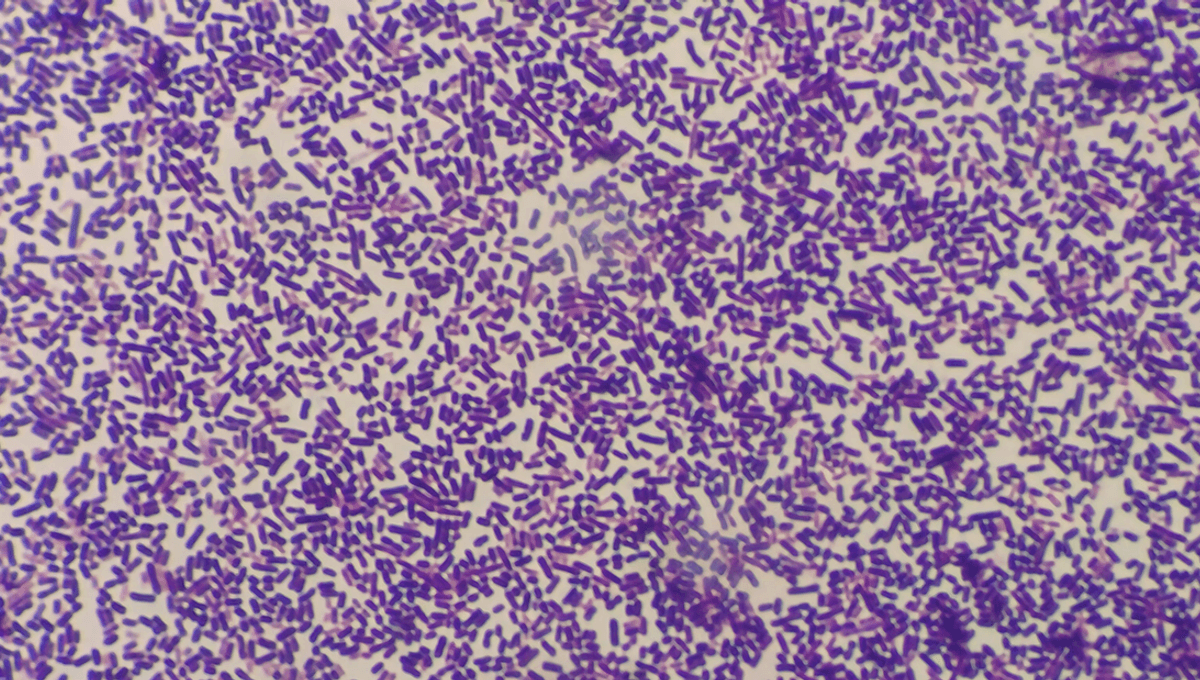
Evolution can be pretty tricky to study, not just due to the complexity of the processes involved, but also because of the enormous timescales involved. Major changes to a species can take place over thousands or even millions of years. With that constraint, you might think that evolution – or the process by which organisms are transformed over many generations through natural selection, genetic variations such as mutations, and adaptation – cannot really be studied in the laboratory. But you are not Richard Lenski, the man behind the longest-running evolution experiment in human history.
The rest of this article is behind a paywall. Please sign in or subscribe to access the full content. On February 24, 1988, Lenski began the "Long-Term Evolution Experiment" (LTTE) by inoculating 12 flasks with colonies of the same strain of non-pathogenic Escherichia coli (E. coli) bacteria. The experiment requires a lot of attention. Every day since the first – bar a short break when the experiment was frozen due to limitations caused by the COVID-19 pandemic – 1 percent of the latest descendants of that ancestor strain are taken from the previous, and transferred into a new dilute sugary solution and allowed to grow. "The bacteria easily grow 100-fold in a few hours. However, the glucose then runs out once they’ve grown 100-fold. The cells then sit there until the next day, when we again transfer 1% of each population into fresh medium," Lenski explains on the LTEE website. "Bacteria reproduce by binary fission: one cell grows and, after it has doubled in size, divides to produce two daughter cells; the two daughter cells then replicate to make four cells; and so on. As it turns out, the 100-fold growth represents about 6 and 2/3 doublings, or generations, each day." After 500 generations, the E. coli that are not to be used in the following day's experiments are protected with a cryoprotectant before being frozen. The advantage of using E. coli, as well as factors such as its speedy growth rate and rapid mutations, is that when frozen, it can be thawed out and revived for further study. "These samples allow 'time travel' in a scientifically meaningful way," Lenski continued. "We can, for example, directly compare the current LTEE bacteria with their ancestors. We can even compete the evolved lines against their ancestors, and thereby quantify the results of adaptation by natural selection—the same process that Darwin realized would 'fit' organisms to their environment." Using this setup, the team has attempted to study questions that we might not be able to answer simply by observing nature. Questions like whether adaptation by natural selection is always slow and gradual, or whether there are periods of slow or rapid change, and whether (in an unchanging environment) the fitness of organisms improves indefinitely, or whether there is some peak to their fitness beyond which they cannot surpass. Other questions can be probed by looking at the differences between the 12 different lineages, such as whether some populations will find better solutions than others, and whether they will evolve via similar paths or different ones despite being placed in identical environments. The experiment is a long-term one, with results released intermittently as they compare populations to each other, and to the frozen and revived ancestor colony. There have been over 100 papers on the experiment, with some interesting and often technical findings. But big headline takeaways include that even in a constant environment, fitness appears to increase "forever", though the rate of this increase slows over time. "Looking at the fitness trajectory for one population over the first 2000 generations, we see that fitness increased by~ 30%. The rise appears to involve three discrete steps of ~ 10% each. This pattern closely matches the dynamic one expects in a large, initially homogeneous asexual population," Lenski explained in the ISME Journal. "Consider a mutation that confers a 10% benefit. Assuming it is not lost to random genetic drift while it is rare, then it takes ~ 250 generations for that mutation to become the majority. For most of that time the mutant remains a tiny minority because, assuming a constant growth-rate differential, the ratio of the mutant to its progenitor changes exponentially. Therefore, the fitness trajectory, at least in the early generations, is dominated by sequential selective sweeps of a few mutations with large beneficial effects. Other beneficial mutations occur as well, but they are outcompeted by the most beneficial ones, a phenomenon called clonal interference." The team has also found interesting differences in the spontaneous mutation rate between different lines of the E. coli colonies. "Six of the 12 LTEE populations evolved to be so-called 'hypermutators' by 50,000 generations. The proximate (i.e., biochemical) causes of these changes are mutations in genes whose products are involved in DNA repair or the degradation of molecules that cause damage to DNA," Lenski explains on the LTEE website. "However, the E. coli strain that was the ancestor to the LTEE has a low point mutation rate, which we’ve estimated as ~10-10 per base-pair per generation. Given the genome contains ~5 x 10⁶ base-pairs, this rate translates to only ~0.0005 point mutations per genome per generation. Therefore, even a 100-fold increase means that most hypermutator progeny are mutation-free. Considering that only a fraction of genomic sites are subject to mutations that would be deleterious in the LTEE environment, we infer that the short-term cost to a 100-fold hypermutator is ~1%." The biggest takeaway, at least in today's odd world, may be the simplest: an unambiguous demonstration of adaptation by natural selection, right there in the lab. "Although no one (excepting cranks, zealots, and the uninformed) doubts the fact that adaptation by natural selection occurs, the LTEE provides a simple and compelling demonstration of its power and efficacy," Lenski adds. Though it is not the longest evolution experiment in terms of time, it is certainly the longest in terms of sheer number of generations. In 2024, the experiment surpassed 80,000 generations, with the strains achieving all-time peak fitness. There are no plans to draw the experiment to a close.



 English
 French
 Spanish
 Portuguese
 Deutsch
 Turkish
 Dutch
Dutch
 Italiano
 Russian
 Romaian
 Portuguese (Brazil)
 Greek
Greek