


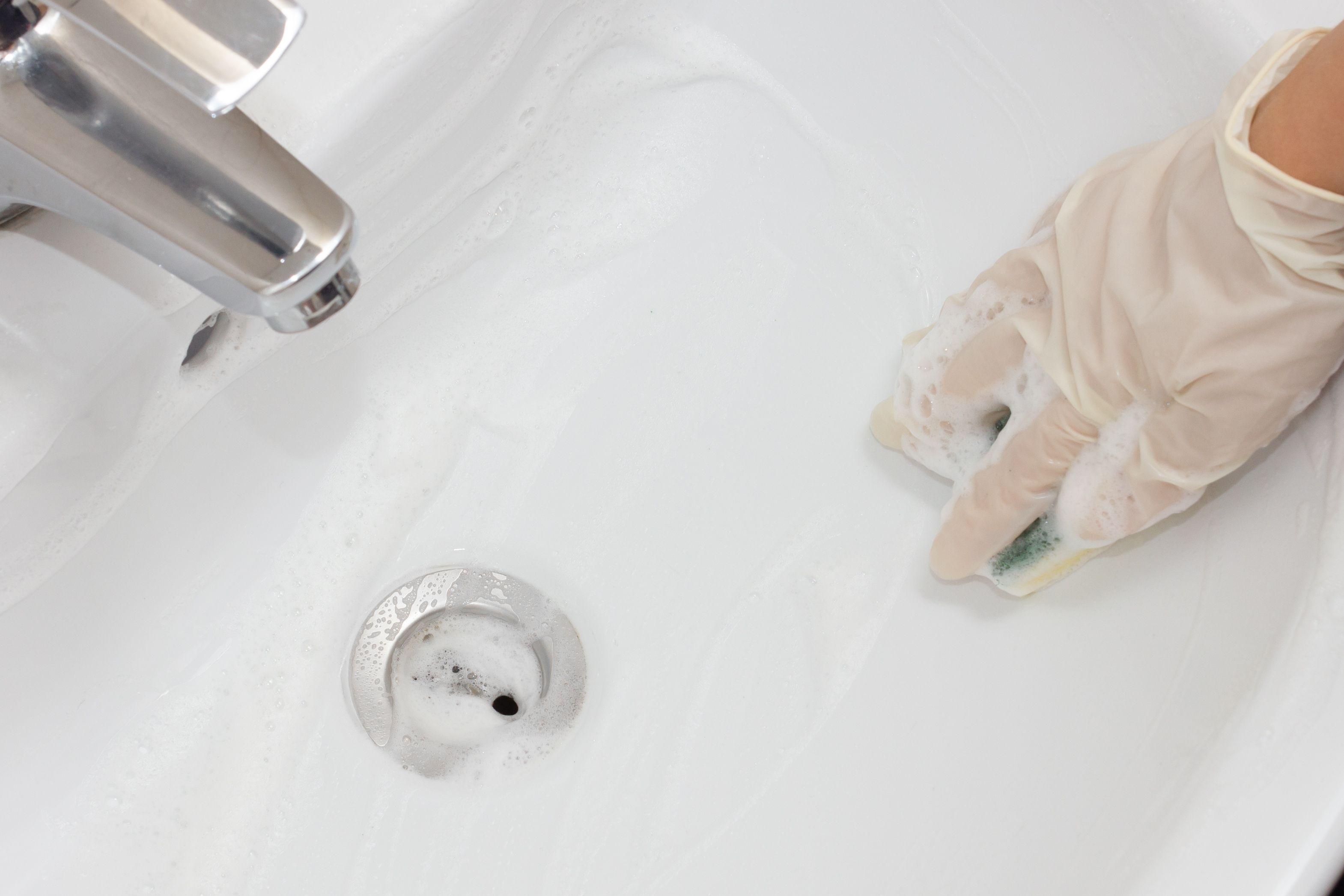
If your home is prone to hard water (water that has a high mineral content, such as magnesium and calcium), you've likely experienced the cleaning challenges that come with it. Hard water tends to leave stains anywhere it dries, especially if the area isn't cleaned often or is consistently exposed to water. The water can leave behind layers of soap scum or limescale, both of which appear as white, chalky stains on drains, faucets, showers, toilets, and more. Hard water can also contain high levels of iron, leaving unsightly rust stains. Learn how to get rid of unsightly hard water stains for sparkling surfaces and properly functioning appliances.
Products to Use for Hard Water Stains
Mary Gagliardi (aka “Dr. Laundry”), Clorox's in-house scientist and cleaning expert, says you should always reach for a cleaner with a low pH when cleaning hard water stains. Low-pH products don't contain sodium hypochlorite bleach; bleach-containing products are formulated at a high pH.
Jennifer Cosco, founder of MomRemedy, advises using hydrogen peroxide to battle hard water stains. She says hydrogen peroxide has mildly acidic properties that can help dissolve and break down hard water's mineral deposits. Once the deposits are broken down, the stains become easier to clean and wipe away.
Baking soda and white vinegar also make great low-pH cleansers. Mix the baking soda with water or vinegar to form a paste for scrubbing dried-on stains. Vinegar, by itself or diluted with equal parts water, is a powerful cleaning agent, especially for appliances like dishwashers and washing machines.
Stacey Brandford
How to Remove Hard Water Stains in the Bathroom
Your bathroom's toilet, shower, bathtub, and sink are all prone to hard water stains. Cosco recommends creating your own cleaning product by mixing equal parts hydrogen peroxide and water in a bowl or a spray bottle.
Start by applying the solution directly to the hard water stain on glass, tile, or faucets. Let the solution sit on the stain for a few minutes to allow the hydrogen peroxide to penetrate and break down the mineral deposits. Then, using a scrub brush, sponge, or cloth, gently scrub the stained areas. The combination of hydrogen peroxide and scrubbing helps to lift and remove hard water stains.
For toilets, Gagliardi recommends the Clorox Toilet Bowl Cleaner—Lime & Rust Destroyer. It has a bleach-free formula that cleans hard water stains and sanitizes toilets. Flush the toilet before dispensing the toilet bowl cleaner and use the specially shaped bottle to squirt the product under the rim and above the water line. Use a toilet brush to scrub the entire bowl surface, then let the product stand for 5 minutes before flushing.
Related
How to Remove Hard Water Stains in the Kitchen
A mix of hydrogen peroxide and water or any other low-pH cleaning product should also do the trick on your kitchen sinks and faucets. Be sure to let the mixture sit for at least 15 minutes to break down any buildup before scrubbing or wiping. Hard water buildup might also be responsible for your kitchen faucet not spraying water properly. To remedy, fill a plastic bag with water and vinegar, then tie a rubber band around the faucet head. Let it soak for 30 minutes to an hour to loosen any gunk.
CARSON DOWNING
How to Remove Hard Water Buildup from Appliances
If you're noticing cloudy dishes or stiff clothes, you might need to give your appliances a good clean.
To clean your dishwasher of hard water buildup, place a bowl of white vinegar on the top rack and run the hottest cycle. Run another cycle with a dishwasher cleaning product, such as Affresh Dishwasher Cleaner Tablets.
To refresh your washing machine, pour a few cups of white vinegar into the tub and run the hottest cycle. There are a few other things you can do to improve your laundry cycles if you have hard water, including installing a water softener.
If you have other appliances that run water often, like coffee makers, they may need to be cleaned or descaled due to their constant exposure to the minerals in the hard water. For a coffee or espresso maker, run a mixture of half water and half white vinegar through the machine like you normally would with water. Run a normal cycle with just water afterward to ensure all vinegar is rinsed out.

 English
 French
 Spanish
 Portuguese
 Deutsch
 Turkish
 Dutch
Dutch
 Italiano
 Russian
 Romaian
 Portuguese (Brazil)
 Greek
Greek