


The First Human Ancestor To Leave Africa Wasn’t Who We Thought It Was
The First Human Ancestor To Leave Africa Wasn’t Who We Thought It Was
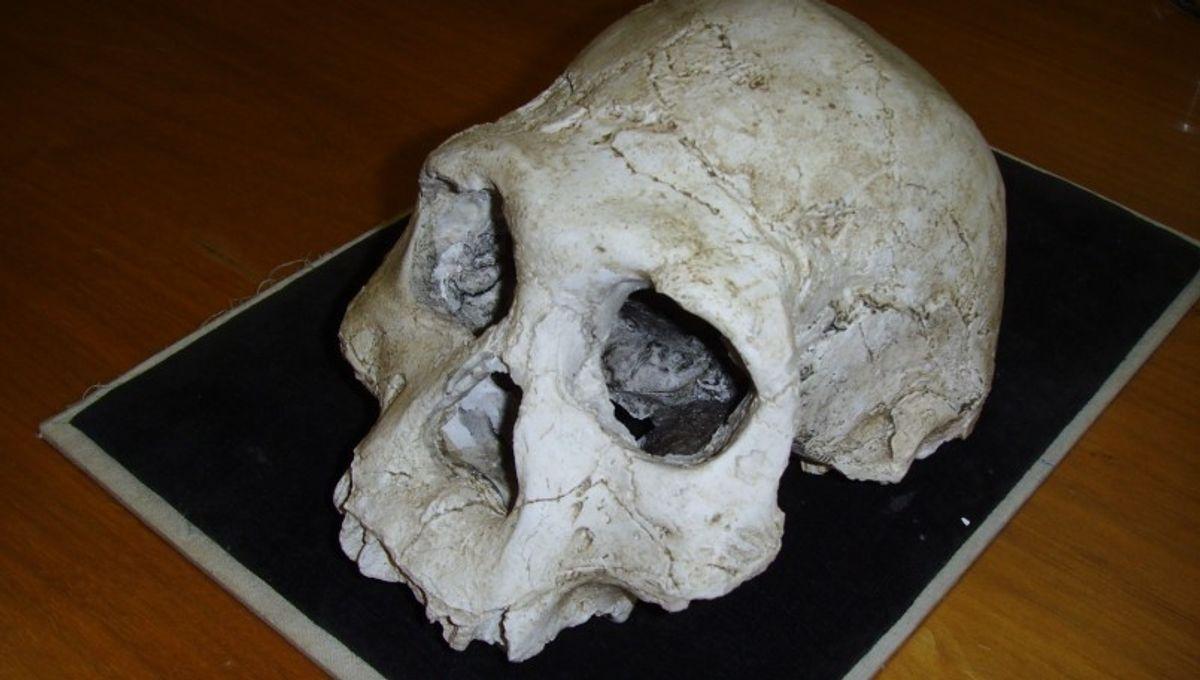
The oldest hominin fossils outside of Africa hail from Dmanisi in Georgia, yet the debate over which human species these ancient remains belong to is far from settled. Dated to around 1.85 million years old, the collection of prehistoric skulls has been officially classified as Homo georgicus, although new research suggests that the assemblage may in fact represent more than one species – thus rewriting the story of our ancestors’ first foray out of Africa.
The rest of this article is behind a paywall. Please sign in or subscribe to access the full content. Initially discovered in 1991, Homo georgicus is typically considered to be an archaic form of Homo erectus, supporting the idea that this was the first human species to leave the African continent. Puzzlingly, however, the various specimens found at the site display a rather large degree of variation in both size and shape, with some appearing to dwarf others. This diversity has been explained as sexual dimorphism, whereby males and females differ in their morphology. However, not all scientists accept this reasoning, leading to the suspicion that the Dmanisi assemblage may contain multiple different human ancestors, who all lived alongside each other in Eurasia more than 1.8 million years ago. To clear up the mystery, the authors of a new study analyzed the dental characteristics of three of the Dmanisi specimens, comparing these with 583 fossil teeth from multiple ancient hominids. Ultimately, they determined that the assemblage does indeed consist of two separate human species, which they identify as Homo georgicus and Homo caucasi. The bigger question, though, is whether these two hominids descended from the first Homo erectus population to leave Africa, or from an entirely different ancestor that may have set foot outside of the continent at an even earlier date. Intriguingly, results showed that the dental morphology of Homo georgicus bears strong similarities with the Australopiths, which predate the Homo lineage and are best known for the world-renowned fossil skeleton dubbed Lucy. So, did Lucy’s kind actually leave Africa before the very first truly human species even existed? Study author Victor Neri thinks not, and told ILFScience that the team’s findings “do not suggest a priori that australopiths left Africa before genus Homo, despite some authors arguing in favor of this hypothesis.” “I believe the results indicate that the first Homo specimens to leave Africa were hominins intermediate between Homo habilis and Homo erectus, and also showing affinities with australopith ancestors, at least with respect to crown area,” he says. In their paper, the researchers argue that stone tools from Jordan and Romania that predate the emergence of Homo erectus support the idea that the first human to leave Africa was in fact related to the older Homo habilis. They therefore suggest that the two species found at Dmanisi probably evolved from different Homo habilis populations that lived in different regions of Eurasia over a long period, thus adapting to different environmental conditions before coming together and coexisting in Georgia. “This possibility challenges the prevailing model of Homo erectus migration out of Africa,” they write, suggesting instead that the first wave of humans to conquer Eurasia may have undergone multiple speciation events as they progressed, thus leaving a mosaic of different hominids across the region. The study has been published in the journal PLOS ONE.

 English
 Arabic
 French
 Spanish
 Portuguese
 Deutsch
 Turkish
 Dutch
Dutch
 Italiano
 Russian
 Romaian
 Greek
Greek