


What Did Carl Sagan Actually Mean When He Said "We Are All Made Of Star Stuff"?
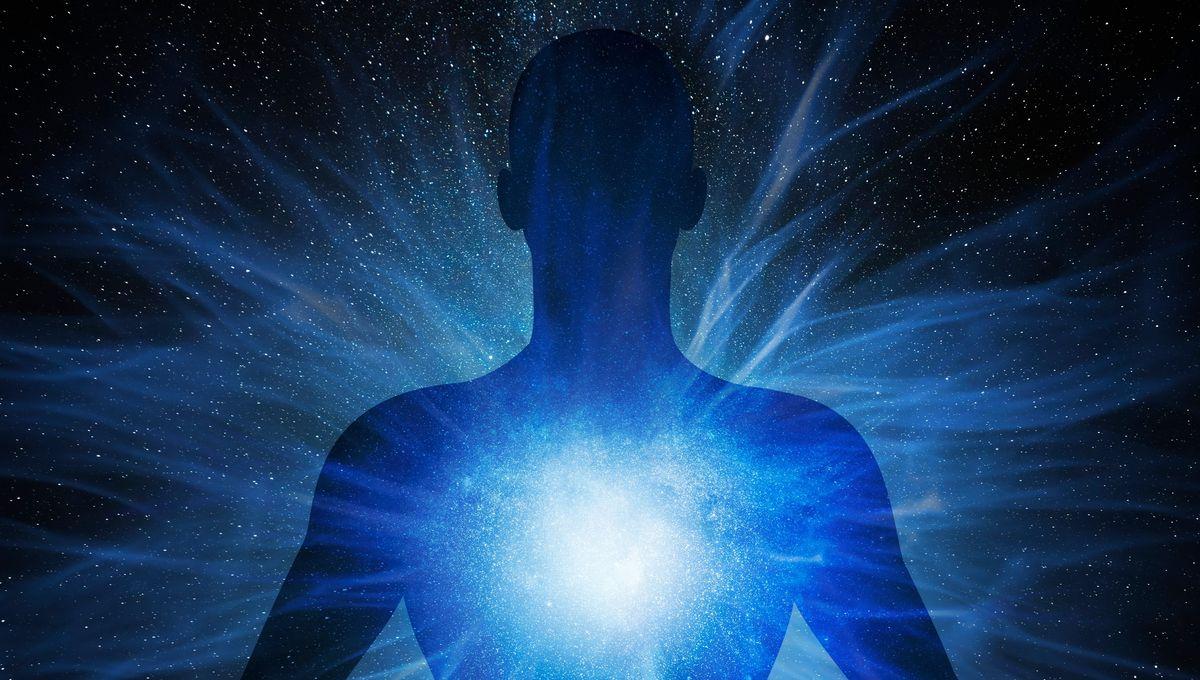
What Did Carl Sagan Actually Mean When He Said "We Are All Made Of Star Stuff"?
“The cosmos is within us. We are made of star stuff. We are a way for the universe to know itself,” Carl Sagan famously said in the 1980 TV series Cosmos. Forty-five years later, the quote has not lost its incredible impact on how profound our curiosity about the universe and our place in it is. In those four-and-a-half decades, and even the 30 years since Sagan's death in 1996, we have learned much more about what exists in the cosmos, and how that relates to us. Still, the words have stood the test of time, despite the line about "star stuff" being misquoted over the years as "stardust". But, what exactly does it mean that we are made of star stuff?
The rest of this article is behind a paywall. Please sign in or subscribe to access the full content. First, "stardust" has a very specific meaning in astronomy and sits among several sources of dust in the universe. These dust particles are not like Earth’s dust; they are often much smaller. The smallest grains are made by just a few molecules. The biggest are about 100 microns apart. Dust forms in a variety of environments in space, including stars, but stardust is only a small portion of all cosmic dust. Sagan’s "star stuff" is more correct. We say more because cosmic dust, including stardust, forms planets. From the same materials that made our planet, we were born: truly a cosmic ashes to ashes, dust to dust. However, Sagan’s words highlight the specific roles of stars in our existence. In the Big Bang, at the very beginning of the universe, only three elements were formed: hydrogen, helium, and a little bit of lithium. This process is known as nucleosynthesis, the formation of the atomic nuclei in the first intense minutes after the Big Bang. The whole visible universe was quite small. If we picture it centered to where the Sun is today, it would not stretch much further than a few dozen of the closest star systems. All the matter now present in the visible universe was there, just not as it is today. What made the difference is the stars. The energy that stars release into the universe is created at their core. Under incredible temperatures and pressures, stars fuse hydrogen into helium. Once they run out of hydrogen, with no energy pushing from the inside, the star falls inwards. The process increases temperature and pressure in the core, and the stars begin to fuse helium to create carbon and nitrogen. This process repeats for the larger stars, so that they can end up producing every element all the way to iron. Beyond iron, you do not get energy out of fusion. Heavier elements are produced in a variety of ways from supernova explosions, either the death of a massive star or a thieving white dwarf stealing enough material to collapse and go boom. Some elements are produced in the collisions between neutron stars, a possible end result of those supernovae. All the natural elements are produced and spread across galaxies, eventually making their way to nebulae, often called "stellar nurseries" because they are where new stars and then new planets are born. In that particular crucible, all life on Earth was born. The chemical elements that make up our component molecules have been found in space (including on nearby asteroids like Bennu), but it might simply indicate that our building blocks are just common and our fundamental molecules are just easily assembled, which is why they are everywhere Ninety-nine percent of the human body requires just six elements. In order of fraction of mass, they are: oxygen, carbon, hydrogen, nitrogen, calcium, and phosphorus. Over half of our mass, 65 percent to be exact, is oxygen, followed by 18.5 percent from carbon. Hydrogen is just 9.5 percent of us by mass, even though it makes up 90 percent of all the atoms we have in our bodies. It’s just the lightest element. This means that over 90 percent of our body mass is made from chemical elements forged inside ancient stars and from stellar processes. Only hydrogen was made in the Big Bang; the carbon, the nitrogen, the oxygen, and the rest come from stars fusing elements, evolving, exploding, and colliding. Take iodine, for example. Neutron stars have to collide in spectacular fashion to come into being. That process also produces gold and platinum and many other elements, but they are less important for our very lives. Sagan was not wrong in using "star stuff", but our understanding of the processes that happen in the universe has massively improved since 1980. If we were to be truly nitpickers, we could say that we are predominantly mostly made of star stuff and hydrogen from the first seconds after the Big Bang, but otherwise, he was spot on. Our planet and every living creature on it are the product of 13.8 billion years of cosmic processes: from the quantum interactions in the instants following the Big Bang to incredible supernovae, the formation of cosmic dust in cold nebulae, to the collisions between stellar remnants. We are a sum greater than its parts, and its parts are all the processes happening in the universe, from the smallest to the cataclysmic. Humans are the very powers of the universe made flesh, and that is pretty neat!To Make Humans, You Need Stars
Several Cups Of Oxygen And A Dash Of Salt

 English
 Arabic
 French
 Portuguese
 Deutsch
 Turkish
 Dutch
Dutch
 Italiano
 Russian
 Romaian
 Portuguese (Brazil)
 Greek
Greek