


There are few things more pleasing to your average mathematician than when a result surprises you. Take e, for example – a transcendentally irrational number equal to a little more than 2.7 – and raise it to the power of π multiplied by the imaginary unit i. Add one to your total, and you get… zero. Why should that be the case? It’s baffling – and for that, it’s truly beautiful.
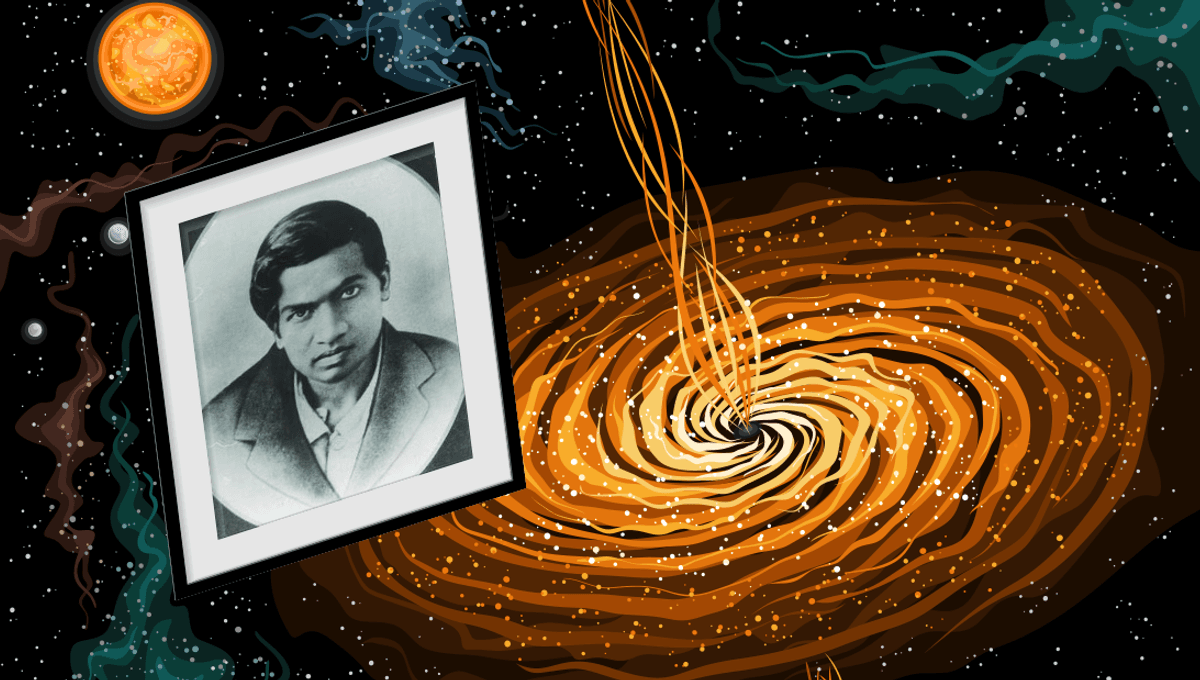
The rest of this article is behind a paywall. Please sign in or subscribe to access the full content. And if anybody personified this surprising mathematical beauty, it would have to be Srinivasa Ramanujan. He’s now remembered as one of the most prodigious minds known to math, making substantial contributions to analytic number theory and leaving behind reams of revolutionary results in unpublished notebooks after his death. His ideas would go on to influence areas of math and science he could never have heard of in his own lifetime; often, as a new paper from a pair of researchers at the Indian Institute of Science shows, they turn up totally unexpectedly in already-known phenomena, and it’s left to us to figure out why. But back in the early 1910s, when he first started reaching out to respected English mathematicians with some of his results, he couldn’t have been more unexpected. A miserably poor man from a tiny village southwest of Chennai in India, Ramanujan had no university degree or formal mathematical training – which might be why the first couple of mathematicians he approached with his ideas assumed he was little more than a crank. But then he sent a letter to G.H. Hardy – cricketer, philosopher, and one of the leading mathematicians in all of England – and finally, he got a response. “I was exceedingly interested by your letter and by the theorems which you state,” Hardy replied on February 8, 1913. “Your results seem to me to fall into roughly three classes: (1) there are a number of results that are already known, or easily deducible from known theorems; (2) there are results which, so far as I know, are new and interesting, but interesting rather from their curiosity and apparent difficulty than their importance; (3) there are results which appear to be new and important.” “Important” may have been, if anything, underselling it. Hardy would later write that “a single look at [the results] is enough to show that they could only be written down by a mathematician of the highest class.” He compared Ramanujan to Euler and Jacobi, and said that his results “must be true because, if they were not true, no one would have had the imagination to invent them.” “Here was a man who could work out modular equations, and theorems of complex multiplication, to orders unheard of,” Hardy would later write in Ramanujan’s 1920 obituary; “whose mastery of continued fractions was, on the formal side at any rate, beyond that of any mathematician in the world, who had found for himself the functional equation of the Zeta-function, and the dominant terms of many of the most famous problems in the analytic theory of numbers.” Ramanujan, even then, had found results whose importance would not be fully appreciated for decades: identities that would open new mathematical worlds and close monstrous conjectures. He found ways of calculating pi that, while obviously correct and incredibly fast, seemed to have arisen more or less from divine inspiration – but which, now, have been shown to reflect some of the deepest truths in modern physics. “[In] any piece of beautiful mathematics, you almost always find that there is a physical system which actually mirrors the mathematics,” said Faizan Bhat, first author of the new paper and former PhD student at the Indian Institute of Science, in a statement. “Ramanujan’s motivation might have been very mathematical, but without his knowledge, he was also studying black holes, turbulence, percolation, all sorts of things.” There are many reasons to be a fan of pi. It’s got strong geometry cred; it’s both eminently calculable and frustratingly not; and, of course, it puts you in mind of a delicious dessert. But in the modern world, we like pi because it means we get to show off. Specifically, we use pi to boast about how powerful our computers are: calculating the constant to ever-higher degrees of accuracy is “a computational challenge,” David Harvey, an associate professor at the University of New South Wales, told The Guardian in 2021. “There’s plenty of other interesting constants in mathematics: if you’re into chaos theory there’s Feigenbaum constants, if you’re into analytic number theory there’s Euler’s gamma constant,” he pointed out. “There’s lots of other numbers you could try to calculate: e, the natural logarithm base, you could calculate the square root of 2.” But “you do pi because everyone else has been doing pi,” he said. “That’s the particular mountain everyone’s decided to climb.” The world record for how many digits pi can be calculated to is not one that stands for very long, these days – it’s been broken four times since the beginning of 2024 alone – but the method for doing it is more hardy. Since 2010, every breakthrough has come thanks to y-cruncher, a one-time high school project by Alexander Yee – and that, in turn, has owed its success to Ramanujan. “Scientists have computed pi up to 200 trillion digits using an algorithm called the Chudnovsky algorithm,” explained Aninda Sinha, Professor at CHEP and senior author of the new study. “These algorithms are actually based on Ramanujan’s work.” That Ramanujan could have discovered these formulae at all, given his (lack of) formal mathematical background, is surprising enough – but “we wanted to see whether the starting point of his formulas fit naturally into some physics,” Sinha said. “In other words, is there a physical world where Ramanujan’s mathematics appears on its own?” As with so many of Ramanujan’s results before this one, the answer turned out to be “yes”. Specifically, the formulas turn up in so-called conformal field theory – an area of theoretical physics that combines quantum mechanics, field theory, and relativity to describe phenomena like string theory and condensed matter physics. It’s a bit of physics that didn’t even exist for more than 60 years after Ramanujan’s death – and yet, somehow, he figured them out. Alone. “We were simply fascinated by the way a genius working in early 20th century India, with almost no contact with modern physics, anticipated structures that are now central to our understanding of the universe,” Sinha said. Ramanujan was evidently a genius – but his untutored approach needed training. Before long, he and Hardy were exchanging letters regularly – and it was ever-more evident to Hardy that Ramanujan’s raw, instinctive talent needed refining and polishing. “The limitations of his knowledge were as startling as its profundity,” Hardy recalled in his obituary. Despite his accomplishments, Ramanujan “had never heard of a doubly periodic function or of Cauchy’s theorem, and had, indeed, but the vaguest idea of what a function of a complex variable was.” “[These] were things of which it was impossible that he should remain in ignorance,” Hardy wrote. “It was impossible to allow him to go through life supposing that all the zeroes of the Zeta-function were real. So I had to try to teach him.” He sent out an invitation to Cambridge via a finagled scholarship to the University of Madras, and – after some soul-searching over the morals of traveling overseas as a Brahmin – Ramanujan came to England. It was a move that would change the mathematical world. “In 1916 Ramanujan got his BA [the equivalent of a modern PhD] from Cambridge and his research went from strength to strength,” wrote Béla Bollobás, Professor of Pure Mathematics at the University of Cambridge, in a 2016 article for The Conversation. “He published one excellent paper after another, with a great deal of Hardy’s help in the proofs and presentation. They also collaborated on several great projects, and published wonderful joint papers.” But personally, it was probably a mistake. Ramanujan suffered from ill health almost immediately, thanks in part to the UK’s 1914 entrance into World War One, partly due to cultural misunderstandings, and partly due to the sometimes institutional, sometimes naked racism of the England around him. He attempted suicide – and was promptly arrested for doing so – and spent years confined to sanatoria for tuberculosis and vitamin deficiencies. “By early 1919 Ramanujan seemed to have recovered sufficiently, and decided to travel back to India,” Bollobás wrote. A year later, he wrote to Hardy once again: the letter “contained some examples of his latest discovery, mock theta functions, which have turned out to be very important.” “A main conjecture about them was solved 80 years later, and these functions are now seen as interesting examples of a much larger class of mock modular forms in mathematics,” he explained, “which have applications to elliptic curves, Borcherds products, Eichler cohomology and Galois representations – and the nature of black holes.” Sadly, his recovery was not to last. Ramanujan was only 32 when, in April 1920, he died from the ill health that had plagued him for so long. It would take decades for his results, including those in his famous “Lost Notebook”, to be fully understood – a few conjectures bearing his name are still open – and, as this new work makes clear, fresh slants on his ideas are constantly being found. “I had to try to teach him, and in a measure I succeeded,” Hardy wrote. “Though obviously I learnt from him much more than he learnt from me.” “He would probably have been a greater mathematician if he had been caught and tamed a little in his youth; he would have discovered more that was new, and that, no doubt, of greater importance,” he concluded. “On the other hand, he would have been less of a Ramanujan […] and the loss might have been greater than the gain.” The study is published in Physical Review Letters. The story of a nobody
A modern man
A tragic end

 English
 Arabic
 French
 Spanish
 Portuguese
 Deutsch
 Turkish
 Dutch
Dutch
 Italiano
 Romaian
 Portuguese (Brazil)
 Greek
Greek