


3200 Phaethon: Parent Body Of Geminids Meteor Shower Is One Of The Strangest Objects We Know Of
3200 Phaethon: Parent Body Of Geminids Meteor Shower Is One Of The Strangest Objects We Know Of
This weekend, we will see the peak of the Geminids meteor shower. This is one of the best of the year, with an expected peak of 150 meteors every hour. Considering that there will be only one-third of the waning Moon visible, this is a great time to go meteor hunting.
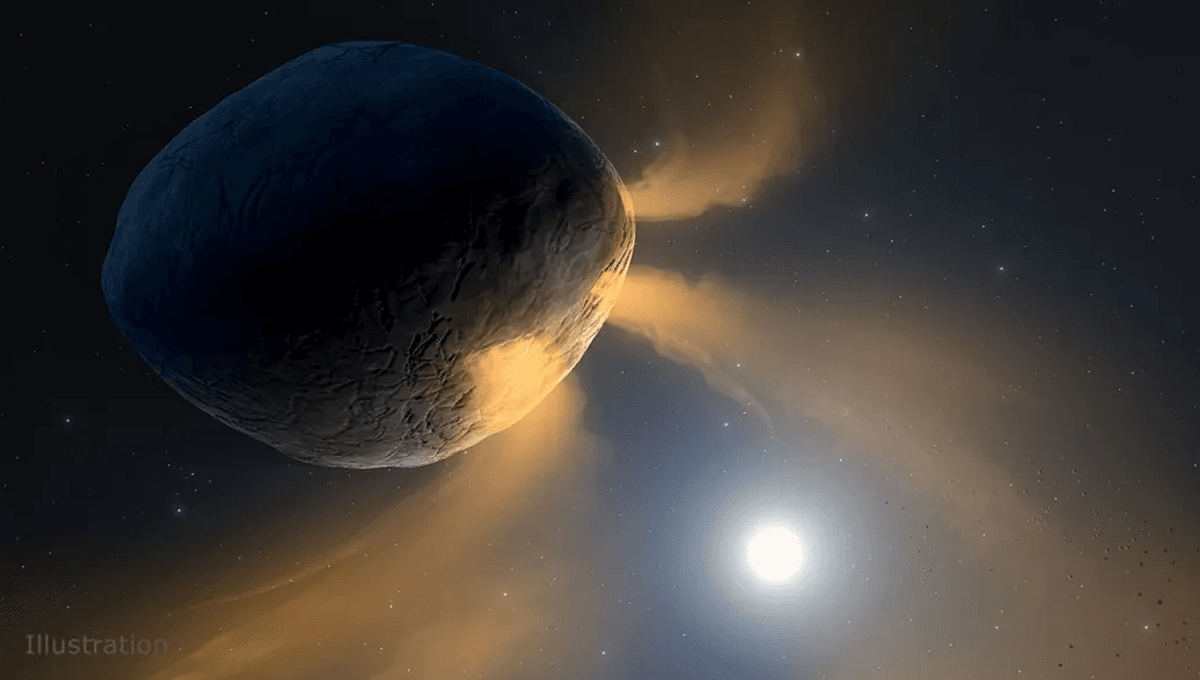
The rest of this article is behind a paywall. Please sign in or subscribe to access the full content. Behind every great meteor shower, there is a great parent body. And none is as peculiar as 3200 Phaethon: an asteroid that acts more like a comet, moves closer to the Sun than any other known, and the only one responsible for a meteor shower (although we might have accidentally added a second one when NASA’s DART mission impacted asteroid Dimorphos). Initially, it was thought that Phaethon was a dead comet. Comets are made of ice and rock, and as they approach the Sun, the ice sublimates – meaning it goes from solid to gas without becoming liquid – and it is released into space. The gas forms the coma, the fuzzy atmosphere of the comet, and the tails. It is possible that a comet runs out of ice over time, leaving behind a rocky corpse that continues to orbit the Sun. Astronomers are not sure that this is what happened to Phaethon, however. Phaethon might not be outgassing water vapor; it has been proposed that the asteroid is releasing sodium, fizzing out through cracks in its surface. That is not all; Phaethon is oddly blue, possibly due to the size of particles on its surface. In fact, it is the object in the Solar System with the highest polarization of light, meaning that sunlight reflected on it vibrates in a special direction. Phaethon also spins on its axis in just 3.6 hours, which is fast but not unheard of for an asteroid. Even its spin does something pretty rare, however – it is slowing down. The rotation of Phaethon on its axis is getting shorter by about 4 milliseconds every year. Only 11 asteroids are known to do that, and with an average diameter of over 5.8 kilometers (3.6 miles), Phaethon is by far the biggest. The bizarre space rock is named after the son of the Greek sun god Helios, and this is due to its orbit. Phaethon gets closer to the Sun than any other known named asteroid, reaching closer than Mercury and farther away than Mars. It was discovered by the Infrared Astronomical Satellite in 1983, the first asteroid to be discovered using images from a spacecraft. Phaethon is also classified as a “potentially hazardous” asteroid, and even though it does get near our planet once in a while, it presents no danger, at least within the next 400 years.

 English
 Arabic
 French
 Spanish
 Portuguese
 Deutsch
 Turkish
 Dutch
Dutch
 Italiano
 Romaian
 Portuguese (Brazil)
 Greek
Greek