


Fabric Painted With Dye Made From Bacteria Could Protect Astronauts From Radiation On Moon

Fabric Painted With Dye Made From Bacteria Could Protect Astronauts From Radiation On Moon
Some special bacteria are helping with a project that overlaps between science and fashion, and their help will require a trip to orbit, where they will be dealing with the increased radiation that exists above the protective bubble of our atmosphere.
The rest of this article is behind a paywall. Please sign in or subscribe to access the full content. The project, which is called Pigmented Space Pioneers, aims to use the dyes produced by certain bacteria to color fabric. This would not only create biodegradable and sustainable dyes, but also fabric that can absorb and alert when it is exposed to too much radiation by simply changing color. The application for space is quite obvious. Without the protection of our planet’s magnetic field and atmosphere, astronauts are exposed to a much higher level of radiation than humans on Earth. Dosimeters exist to evaluate radiation, but a fabric would be a much simpler and more effective design to protect astronauts who may be exploring the surface of the Moon, or farther, by alerting when they have been exposed to dangerous levels. It could also provide covers for sensitive equipment. “What we’re developing is a fabric with a design that is visually interesting but is also easily readable, so that in the future it will be easy to see at a glance when the dye has faded in response to potentially dangerous radiation exposure. It’s an exciting challenge, and it’s a unique fusion of art and science,” Katie Tubbing, a fashion designer who has teamed up with scientists from the University of Glasgow on the fabric, said in a statement. The team created fabrics using six different bacteria that can create different colors: red, yellow, pink, blue, and orange. The bacteria are harmless to us, and their pigments are produced with specific protective purposes from various environmental stresses. The microbes were then injected into the fabric using specialized needles and 3D printing techniques, creating precise patterns and layers. When the bacteria die, they leave the dye behind in the fabric. Examples of the fabric painted with bacterial dyes sit beside the Spinning Around SpinnyONE satellite, which will carry it into space next year. The pigments are quite vivid, not just protective. Image Credit: University of Glasgow/Chris James “Exposure to radiation breaks up the pigments in the bacteria, while similar exposure to radiation in humans breaks our DNA. For the bacteria, that means a reduction in their colour saturation, but for us it means greater risk of genetic mutations and cancers,” explained project lead Dr Gilles Bailet from the University of Glasgow. “We are aiming to harness the bacteria’s highly-visible response to create an unmistakable early-warning system for radiation exposure. It doesn’t need electronics or batteries to work – all you need are your eyes to see the colours respond to changes in ambient radiation.” There are also applications for the fabric on Earth, including radiation-sensitive scrubs and PPE for medical imaging staff, or even just to alert people to overexposure to sunlight, potentially reducing the risk of skin cancer. The bacteria were grown at ASCUS – Art and Science Lab and include some very common strains. The approach also has the potential to make coloring fabric more sustainable. “At ASCUS, we are working on ways to use common forms of bacteria to create more sustainable ways of dyeing clothes than relying on synthetic dyes, which can contaminate water supplies and have serious negative impacts on the environment,” Dr Keira Tucker, from ASCUS, added. “In this project, one of the pigmented bacteria we’re using, Serratia marcensens, you might have in your bathroom if you haven’t cleaned your sink in a while – it forms red rings around taps. It’s great to think that we can put these bacteria to new use in ambitious projects like Pigmented Space Pioneers.” The next step is space. The Pigmented Space Pioneers are working with an Edinburgh-based space startup, Spinning Around. The goal is to send the first piece of fabric into space in February 2026.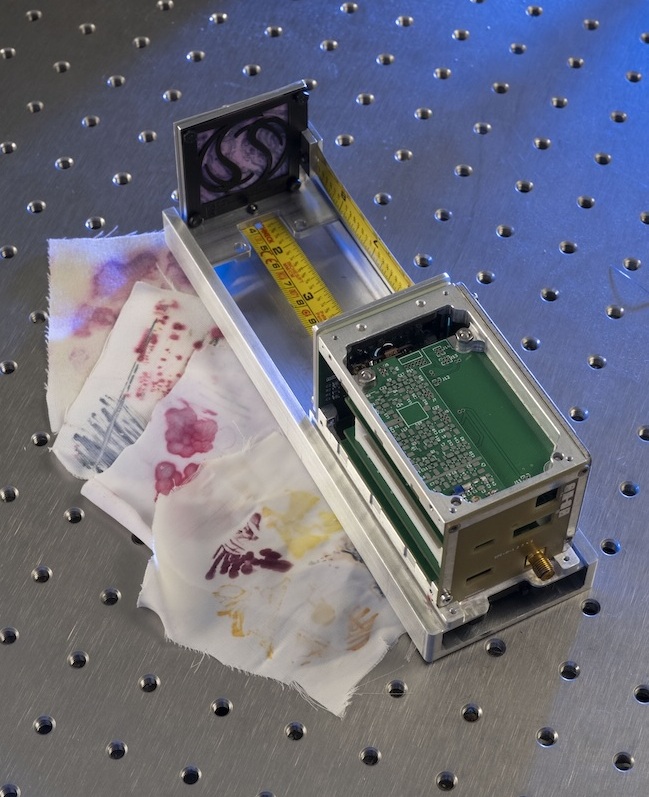

 English
 Arabic
 French
 Spanish
 Deutsch
 Turkish
 Dutch
Dutch
 Italiano
 Russian
 Romaian
 Portuguese (Brazil)
 Greek
Greek