


"It Was Bigger Than A Killer Whale": 66 Million-Year-Old Tooth Suggests Mosasaurs Were Hunting In Rivers, Not Just Seas
"It Was Bigger Than A Killer Whale": 66 Million-Year-Old Tooth Suggests Mosasaurs Were Hunting In Rivers, Not Just Seas
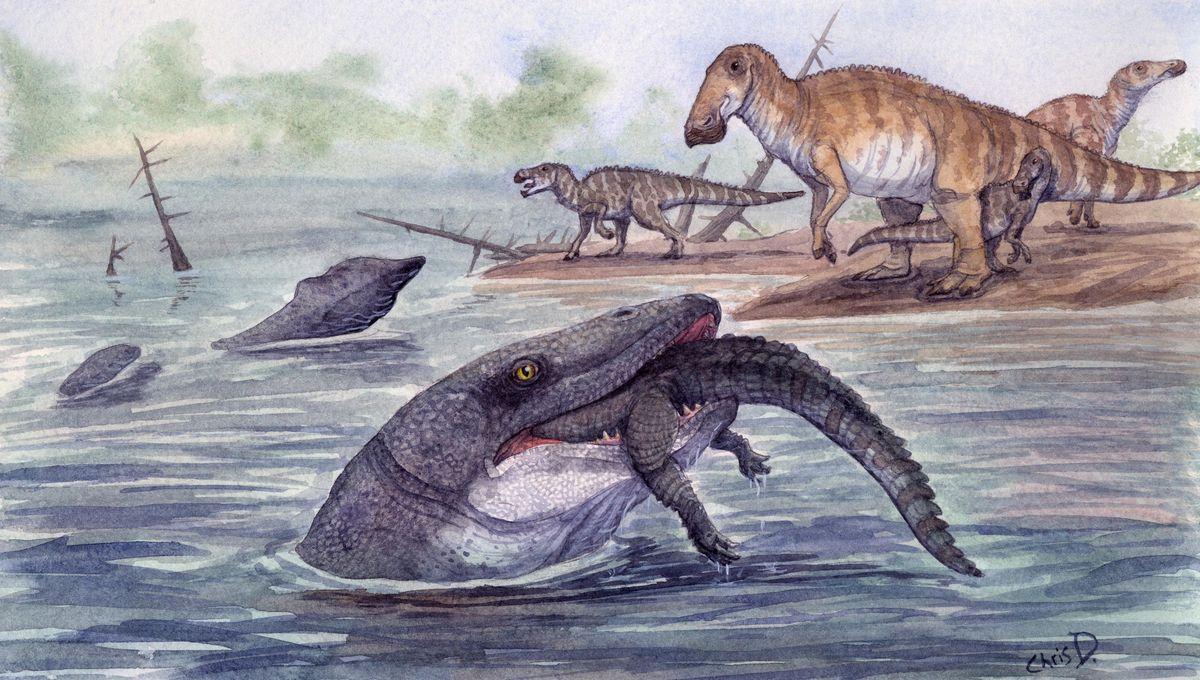
A mosasaur tooth has been found at one of the most famous Late Cretaceous fossil sites in the world. That means the famous marine predators adapted to a freshwater environment, and it seems they didn’t lose any of their size in the process.
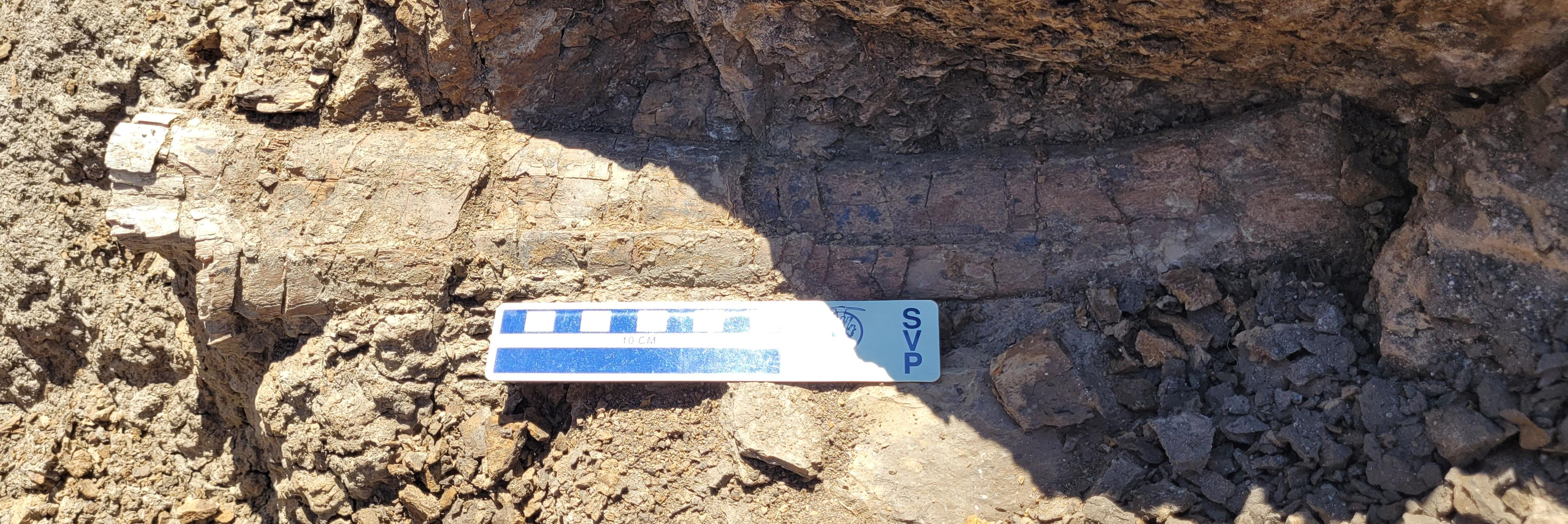
The rest of this article is behind a paywall. Please sign in or subscribe to access the full content. In 2022, Trissa Ford was digging in the famous Hell Creek, North Dakota, and came across a Tyrannosaurus rex tooth. Exciting as that always is, the tooth was in poor condition, so dig leader Dr Clint Boyd of the North Dakota Geological Survey dug around the tooth in an effort to extract it safely, only to have an even larger tooth fall out. Aware that the new find wasn’t a T. rex’s dentition, Boyd reported the tooth to marine reptile expert Dr Nathan Van Vranken of Eastern West Virginia Community and Technical College, who recognized it as coming from a mosasaur of the Prognathodontini subfamily. Perhaps Jurassic World’s vision of a modified T. rex eaten by a mosasaur was more realistic than the way either creature was portrayed. The mosasaur tooth from different angles (left) and where it was found, next to a T. rex tooth and protective bag (right) Image Credit: Melanie During The only problem was that Hell Creek is almost 2,000 kilometers (1,200 miles) from the ocean, and it wasn’t much closer as the Cretaceous was ending. The team recruited Dr Melanie During, of Uppsala University – who previously revealed the season the asteroid struck Earth and wiped out the dinosaurs, not long after this tooth was deposited – to solve the mystery of how the tooth got there. The team argues the tooth was not moved, and nor was Hell Creek hosting a giant salty lake. Instead, this mosasaur was descended from ancestors that adapted to living in rivers and probably fed, at least occasionally, on unwary dinosaurs. For much of the dinosaur era, North America was split by the Western Interior Seaway, causing species in the east and west to evolve independently. For a long time, the seaway was connected to both the Arctic Ocean and the Gulf of Mexico, and was therefore assumed to be salty. Mosasaurs thrived in its waters. However, the Seaway was a very different place as the dinosaur era was ending. “Some mountain forming was taking place, and the San Andreas fault was very active,” During told IFLScience. “The continent was being lifted up.” The Seaway was blocked off from first the Gulf and then the Arctic. Rains flushed salt out as the Hell Creek region became a network of rivers interspersed with land. Through all this, mosasaurs apparently survived and adapted. During told IFLScience it’s not so surprising that the giant marine reptiles could adapt to the new conditions. “Becoming a saltwater species is a very severe adaptation,” she said. “You have to flush the salt out, or your body shuts down. Going back to fresh water is comparatively easy.” During uses the example of whales and seals that sometimes make their way far up river systems without coming to any harm. The discovery of mosasaur fossils in what is now Hungary alerted scientists to the possibility that they could adapt to riverine environments. However, During told IFLScience, “That was a different genus, and much smaller, around 5 meters.” Based on its size, the Hell Creek tooth came from an 11-meter-long monster. “It was bigger than a killer whale,” During told IFLScience, certainly exceeding any modern crocodile or great white shark. Speaking of crocodiles, however, During compared its adaptability to freshwater to Australia’s giant saltwater crocs. Asked if that includes the capacity to leave the water entirely, During didn’t rule it out. She noted there are signs of being able to move on land in the Hungarian freshwater mosasaur’s shape, but with only a tooth to go on, she can’t tell if its North American distant relative followed the same path. During told IFLScience she faced skepticism when she presented the idea of a giant freshwater mosasaur at conferences, but resistance diminished “When I threw out my third line of evidence.” That evidence includes where the tooth was found, oxygen and strontium isotope ratios in the enamel, and the fact that earlier mosasaurs from the Western Inland Seaway appear to have lived in partially fresh conditions. During thinks that at one point the Seaway had a layer of fresh water above more salty depths. Marine mosasaurs are thought to have fed primarily on fish and things like turtles, whose shells they could bite right through. However, During told IFLScience the carbon isotope ratios in this tooth are so far off the scale of others that they barely fit on the same chart. Those ratios resemble those of animals that fed on dinosaurs, leading During to suspect that hadrosaur was probably part of its diet. An Edmontosaurus rib from Hell Creek shows they were around to be eaten. Image Credit: Melanie During So if mosasaurs adapted to fresh water, might the Loch Ness Monster be a mosasaur, not a plesiosaur, as usually portrayed? “It could just as well be a mosasaur as a plesiosaur,” During replied. The study is published in BMC Zoology.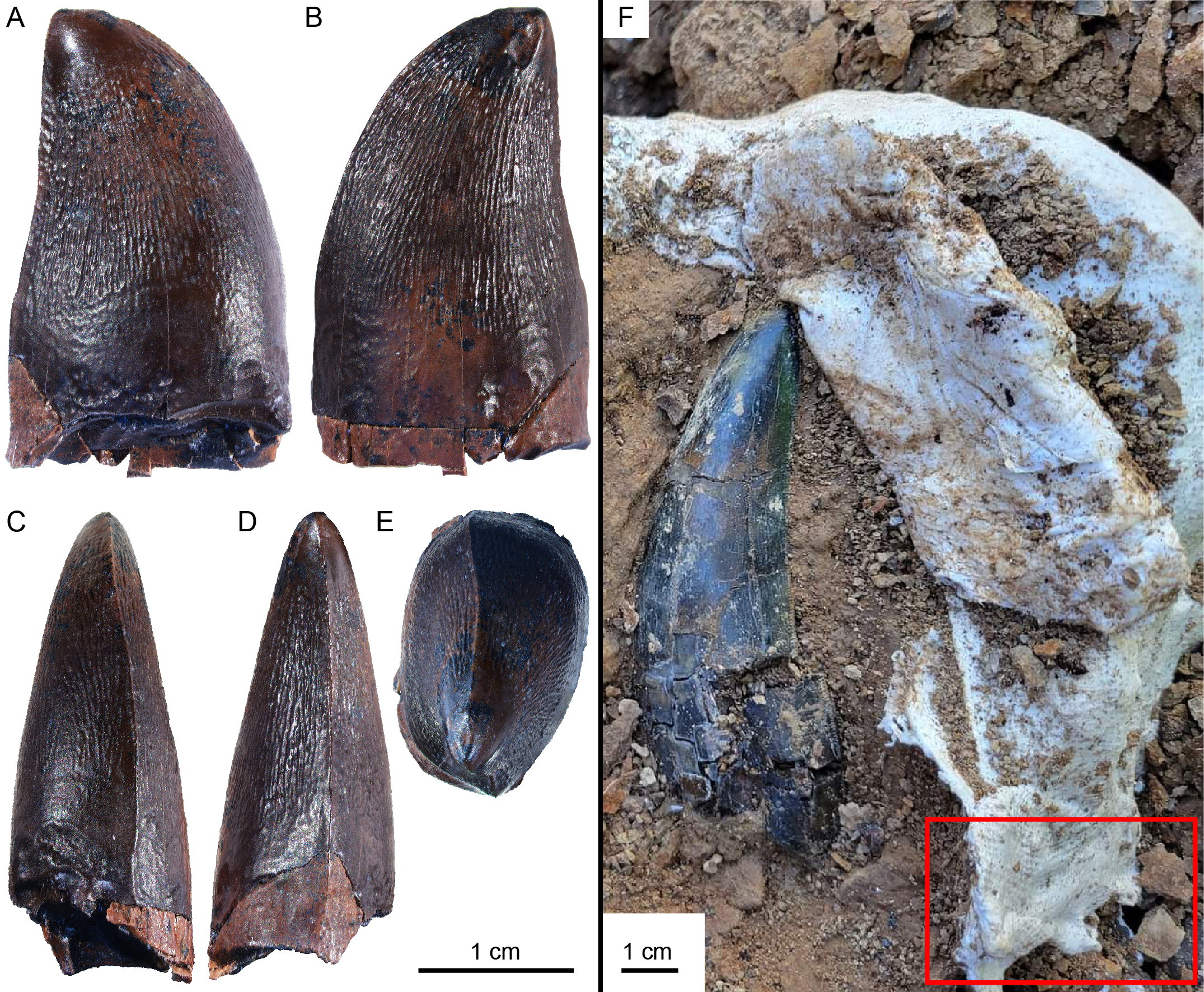

 English
 Arabic
 Spanish
 Portuguese
 Deutsch
 Turkish
 Dutch
Dutch
 Italiano
 Russian
 Romaian
 Portuguese (Brazil)
 Greek
Greek