


How A Comet On Christmas Day Changed What We Knew About Space
How A Comet On Christmas Day Changed What We Knew About Space
Take yourself back in time to the year 1758. We are in Germany and it's winter, so we can confidently assume that it is cold, with possible snow covering the fields and roofs of houses. Here we meet the protagonist of this story, farmer and astronomer Johann Georg Palitzsch. He is scanning the sky as he has been doing for a while. Palitzsch has been looking for a very specific object, one that has been predicted to make a return that very year. But the year is almost over, and today is Christmas Day.
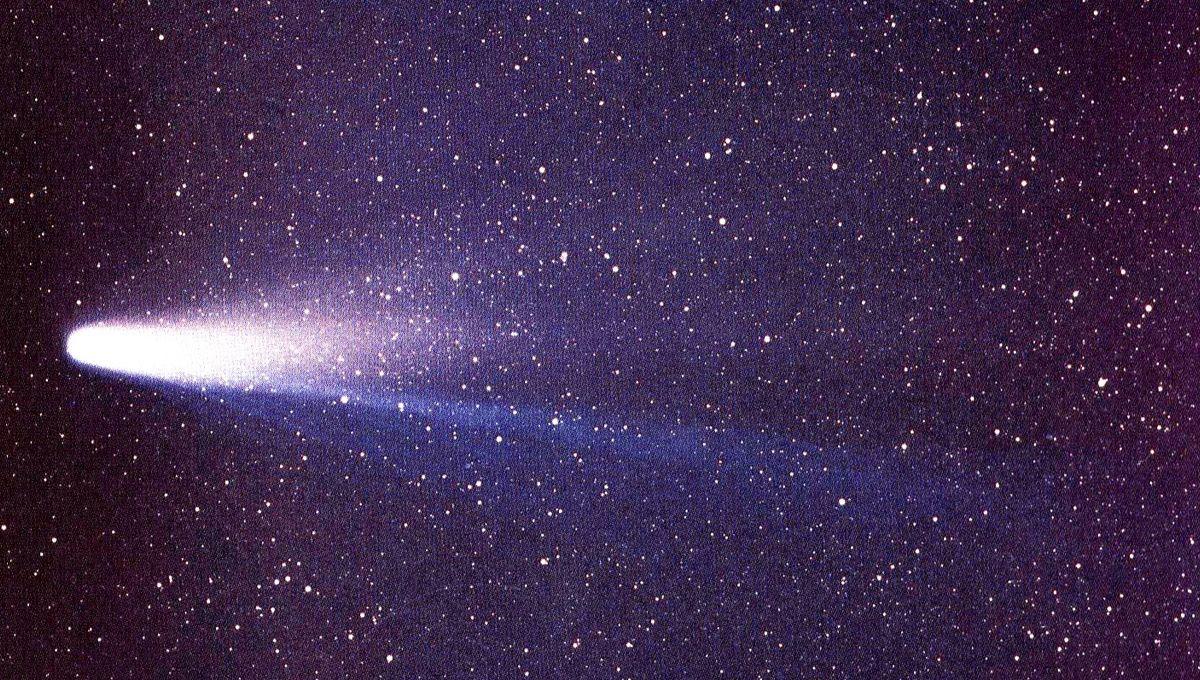
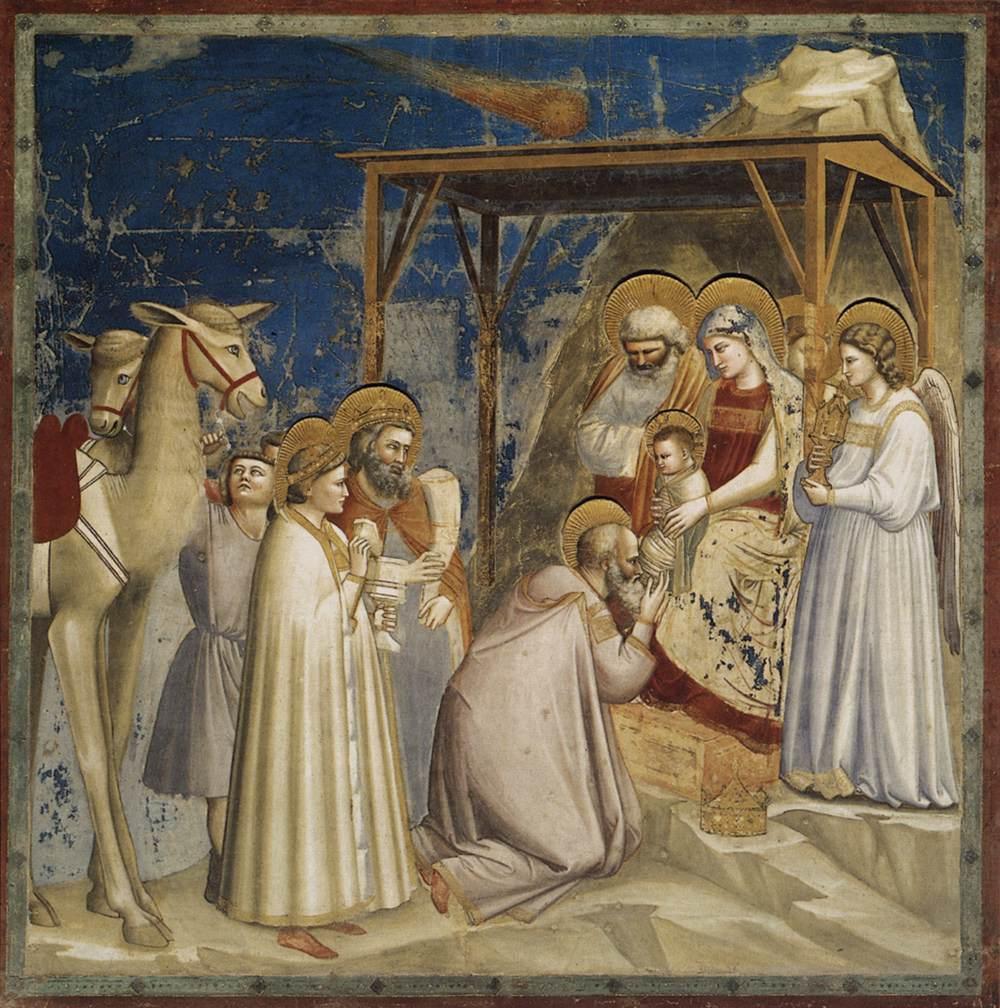
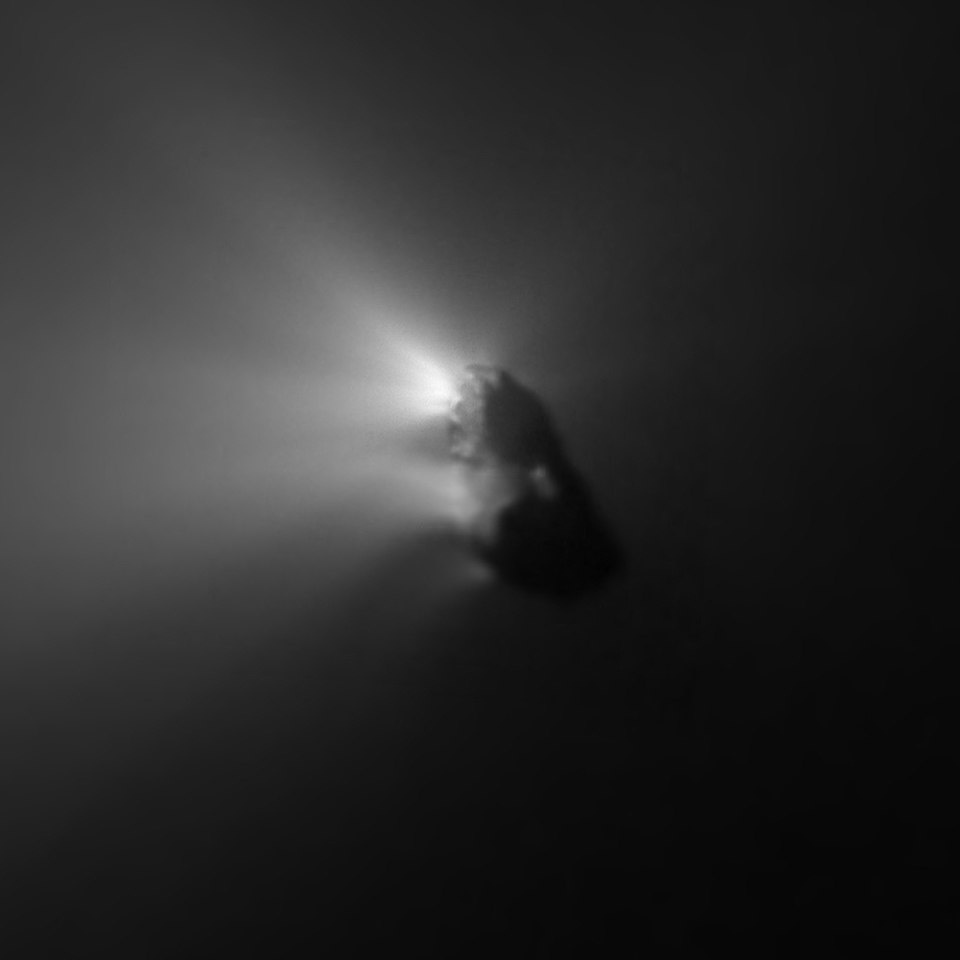
The rest of this article is behind a paywall. Please sign in or subscribe to access the full content. We can picture the wind and the cold, which probably bothered the then 35-year-old Palitzsch, but we know that the sky is clear. We know that because he sees a new light appearing in the sky. It’s a comet, just where it was predicted to be. Palitzsch is the first person to have seen this comet that year, the first person born in the 1700s to have seen it, in fact, but the comet has been seen by humans for millennia. The revolution that Palitszch's observation underlines is that he is the first person to have seen it, already knowing exactly where it was going to be. The German astronomer had just seen what would become known as 1P/Halley, or Halley’s Comet, thus proving for the first time that comets were periodic, not random, and could be predicted, just like Edmond Halley had said 50 years earlier. A portion of the Bayeux Tapestry with people pointing at what we now know as Halley's comet. The Latin translates to "These (men) are admiring the star." Image Credit: Public Domain via Wikimedia commons “Halley's Comet is the only short-period comet that is easily visible from Earth with the naked eye. Its solar orbit time of 75-76 years makes it possible to see twice in a human lifetime. As a result, it is the most observed comet in human history, appearing in every major historical era,” Jake Foster, an astronomer at the Royal Observatory Greenwich, told IFLScience. “Its depiction in the Bayeux Tapestry after appearing overhead during the Battle of Hastings in 1066 is one such example.” Halley’s comet is the quintessential comet for humanity, both for its regularity, as Foster explained, but also for its impact in art; that's another Christmas connection. The Star of Bethlehem is now commonly represented as a comet, and this is due to Giotto di Bondone's extraordinary 1305 fresco, The Adoration of the Magi. There, the Christmas star is inspired by the Italian artist's own observation of Halley’s Comet during its 1301 passage. Giotto's "The Adoration of the Magi" is located in the Cappella degli Scrovegni in Padua, Italy. Image Credit: Public Domain via Wikimedia Commons. Despite the comet appearing throughout human history, it was only in the late 1600s that it became clear that the many passages were made by the same object. Edmond Halley, who would go on to be Astronomer Royal, was able to work out that the comet of 1682 had been near the center of the Solar System before. “Halley's research included studying the astronomical records of two dozen comet sightings that occurred between the 14th and 17th centuries, examining their noted paths across the sky. Three of these sightings were found to have matching orbital patterns – factors such as reaching the same closest distance to the Sun (known as perihelion) and doing so from the same angle,” Foster told IFLScience. Halley first saw the comet with his own eyes in 1682 when he was 25 years old. He correctly predicted that it would return in 1758 but didn't live to see its return, dying in 1742 at the age of 85. Jake Foster “These sightings happened in 1531, 1607, and 1682, indicating an orbit time of 75-76 years. Halley even noticed that the comet was pulled on by the gravitational forces of Jupiter and Saturn when it got close to them, so he added this into his calculations to make his prediction even more precise. Halley first saw the comet with his own eyes in 1682 when he was 25 years old. He correctly predicted that it would return in 1758 but didn't live to see its return, dying in 1742 at the age of 85.” It was then, on that cold Christmas night in 1758, that Palitzsch saw and documented it first. Several other astronomers, including Jamaican astronomer Francis Williams, independently spotted it and then reported the sighting, before the comet became visible to everyone on the planet. Recovering the comet truly was a game-changer. Halley had used Isaac Newton's theory of gravity to predict the comet's return, and seeing it exactly when it should be in 1758 demonstrated not only that Newton's law could be applied to planets but to other celestial bodies, too. It showed that it was possible to study and predict the motion of celestial bodies, even those that come and go, as long as there was enough data. Revolutionary! Halley’s last visit was in 1986, almost exactly 40 years ago. In fact, the comet is now on its way back towards the inner Solar System. However, that close passage in 1986 allowed humans to truly attempt the impossible with this comet that we had obsessed over and feared for thousands of years. We sent a probe to catch it. The nucleus of Halley's Comet, imaged by the Giotto probe on March 14, 1986. Image Credit: ESA/MPS, CC BY-SA IGO 3.0 NASA was sceptical of a mission to a comet, a previous international attempt having been scrapped. The environment around a comet is intense, with gas and dust being liberated by the sublimating ice at high speed. The European Space Agency's Giotto probe, named after the artist who depicted the comet, was ESA's first deep-space mission and was designed to encounter comets Halley and Grigg–Skjellerup. It managed not only to survive encountering Halley's Comet but also delivered the closest views of a cometary nucleus, analyzed the composition of this extraordinary object up close, and found the first evidence of organic material in a comet. Halley’s Comet is simply The Comet. So, let’s all start getting excited for 2061: it's expected to be brighter and closer than last time. The 1986 visit was actually the worst view in 2,000 years, so we are due a showstopper this time, and we know that this comet can truly deliver. 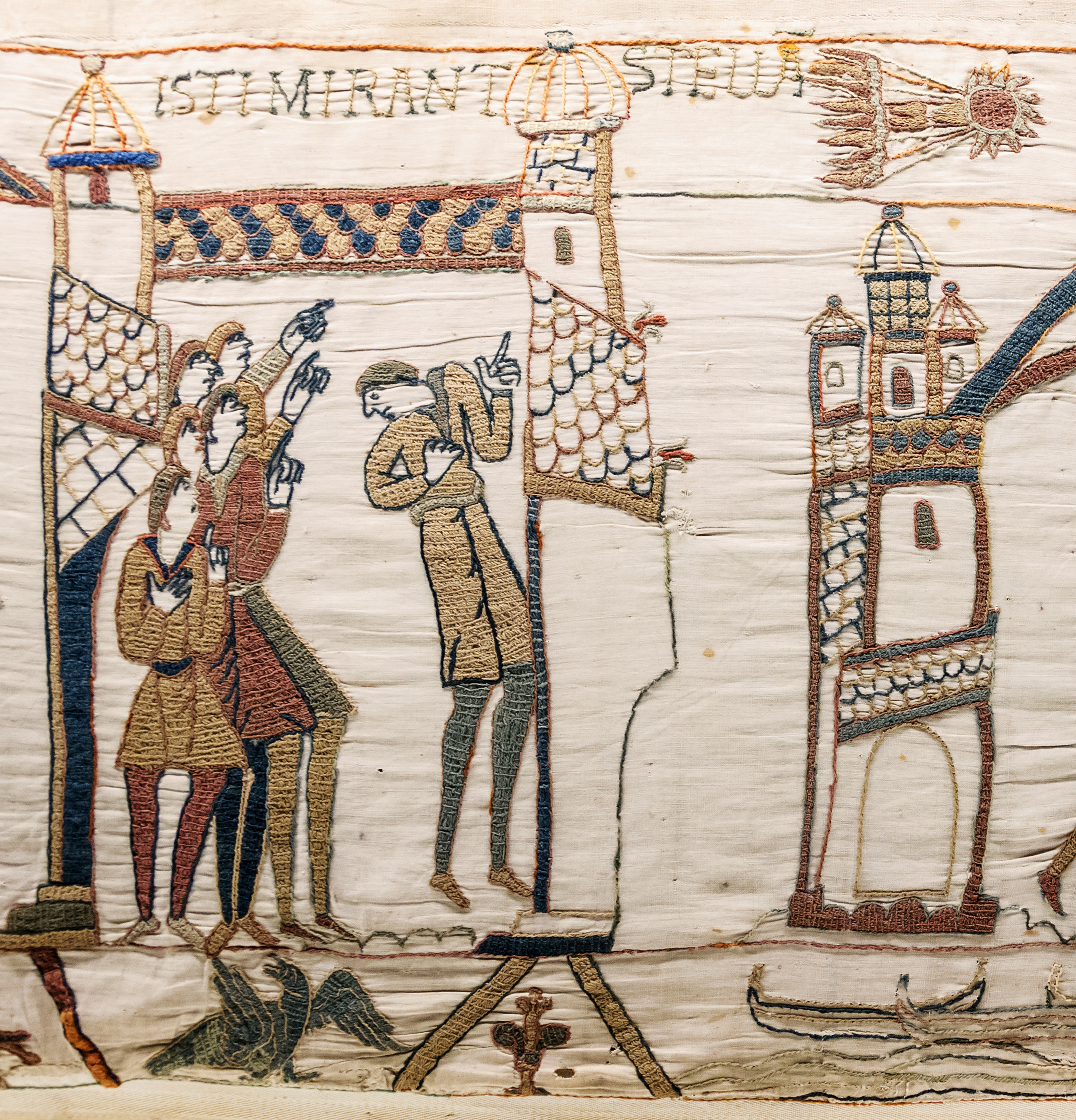

 English
 Arabic
 French
 Spanish
 Deutsch
 Turkish
 Dutch
Dutch
 Italiano
 Russian
 Romaian
 Portuguese (Brazil)
 Greek
Greek