


 PUBLISHED
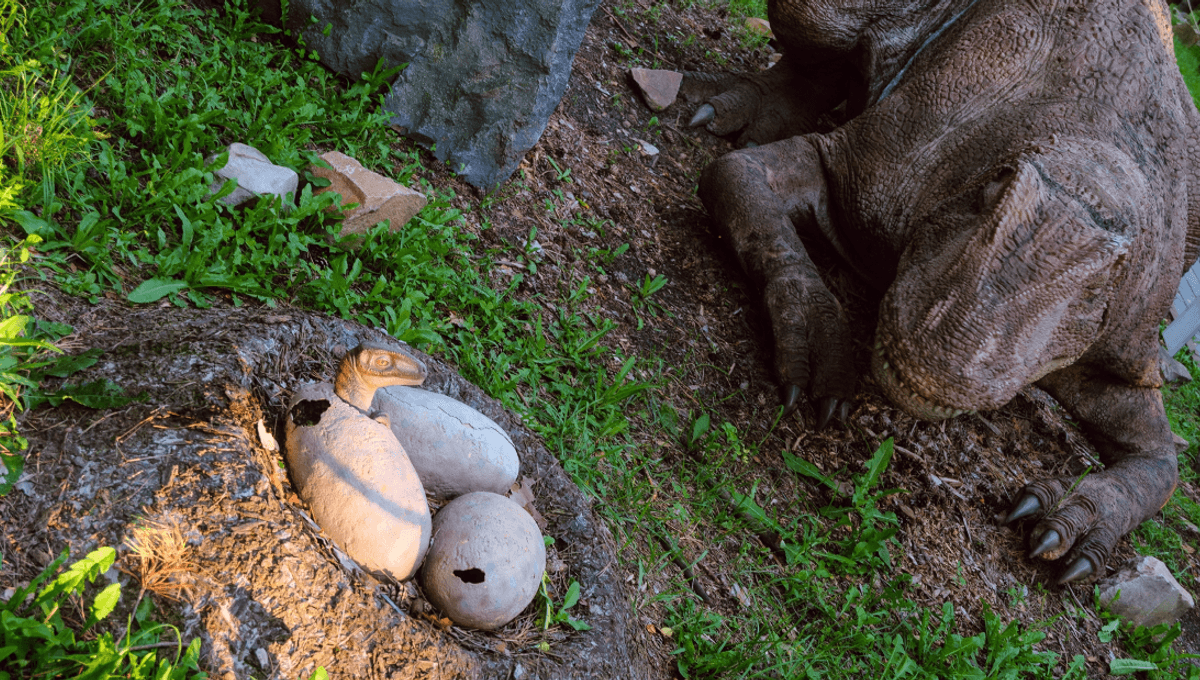
In 2004, scientists digging in China discovered a fossil that changed the way we saw dinosaurs. It was a Psittacosaurus, a horned herbivore that lived around 120 million years ago. It wasn’t alone in death, however, as scientists found the fossils of 34 offspring huddled around it.
The rest of this article is behind a paywall. Please sign in or subscribe to access the full content. It was one of the earliest pieces of evidence that some form of parental care existed among dinosaurs, and could explain why we see parental instincts in modern-day birds and reptiles. We don’t know if this Psittacosaurus was a male or female, but then the idea that parental care is sex-specific is something of a mammalian outlook – a lens that’s often gotten in the way of us understanding dinosaur behavior. We’ve historically thought of dinosaurs as a bit like the mammalian equivalent of their time, being the top dogs and fairly large. But they were drastically different from us in many ways, and these differences may have shaped the environment as much as their behavior. Among modern-day mammals, the reproductive approach typically invests a lot into just a few offspring that are already pretty big at time of birth. Despite this, they remain dependent on their parents for quite a long time. By comparison, dinosaur parents were all about the numbers game, much like sea turtles, where it's thought only one in 1,000 hatchlings survive to adulthood. Dinosaurs laid lots of eggs and didn’t always hang around to see the hatchlings emerge – hatchlings that were far, far smaller than the adult form. A new study has explored how this drastically different reproductive strategy may have shaped ancient ecosystems. We know this can happen because of something known as ontogenetic niche shifting, whereby an animal occupies lots of different ecological roles across its lifespan, influencing different parts of the environment. Ravenous 'teenage' sauropods would have ravaged plants both low down and as high as they could reach. Dr Stephen Poopat We see an example of these shifting ecological roles in sauropods, long-necked dinosaurs that loved munching on vegetation. We recently found the first-ever fossilized stomach contents for these dinosaurs, and it revealed how their diets changed over their lifetimes. “A horde of hatchlings would have been able to decimate tracts of low-growing plants pretty rapidly,” Dr Stephen Poropat, lead author of the stomach study, told IFLScience. “Ravenous 'teenage' sauropods would have ravaged plants both low down and as high as they could reach. The few of these that made it to adulthood would live to feed at the tops of trees, or continue feeding down low, vacuum-cleaner style (or somewhere in between those two extremes), thereby still putting pressure on their environment.” “The impact that sauropod feeding had on plants in terms of pressuring them to develop defences (either physical or chemical), regrowing rapidly, or encapsulating their seeds in fruits or seed pods to entice or at least enable sauropods to disperse them as they roamed and defecated, is a marvellous subject to ponder. Sauropods would have been ecosystem engineers throughout their lives, no matter at what level(s) they fed.” In the new study we mentioned, scientists tried comparing dinosaur and mammal communities by looking at their “functional species” richness. That is, rather than just counting the number of individual species within a community, it considered the number of potential ecological players based on the different roles those animals could fulfil. It revealed that if you only take into account adult animals, mammalian communities appeared to be more species-rich, but when you factored in juveniles, dinosaurs shot ahead. This suggests that the drastic differences we see in dinosaur versus mammalian parents does have a big impact on the environment. As for what that parenting looked like? For dinosaurs, it varied. Birds are living dinosaurs, and in birds, both parents often play a very important role. Dr Nizar Ibrahim We know sauropods were fond of laying their eggs and disappearing, leaving their young to fight their way out of the volcanic Badlands (yes, I am talking about that scarring Prehistoric Planet sequence). For Spinosaurus, however, it might have been quite hands-on, as seen in Walking With Dinosaurs. “We have a tendency to look at dinosaurs with a mammal-centric view,” series science consultant and Spinosaurus expert Dr Nizar Ibrahim told IFLScience. “We automatically assume that it's going to be like a grizzly bear mama taking the kids somewhere, but birds are living dinosaurs, and in birds, both parents often play a very important role.” “It turns out that in the most ‘primitive’ or ‘basal’ birds, male parental care is actually the rule," Ibrahim explained of the sequence showing a male Spinosaursus caring for its offspring. "These are the birds that are closest, in some ways, to the dinosaurs. Things like an emu or a rhea or a cassowary.” “We also have dinosaurs sitting on clutches of eggs, and there's some circumstantial evidence suggesting that some of these were males sitting on the eggs, just like in an emu," he added. "So, I think [this male Spinosaurus and its offspring] was a way for us to challenge these ideas that people have.” That dinosaur babies were experiencing everything from battling the Badlands solo to cuddling up with mom or dad just goes to show how different they were not only from mammals, but each other, too. And as for how many babies did dinosaurs have? It boiled down to lots of eggs, lots of babies, and lots of death.Lots vs a little
Ecosystem engineers
Dinosaurs vs mammals
Dinosaur parenting styles



 English
 Arabic
 French
 Spanish
 Portuguese
 Turkish
 Dutch
Dutch
 Italiano
 Russian
 Romaian
 Portuguese (Brazil)
 Greek
Greek