


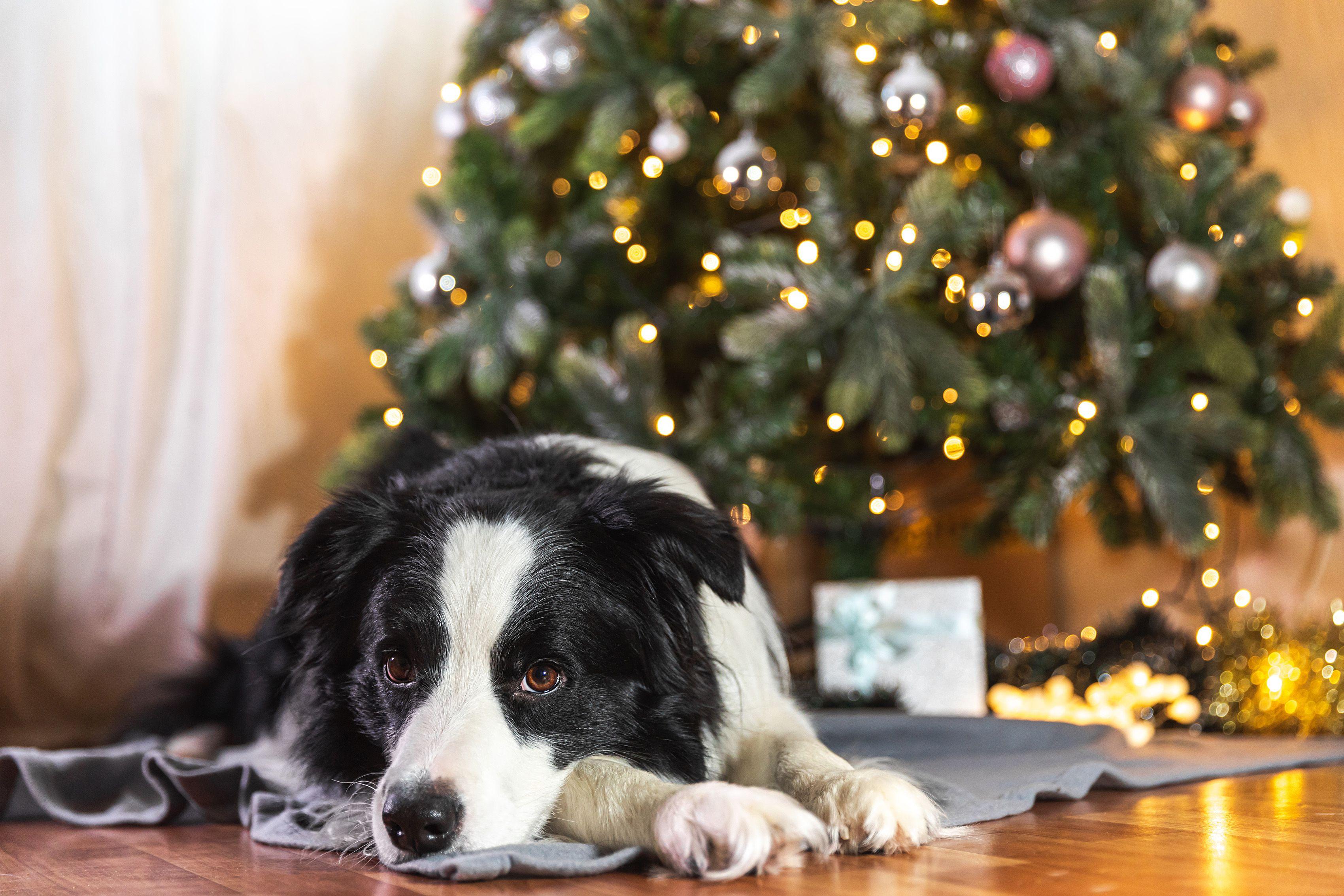
Just as the holidays are a time for celebration, they can also bring their fair share of stress. Hosting responsibilities, meal prep, and decor are always top of mind—but humans aren't the only ones experiencing holiday stress.
If you're a pet owner, there are a few extra considerations to keep in mind this season. Not all holiday trends are pet-friendly; in fact, some can be downright harmful to our furry friends. Instead, pet experts say that it’s best to prepare ahead for common concerns and avoid these holiday decor mishaps.
1. Electrical Cords
Veterinarian Carly Fox reminds pet owners that holiday lights and electrical cords pose a risk of shocks and oral burns if chewed. Pets, especially young ones, enjoy exploring new objects by tasting them, which can pose choking and electrocution hazards. This means holiday decor that looks or tastes like a chew toy can pose a danger. Be cautious to tape down any electrical cords for twinkle lights or holiday trees. Check for signs of bites or chewing marks. Remember to turn off and unplug electrical items overnight, when curious pets are most likely to be left unattended.
2. Tinsel, Ornaments, and Ribbons
Much like electrical cords, holiday decor made of plastic and glass can pose serious ingestion hazards. “Shiny items that dangle like tinsel are particularly attractive to cats and can cause severe intestinal damage if swallowed," says veterinarian Bethany Hsia. It is ideal to keep gift wrapping materials, such as ribbons, bows, and plastic, outside or in hard-to-reach places, so that pets avoid accidentally harming themselves.
Fox also notes that fallen or broken ornaments can cause lacerations and cuts, potentially leading to an unexpected veterinary visit during the holiday season. Consider switching to more durable wooden or plastic ornaments instead of delicate glass.
3. Scented Candles
Of course, candles pose a fire hazard and should always be used with caution. But, pets secretly dislike candles with strong and unfamiliar scents. “Scented candles and potpourri might cause respiratory issues, especially in animals with underlying respiratory disease like bronchitis or feline asthma," Fox says. If your pet starts sneezing, coughing, or wheezing, it’s best to put the candles away for the season. If the symptoms persist, the cause could be a new perfume on a guest or in a gift. Keep the space well-ventilated to thin out any strong scents.
4. Unprepared Guests
Holidays are a time to host friends—old and new. If this is the first time a guest is coming to your home, it’s best to warn them that there is a pet in the house. This simple disclosure allows guests to self-select if they’re not comfortable with pets and warns the host of any allergies to consider. Having to lock up pets at the last minute and for extended periods can be particularly confusing and anxiety-provoking for pets accustomed to having the run of the place. Have a backup plan, a cozy crate, or a designated room that they already enjoy.
Similarly, it’s imperative that guests know not to feed pets table food. “It’s important to avoid sharing table food and instead offer pet-safe treats, as many festive treats contain ingredients that are toxic to pets, including chocolate, raisins, turkey bones, onions, garlic, and artificial sweeteners like xylitol," says veterinarian Zac Pilossoph. This laundry list of no-go foods may be new to people who are not pet owners themselves, so it’s helpful if hosts make sure everyone—including children—know what to expect.
“Be mindful of dogs being left outside during holiday gatherings," Pilossoph says. "It’s common for hosts to let dogs out at the start of a party and forget how quickly temperatures can drop. Hours later, the pet may be cold, stressed, or even at risk for hypothermia.” Monitor weather conditions and limit outdoor time accordingly.
5. Holiday Plants and Trees
End-of-year holiday decor is almost always filled with plants. Christmas trees, floral centerpieces, and leafy wreaths are all common this time of year—but seasonal plants are not all safe for pets.
Furry friends can be susceptible to respiratory allergies from the new scents, but they're equally likely to put harmful plants in their mouths. Ensure plants are placed on high tables or hanging planters, out of close reach.
Pilossoph says to watch out for these common holiday plants, which can be toxic for pets:
- Mistletoe can cause vomiting, diarrhea, low blood pressure, and breathing issues. European mistletoe (Viscus album) can also cause neurotoxicity.
- Holly may lead to digestive distress, including vomiting and diarrhea.
- True Lilies, especially dangerous for cats, can cause kidney failure.
- Poinsettias, while commonly believed to be highly toxic, usually cause only mild irritation (drooling or vomiting) if ingested in small amounts.
- Yew causes cardiotoxicity, arrhythmias, and sudden death.
- Amaryllis cause neurotoxicity- tremors, seizures, sudden death.
When it comes to Christmas trees, ensure that pets don’t chew and swallow plastic from artificial trees. And for live ones, watch out for tree stands filled with water and preservatives. Pets might mistakenly lap up the water. If you notice vomiting, diarrhea, or severe malaise, take your pet to the vet immediately.
6. Fireworks and Noisemakers
Fox explains that decorations that make noise, such as noisemakers or ticking clocks, can heighten anxiety, especially in pets sensitive to loud or sudden sounds. “Loud noises from fireworks or holiday gatherings can also cause significant anxiety and stress in pets, leading to behavioral issues like hiding or inappropriate urination,” adds Hsia.
If you notice any of these signs, then it’s time to stop the loud sounds and offer your pet some comfort. Try placing them in a quieter area of the home and away from windows where they might see sparklers or other flashing lights.
7. Disrupted Routines
Holidays are special because they’re a break from the norm, but that could be precisely why pets secretly hate this time of year. Most pets are creatures of habit, and routines bring them a sense of safety. Try to stick to sleep and feeding schedules. If pets have a customary room or hiding space that won’t be available during the holiday season, prepare them weeks ahead by training them to go to their crate, cage, or litter box in alternate spaces in the house. Treats can be a welcome reinforcement tool.
Last, Pilossoph reminds that if you and your pet are heading away from home for the holidays, it’s important to prioritize safety first. “When traveling, make sure your pet is secured in the vehicle, has up-to-date tags, and is never left in a car alone, even briefly," he says.

 English
 Arabic
 French
 Spanish
 Deutsch
 Turkish
 Dutch
Dutch
 Italiano
 Russian
 Romaian
 Portuguese (Brazil)
 Greek
Greek