


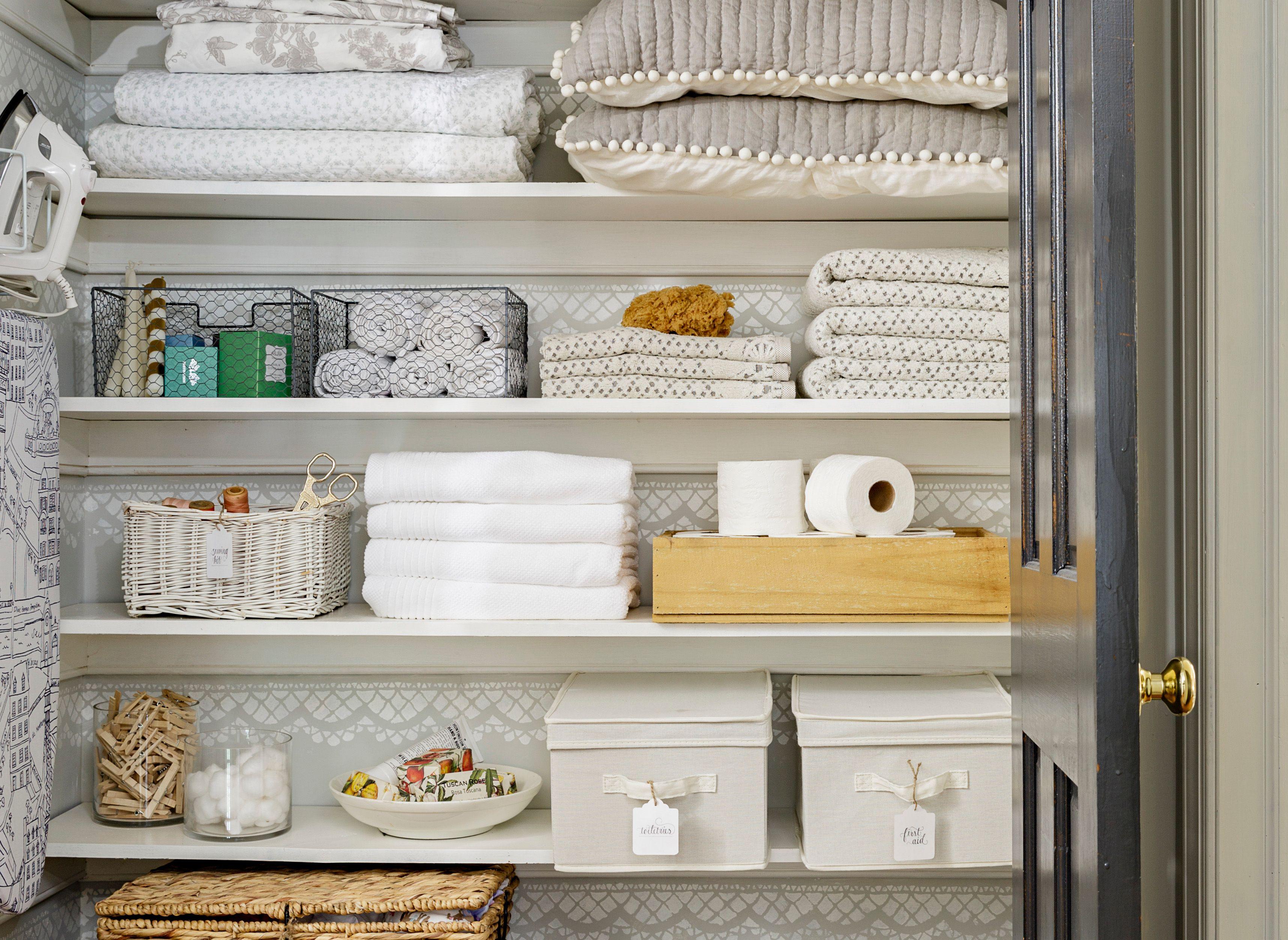
As a professional organizer, I know that linen closets are just as much of a catch-all in homes as junk drawers or basement closets. It often becomes the place where beach towels, travel-size toiletries, extra toilet paper, and even random items like old home decor or hidden holiday gifts end up stuffed together. Before you know it, you’re hesitant to open the door for fear of what might come tumbling out when you do.
The problem isn’t necessarily what’s stored in the linen closet, but rather the lack of structure. When everything gets tossed into the void, smaller items fall to the back, everyday essentials get lost, and nothing has a consistent home. That’s where organizing in zones comes in. Here's how to rethink your linen closet so it works for you, not against you.
How to Organize with Zones
By dividing your closet into intentional sections based on what you use and how often, you can finally turn a chaotic linen closet into a streamlined, easy-to-maintain storage space. And once you set up these zones properly, you’ll be able to find things faster, stop rebuying items you already own, and (finally) open the closet door with confidence.
1. Start with a Clean Slate
As with any successful home organization project, you’ll want to begin by pulling everything out of the space. Have a convenient spot ready to lay it all out, such as on the bed, the hall floor, or a nearby table. (Pro tip: place a clean sheet or towel down to keep surfaces clean.) By getting everything out of the closet, you have a clear view of everything that’s been living in it. Warning: You’ll likely be surprised by how much stuff you've stored here over the years.
As you sort, start creating rough categories such as towels, bedding, toiletries, paper products, seasonal items, and miscellaneous. You’ll immediately begin to see which items are essential, which are backstock, and which may not belong in the closet at all. In that case, put these things back where they belong. If the don't belong, now is a good time to finally find a spot for them elsewhere. If you no longer need an item, add it to the trash or donation pile.
2. Identify Your Zones Based on Use (Not Just Category)
The biggest mistake people make when organizing a linen closet is grouping everything by item type, without thinking about other factors, such as frequency of use. Yes, all your sheet sets belong together, but should your everyday sheets live next to holiday-themed or guest bedding? Probably not.
Instead, think of zoning like this:
- Your most-grabbed items go at eye level. This shelf is prime real estate reserved for what you use daily or weekly, such as bath towels, hand towels, washcloths, and everyday sheet sets. Keeping these items at arm’s reach eliminates the daily shuffle and prevents the entire closet from getting rearranged every time someone grabs a fresh towel.
- Your frequently (but not daily) items belong on the upper to middle shelves. Here is where you should store things such as guest towels, spare pillowcases and sheet sets, and extra towels. You still want these items visible and easy to grab, but they don’t need to be at eye level.
- Use the top shelf for bulky or seasonal linens. Anything soft, large, and rarely used should claim the top shelf. Think: comforters, pillows, blankets, and holiday or seasonal linens. This shelf is ideal for stacking large items that would otherwise hog space elsewhere.
- Corral toiletries on a lower shelf. This is where bins become your best friend. Small items are notorious for disappearing behind stacks of towels. Instead, use containers to group items such as extra shampoo, toothpaste, body wash, trial-size toiletries, and first-aid supplies. Storing these on a lower shelf makes heavier things safer to lift while also giving them a designated home.
- Save floor space for heavy or awkward items. It’s smart to store things like backup packs of toilet paper and cleaning products (although you should avoid the latter if you have small children or pets in the house). Floor-level storage is sturdy but less visible, so use it intentionally.
3. Fold and Store Bedding Sets the Smart Way
Once you’ve established your zones, the next step to maximizing space is how you fold items, especially bedding, which can be tricky. Instead of folding sheets individually and stacking them horizontally, try to keep each set together. Many organizers (myself included) swear by the “bed in a bag” method, which entails folding the fitted sheet, flat sheet, and all pillowcases except one, then sliding them into the set-aside pillowcase. There are also organizers designed specifically to keep sets together, with space for you to label by room, size, or season.
Towels should be separated by type, with smaller towels contained in baskets if you find that easier to keep them organized (I do!). Whether you fold or roll towels is entirely up to you. Keeping them consistent matters more. Uniform stacks make everything from grabbing a fresh towel to putting laundry away noticeably easier. Pro tip: consider adding shelf dividers to keep rolled or folded bath towels in line.
4. Contain Small Items
Toiletries and smaller supplies can quickly get lost in the back of a linen closet. Instead of placing them directly on shelves, use bins or lazy Susans to corral like items. A few examples include:
- A bin labeled “travel toiletries” for all those hotel goodies you bring home
- A lazy Susan for backstock bottles, like conditioner and body lotion
- A tall basket for toilet paper so rolls don’t topple over
An alternative way to store the small stuff (and maximize space) is to install an over-the-door organizer on the inside of the linen closet. Whether it’s rows of adjustable baskets or an inexpensive shoe pocket holder, it can keep these types of things neat and easy to reach.
5. Label What You Can (So Everyone Can Follow the System)
Labeling in a tight linen closet can be a little tricky, but it’s not impossible. If your baskets don’t include a space to label, use a bin clip. They also make shelf clips that attach directly to the part of the shelf facing you. Use a label maker for the containers holding toiletries or first-aid supplies.
Get creative if you have to, because labels help every household member understand where things are and where they can be returned. Having clear zones in the first place makes labeling that much easier.

 English
 Arabic
 French
 Spanish
 Portuguese
 Deutsch
 Turkish
 Dutch
Dutch
 Italiano
 Russian
 Romaian
 Portuguese (Brazil)