


Adorable Camera Trap Footage Of Moms And Cubs Heralds Conservation Win For Sunda Tigers
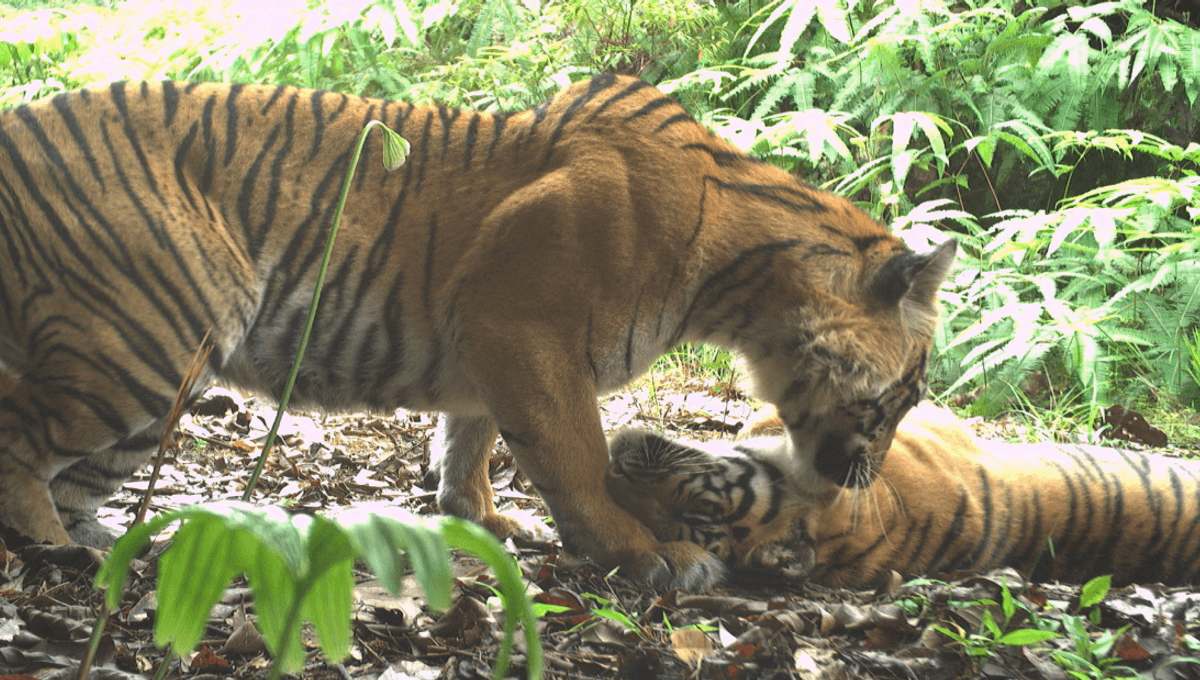
Good News! Camera Traps Snap Nearly Triple The Number Of Endangered Sunda Tigers Seen In Previous Surveys
It’s a tough time to be a tiger. Habitat loss, poaching, and depleting resources have seen their numbers drop across the globe, but new research has shown that even small pockets of protected habitat can have a positive impact on their survival.
The rest of this article is behind a paywall. Please sign in or subscribe to access the full content. The study takes us to the Leuser Ecosystem on the Indonesian island of Sumatra, home to critically endangered Sumatran or Sunda tigers (Panthera tigris sondaica). Their latter name comes from the Sunda Islands, including Java and Bali where they were once found, but today the only surviving population is in Sumatra. Sumatra's Leuser Ecosystem is about three times the size of Yellowstone National Park and a vital region for the tigers, being their largest contiguous habitat left on the island. Made up of lowland, hill, and montane forests, it’s also the most thoroughly patrolled part of the island, but what effect has that had on the population here? To find out, scientists working with collaborators from the local communities set up 59 cameras between June and December, 2023, and a further 74 between May and November, 2024. “Multi-year camera trap monitoring is critically important for estimating key tiger demographic parameters such as survival, recruitment, tenure, and population growth rate,” said Dr Joe Figel, a conservation biologist who works with Indonesian wildlife and forestry agencies, in a statement. “With these data – and only with these data – can we even begin to evaluate conservation efforts.” The cameras got snapping and from the resulting footage and imagery the team were able to identify 27 individuals, including three different sets of cubs. This comparatively high density of tigers, including females with offspring, indicates the ecosystem is healthy enough to keep the tigers and their prey fed. The number of Sunda tiger images was nearly three times higher compared to similar surveys conducted in the region. It marks a promising turn in the tide for Sunda tigers, demonstrating that conservation can and does pay off, even for critically endangered species. “Thanks to the work, activities, and support of government agencies, local Acehnese and Gayo communities, donors, and other researchers, Leuser has maintained important patches of lowland and hill forests where, in Sumatra, tiger prey densities reach their highest levels,” said Figel. “The persistence of these habitats and prey populations are the main reasons for our findings.” The study is published in the journal Frontiers in Conservation Science.

 English
 Arabic
 French
 Spanish
 Portuguese
 Deutsch
 Dutch
Dutch
 Italiano
 Russian
 Romaian
 Portuguese (Brazil)
 Greek
Greek