


It was 1959, and Dmitry Belyayev had a plan. He was going to take the silver fox – a wild animal prized for its fur but naturally (and understandably) hostile to humans – and domesticate it.
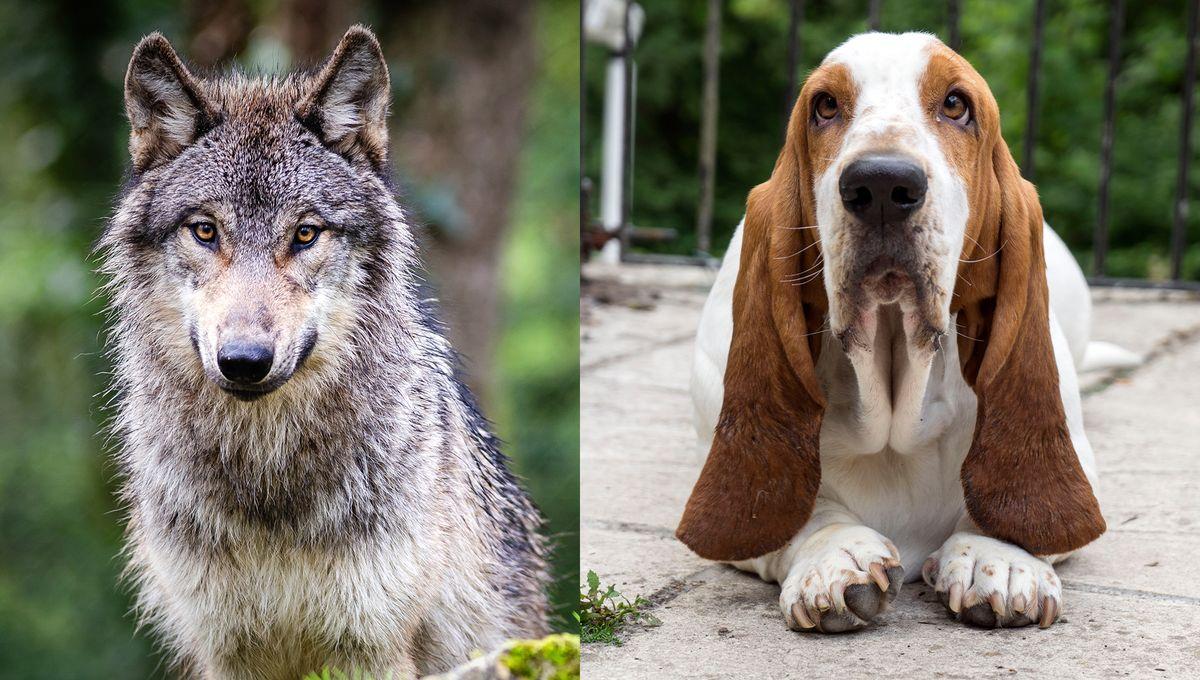
The rest of this article is behind a paywall. Please sign in or subscribe to access the full content. Critics called the plan overambitious. “The audacity […] is difficult to overestimate,” wrote Tecumseh Fitch, an animal behavior expert now at the University of Vienna, after a 2002 visit to Belyayev’s lab. “The selection process on dogs, horses, cattle or other species had occurred, mostly unconsciously, over thousands of years, and the idea that Belyaev’s experiment might succeed in a human lifetime must have seemed bold indeed.” Nevertheless, it worked – both far better, and far faster, than anybody could have expected. Within eight generations, Belyayev’s fox population was regularly turning up pups that lacked their forebears’ fear of humans; within 20 generations – about 25 years – the breeding program had produced a line of foxes tame enough to be kept as household pets. “For those who study evolution, this is an extraordinarily short time span,” pointed out embryologist Don Newgreen and principal research fellow Jeffrey Craig, both from the Murdoch Children's Research Institute in Melbourne, Australia, in a 2014 article for The Conversation. “But that wasn’t the most surprising result.” Belyayev and his successor, Lyudmila Trut, had focused only on one trait for their experiment: tameness. A fox that demonstrated less fear and aggression was allowed to breed; one that was “wilder”, and less trusting of the humans, was not. And while, certainly, this characteristic became widespread among the foxes, so did a group of other, more visible ones. “Although selected only for their temperament, the later generations of silver foxes also had shorter faces, smaller teeth, soft and droopy ears, curly tails, and altered color,” wrote Craig and Newgreen. They became, in short, pups. If you breed for dog behavior, apparently, you get dogs. Image credit: Jennifer Johnson, Darya Shepeleva, and Anna Kukekova, Journal of Neuroscience CC-by But even more surprising than this collection of changes in the domesticated fox population? The fact that they were all completely expected. As a rule – and elephants notwithstanding – wild animals do not have floppy ears. Pets do, though. The most obvious comparison is between wolves and dogs, but it’s true for many domesticated species: for “cats in China, horses in parts of Russia, sheep in Italy and elsewhere, the guinea-pig in Germany, goats and cattle in India, rabbits, pigs and dogs in all long-civilized countries,” noted Charles Darwin in 1859’s On the Origin of Species. “The incapacity to erect the ears is certainly in some manner the result of domestication.” And in fact, it’s not just the ears. “Domesticated animals share a fairly consistent set of differences from their wild ancestors,” Newgreen and Craig pointed out: they have smaller brains on average; smaller teeth and shorter muzzles; shorter, curly tails; lighter, blotchy coats; they go into heat more often, and act more “juvenile” than their wild counterparts. It’s such a widespread and predictable set of characteristics that it has its own name: “domestication syndrome” – but precisely why it occurs was one of the longest-standing mysteries in the field of genetics. From Darwin himself up until relatively recently, theories abounded: “There is no shortage of ideas about the nature of the domestication process and its effects on various domesticated animal species and breeds,” admitted biologist Adam Wilkins and his colleagues in a 2014 paper on the phenomenon. “Most of the explanations proposed, however, do not attempt to account for the full spectrum of [domestication syndrome],” they wrote. The confusion was clear to see: even as late as 1979, hypotheses were still out there relying on the kinds of epigenetic arguments that had been roundly debunked half a century earlier. By the early 2000s, though – and with the evidence brought forth by the silver fox experiment – the thinking had changed somewhat: biologists thought that, probably, the floppy-ear genes and the friendly-to-humans genes all lived within the same genetic regulatory network. To change one trait, therefore, would change them all. It is, on the face of it, more convincing than the arguments that preceded it – but it comes with a couple of big problems. First, the proposed network would have to be huge – big enough to cover every aspect of domestication syndrome, and certainly bigger than any other known at the time. And second, Wilkins and his team argued, it was kind of too good to be true: “it posits upstream mutations (or epimutations) in the hypothesized network with dramatic, widespread effects,” they wrote, “but which are not lethal.” “Thus this explanation […] postulating a single network that directly controls all the traits affected by the [domestication syndrome], is not without problems,” they concluded. Instead, they argued, it all came down to adrenaline – and a single, temporary structure that turns up during embryonic development. In 1868 – less than a decade after Darwin’s Origin of Species – an anatomist over in Switzerland with the slightly confusing name of Wilhelm His Sr was busy making discoveries equally as revolutionary. “His first described the ‘Zwischenstrang’ as a band of cells residing between the neural tube and epidermis that later migrates laterally to form the spinal ganglion,” explained Weiyi Tang and Marianne Bronner, both from the California Institute of Technology’s Department of Biology and Bioengineering, in 2020. “Today, this cell population is known as the neural crest.” Now, if you’re looking for a single structure with the ability to affect systems throughout the body, this is your guy. It’s been called variously “the fourth germ layer” and “the only interesting thing about vertebrates” because of its impact on the clade’s development, with cells from the neural crest ultimately ending up in systems as diverse as cartilage, connective tissue, pigment cells, peripheral nervous system cells, hormonal glands, and more. If all that sounds familiar, it should. Mess with the neural crest, and it’s theoretically possible to affect not just an animal’s facial skeletal and connective tissue – giving them, for example, smaller teeth, a curly tail, and floppy ears – but also its coloring, its brain development, and its adrenaline response. In short, all the traits that mark a species as “domesticated” rather than wild. Of course, these changes wouldn’t have happened organically. “When humans bred these animals for tameness, they may have inadvertently selected those with mild neural crest deficits, resulting in smaller or slow-maturing adrenal glands,” explained Wilkins back in 2014. “So, these animals were less fearful.” We may not have been aiming to make puppies or bunnies or donkeys that had floppy ears – just as we didn’t set out to create the curly tail of a piglet or the mottled coat of the tortoiseshell cat – but they turned up just the same, an inevitable side-effect of tamer, more human-friendly animals. But then, whether because they were a necessary price to pay for not being eaten in our sleep, or because they signaled an animal could be trusted – or maybe we just thought they looked cute – we kept these traits, building for ourselves a fuzzy, floppy army of domesticated pets. It was certainly a convincing theory – but would it survive scrutiny? With the neural crest argument, the origin of “domestication syndrome” seemed tied up with a bow. But not everyone was convinced – and eventually, in 2023, the question was busted open once again. “[The] currently popular explanations aren’t quite right,” announced Australian National University ecologists Ben Thomas Gleeson and Laura Wilson in a 2023 article for The Conversation. “[We] propose a new explanation focused on big changes in the way domesticated animals live.” Arguments that domestication syndrome was some kind of side-effect of tameness “oversimplify and obscure the complex evolutionary effects at play,” they wrote. The silver fox experiments, they argued, wasn’t as definitive as presented – for one thing, the first generation weren’t actually wild, but farmed; for another, symptoms of domestication syndrome had turned up even when Belyayev and Trut had bred for aggression rather than docility. Evidently, something more complicated is going on. The key, Gleeson and Wilson found, wasn’t so much which traits were being selected for, but which ones weren’t. “For example, domesticated animals are often protected from predators, so wild traits for avoiding them might be lost,” they pointed out. “Competition for mating partners is also often reduced, so wild reproductive features and behaviors could decline, or disappear.” “Domesticated animals are also usually reliably fed,” they continue. “This might alter certain features, but would certainly change natural metabolism and growth.” For wild animals, stiff ears have advantages. They help you hunt by better localizing sound; they stave off infections caused by trapped moisture and debris; they’re useful for thermoregulation both in hot and cold weather. But when those features aren’t being prioritized by the humans in charge of your breeding, they’re not necessarily going to survive. In other words, floppy ears aren’t something that turns up with domestication – they’re something that disappears without it. So, what’s the verdict? Neural crest? Both? Something else entirely? Overall, it seems the jury’s still out – even if we do have a much clearer picture of what’s going on than old Darwin did all those years ago. The theories may all be true – they’re not mutually exclusive – or it could be none of the above. But if you’re looking for an answer that definitely fits the question “why do tame animals have floppy ears, when wild ones do not?” – well, it’s short and sweet. We made them that way – and, in turn, they made us right back again. After all, “animal domestication was a crucial step in the development of human civilizations,” Wilkins said. “Without these animals, it's hard to imagine that human societies would have thrived in the way they have.”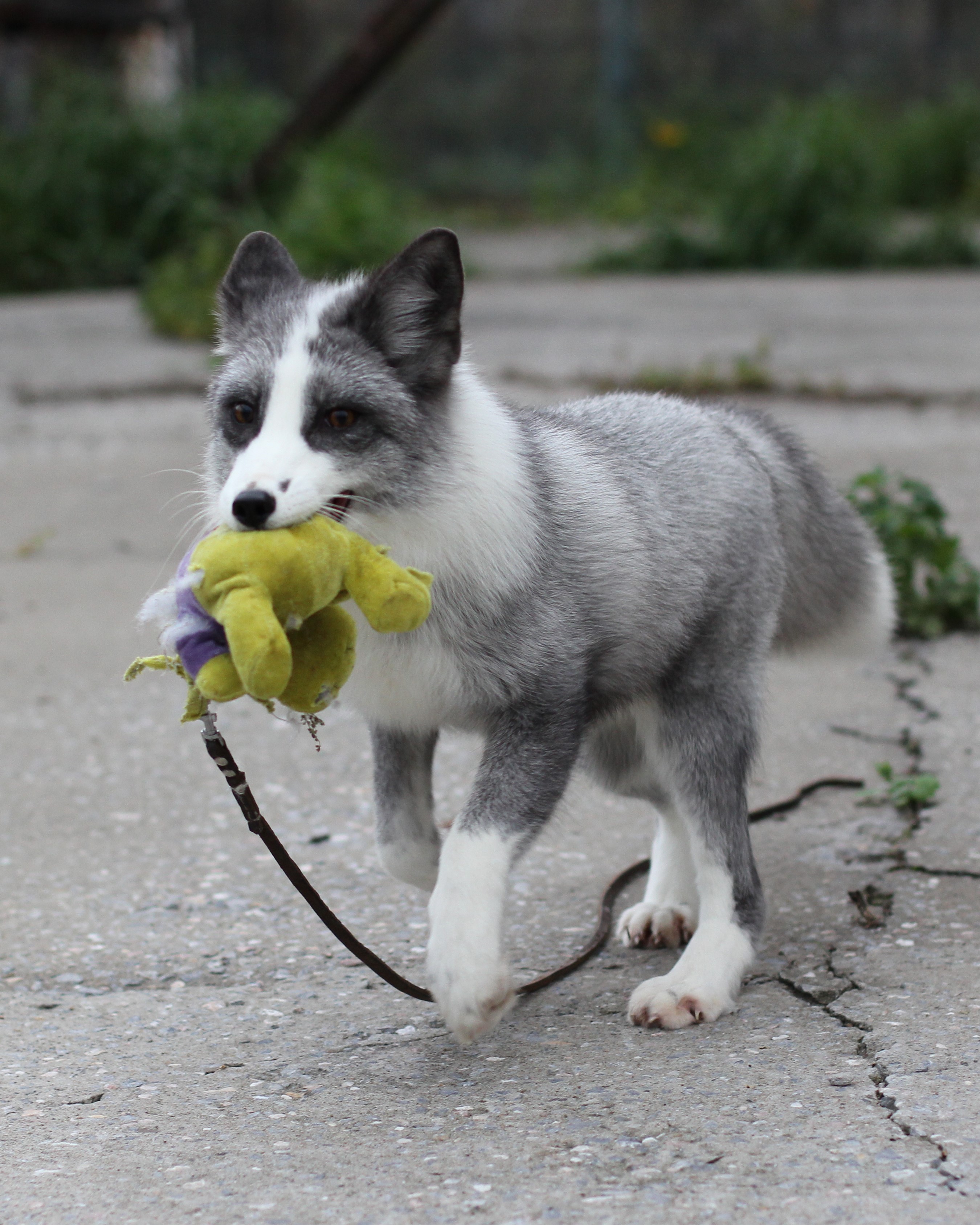
Floppy ears are a sign of domestication
Growing tame
A more complex picture
Hearing it out

 English
 Arabic
 French
 Spanish
 Portuguese
 Deutsch
 Turkish
 Italiano
 Russian
 Romaian
 Portuguese (Brazil)
 Greek
Greek