


Poor Sauropod Was Limping When It Made Curious 360° Looping Dinosaur Track
Poor Sauropod Was Limping When It Made Curious 360° Looping Dinosaur Track
One of the longest trackways created by a single dinosaur shows it completing a full loop. Drones have been used to map all 95 meters (315 feet) of the footprints, which show some intriguing behavior, but don’t tell us what made the sauropod change its mind on where it was going.
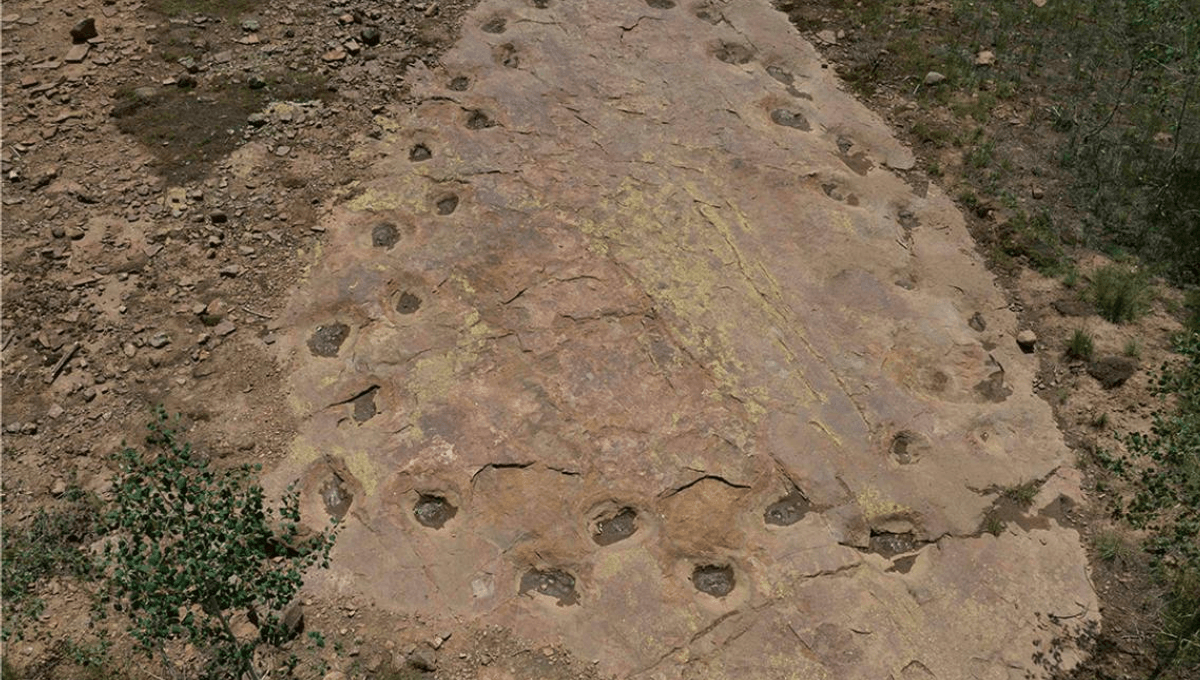
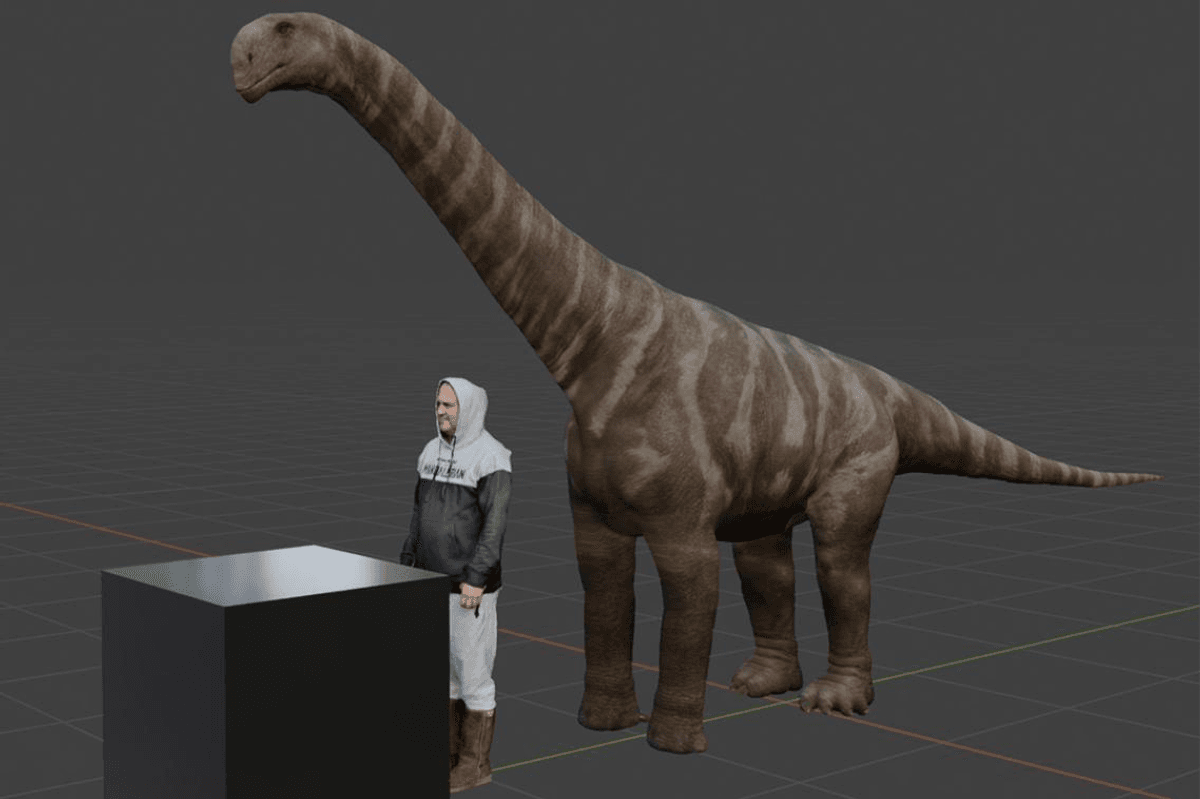
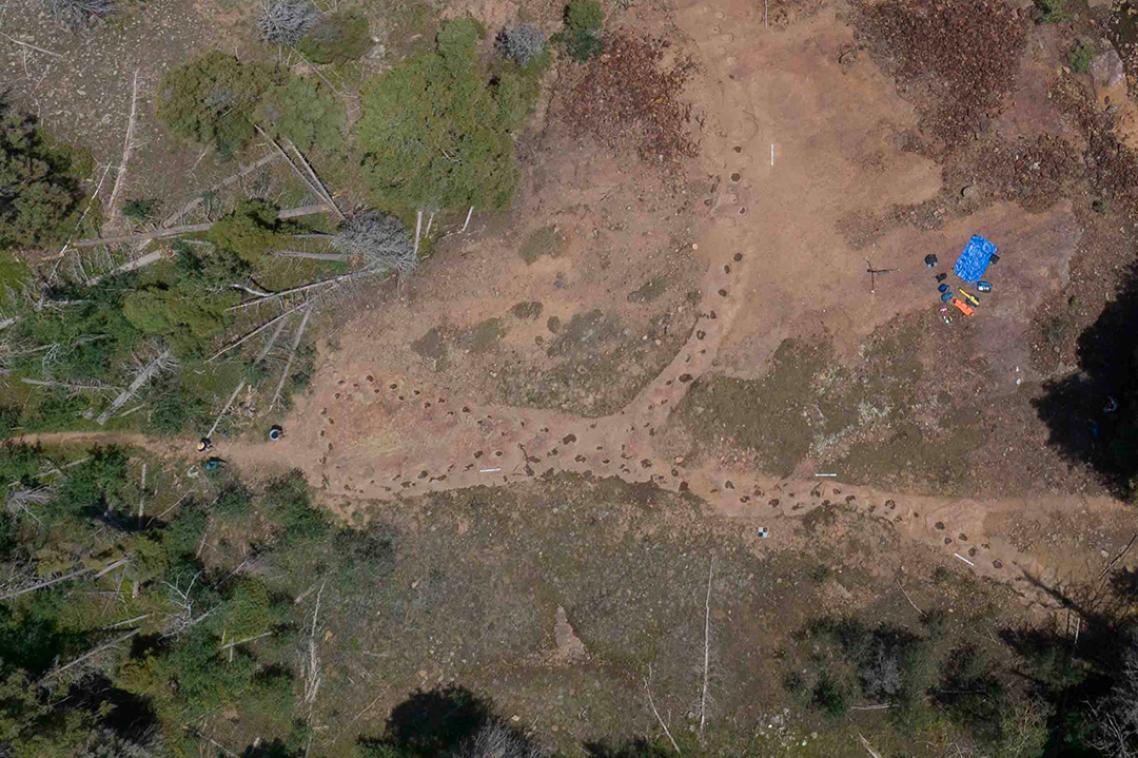
The rest of this article is behind a paywall. Please sign in or subscribe to access the full content. At West Gold Hill, Colorado, a set of at least 131 sauropod prints have been known since at least the 1950s. The previously private land was acquired by the US Forest Service last year, and paleontologists have since used drones to map the path in a way that is hard to do from the ground. The almost 360° change in direction the drones revealed may tell us a sauropod’s turning circle, among other aspects of the motion of the largest beasts to ever walk the Earth. Dinosaur footprints are quite common, but there’s only so much you can learn from one or two prints. An extensive trackway can teach us a lot more about how they moved, and sometimes their interactions. Trackways much larger than West Gold Hill have been found when the conditions were right to preserve the imprints of many dinosaurs at once, but only a few offer as much length from a single individual as this. “This was left in the Late Jurassic when long-necked dinosaurs such as Diplodocus and Camarasaurus roamed North America,” said Dr Anthony Romilio of the University of Queensland in a statement. Besides its extreme length, Romilio added, “This trackway is unique because it is a complete loop.” A drone image of the trackway (left), and the same in false color showing the height of the landscape (right) Image Credit: Dr Anthony Romilio However, Romilio told IFLScience, the site has its drawbacks. The prints are not as sharp as at many other sites, which he attributes to damage from the same glaciers that exposed them in the last Ice Age by removing the layers above. This erosion means the team cannot identify the species of the trackmaker, or even if the prints come from the front or hind feet. Nevertheless, Romilio and others who studied the prints have concluded that, with one or two possible exceptions, they are consistent enough in shape that they must have been made by the same two feet. The sauropod that made these tracks was not among the giants, likely becaue it was not fully grown. Its reconstructed size has been compared with a human. Image Credit: Dr Anthony Romilio Although there is reason to believe some sauropods could stand on their back feet to reach treetops, no one thinks they could walk that way – fun as an acrobatic sauropod might be. Some sites that curiously only appear to show front feet prints have been proposed to preserve dinosaurs half-swimming, half-wading, but this is disputed. Instead, there are plenty of cases where only one set of prints is visible because they are the only ones deep enough to survive. Early sauropods carried most of their weight over their hips, and consequently, their hind legs went deeper than the front. Later this shifted, however, with evolutionary factors favoring more forward centers of mass. Prints from these species tend to have deeper front prints, to the extent that sometimes the hindprints have not survived. If the printmaker was a Diplodocus, Romilio told IFLScience, we’re seeing the hindprints, but if the maker was Camarasaurus, these would have been left by the forefeet. Given the size and spacing of the prints, the maker was either not fully grown or a member of some smaller sauropod species, but its weight distribution would have matched one or the other. Identifying the print-maker would not just satisfy our curiosity; it could reveal a lot about how one sauropod species moved. Giant sauropods are often compared to modern trucks or buses, which both have large turning circles, yet this one looped rather tightly, before heading off in a different direction, apparently at greater speed. We’ll probably never know why the dinosaur turned around, but Romilio considers the possibility that something scared it – whether a predator, a territorial member of its own species, or a clap of thunder – most likely. The shape of the trackways is clearly visible from a suitable height. Image Credit: Dr Paul Murphey Biomechanics suggest that if the trackmaker was a Diplodocus or another species with weight in the rear and a more horizontal neck, this could represent the tightest turn it could manage. However, Romilio told IFLScience, Camarasaurus’s frontfoot drive and more vertical neck probably made tighter turns possible. Irrespective of species, the prints indicate an animal that was putting more weight on the left leg, most likely indicating it was limping a little due to an injury on the right. No other prints have been found in the vicinity, so we don’t know if any other dinosaurs found a similar motivation to change direction. The study is open access in Geomatics.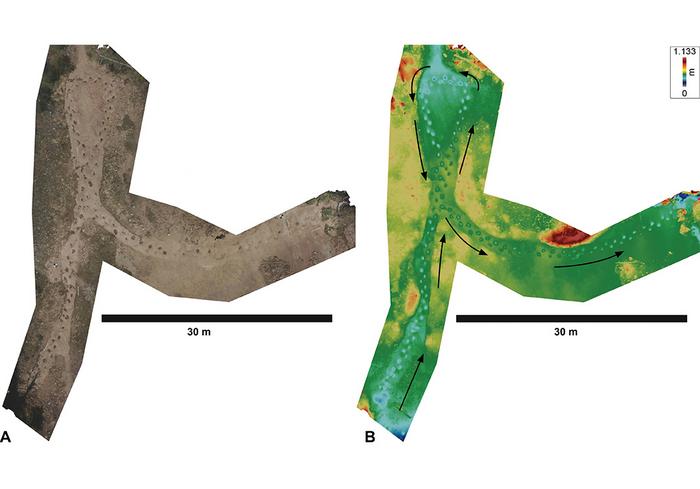

 English
 French
 Spanish
 Portuguese
 Deutsch
 Turkish
 Dutch
Dutch
 Italiano
 Russian
 Romaian
 Portuguese (Brazil)
 Greek
Greek