


Foodgraphy39/Shutterstock
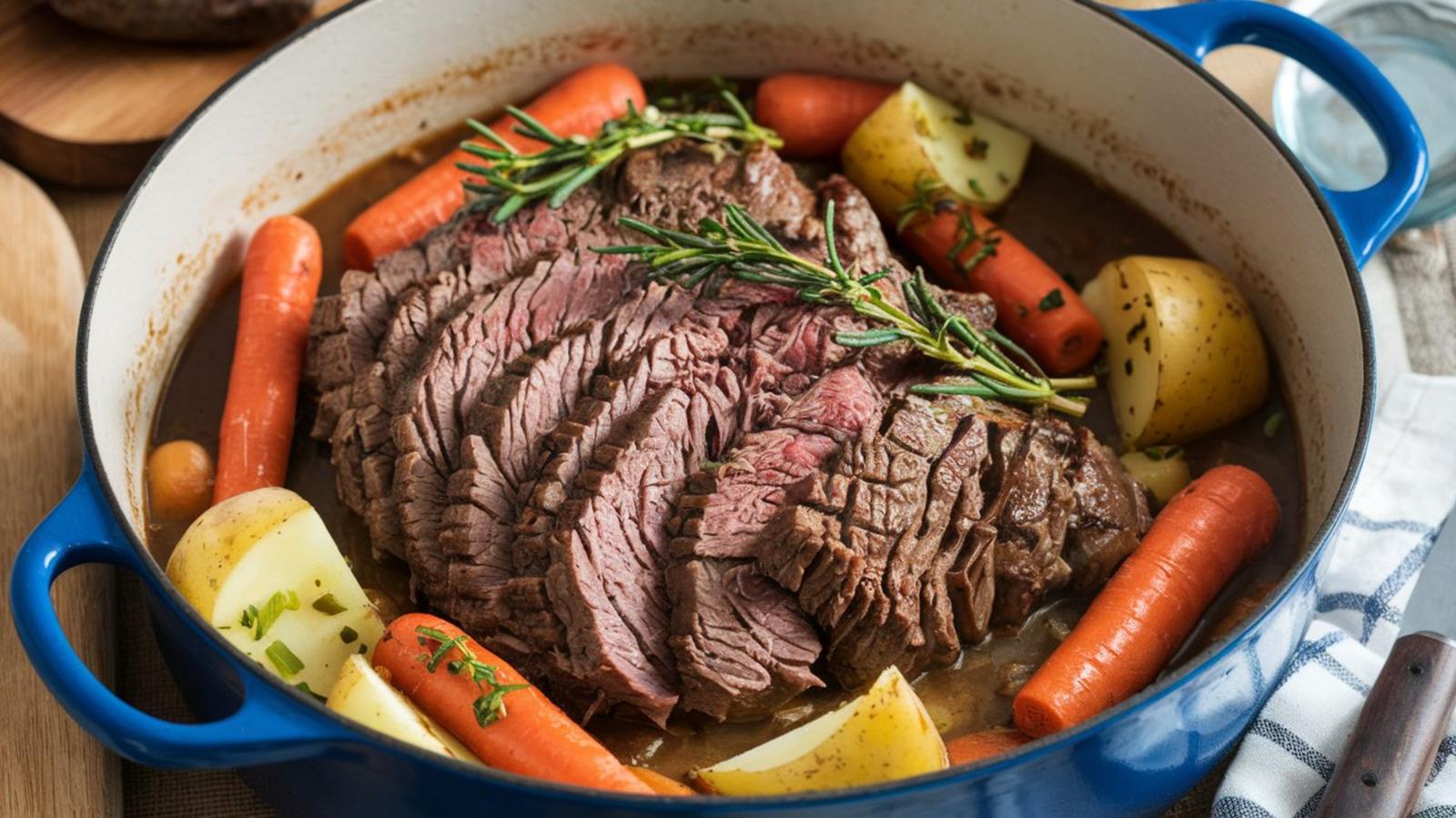
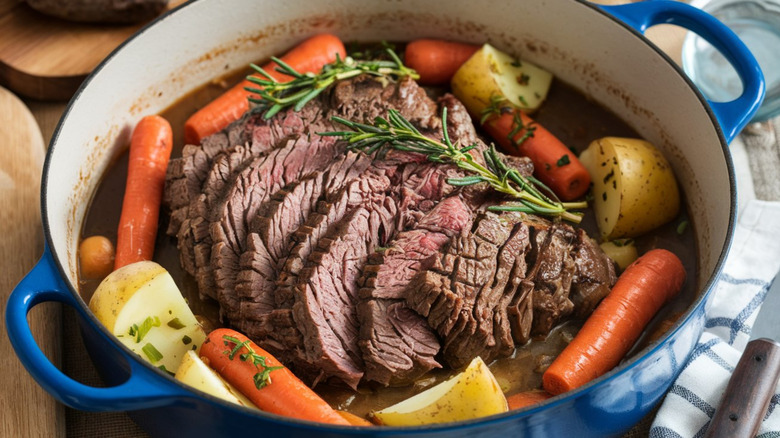
A memorable pot roast begins at the butcher counter, well before any pot reaches a stove. Slow cooking rewards beef built from sturdy fibers, modest internal fat, and connective strands ready to soften through patient heat. Time guides every transformation. Collagen dissolves into silkiness, fat merges with the sauce, and firm muscle melts into a nostalgic experience beloved across generations. Pot roast carries enduring appeal because gentle heat reveals generosity within cuts that appear rugged at first glance.
Beef suited for long braises softens at a steady pace while holding essential moisture, yielding slices that maintain their form. Few culinary techniques highlight the power of patient preparation more clearly. A thoughtful choice at the counter shapes every phase ahead, steering the journey from raw beef to a meal with dependable tenderness and cozy familiarity. A carefully selected roast proves how simple ingredients can evolve into something resonant when supported by time, structure, and intention.
Cooks make plenty of mistakes when preparing pot roast, from neglecting to thoroughly brown the meat to overcooking the supplementary vegetables. But if you follow the next few tips, you can confidently serve a delicious, hearty, protein-packed dinner time and time again.
Choose tougher, well-worked beef cuts (preferably chuck)
Food Arena/Shutterstock
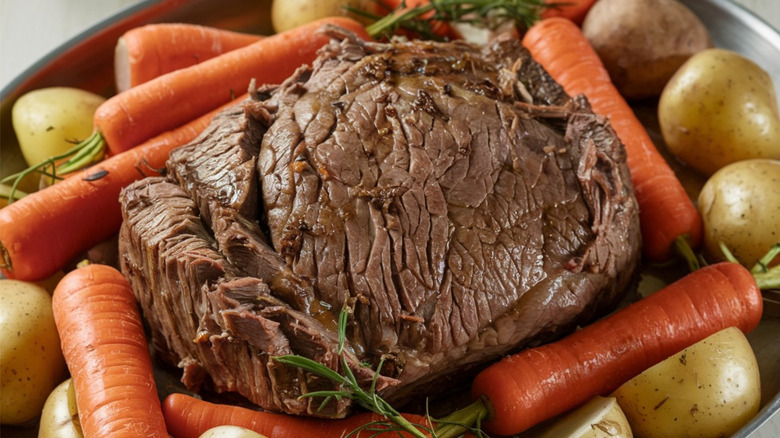
Chuck rises to the forefront for pot roast because it comes from the hardworking shoulder. Muscle fibers in this region of the cow develop impressive strength, with connective tissue woven throughout each layer. A long braise turns structural toughness into a key advantage. Collagen melts into gelatin, saturating the roast with moisture while lending depth to the surrounding liquid. Slices remain intact yet yield under light pressure, reflecting qualities appreciated in a slow-cooked classic.
Shoulder cuts excel at absorbing aromatics. Broth, herbs, and vegetables settle into every seam without compromising structure while natural reservoirs help maintain tenderness. Many lean cuts stiffen during extended cooking, whereas shoulder meat softens in a consistent, predictable pattern. Browning also improves when a broad surface meets a hot pan, building caramelized character before the simmer even begins. There are many reasons chuck is among the underrated cuts of meat chefs love (and you will, too). For one, it offers a solid foundation for cooks aiming for a satisfying meal anchored in tradition.
Look for marbling
Lori Long McConnell/Shutterstock
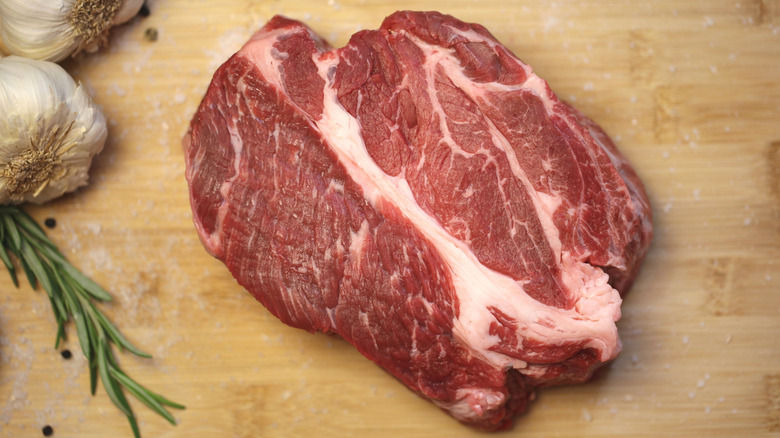
Marbling plays a vital role in pot roast. As hours pass, each thin line melts within the meat, providing continuous internal basting that keeps the fibers supple. A roast with balanced marbling stays plump throughout an extended braise, supported by lubrication that forms naturally as fat melts. The rendered fat merges with juices released during cooking, sharpening savoriness within the braising liquid.
Cuts with sparse marbling often retain firm fibers because internal support never fully develops. Ideal marbling appears as fine, feathery lines drifting across the surface, promising slow, even rendering through the entire cut. Thick exterior fat caps contribute far less, dissolving outward rather than nourishing the inner structure.
A brief scan of the meat's surface offers essential insight into its ultimate texture and flavor. Even, delicate patterns signal a roast prepared to reward patient heat with moisture and tenderness. Marbling acts as a built-in partner during long cooking, guiding the pot toward a melt-in-your-mouth finish from the first slice to the final serving.
Prioritize collagen and connective tissue
julie deshaies/Shutterstock
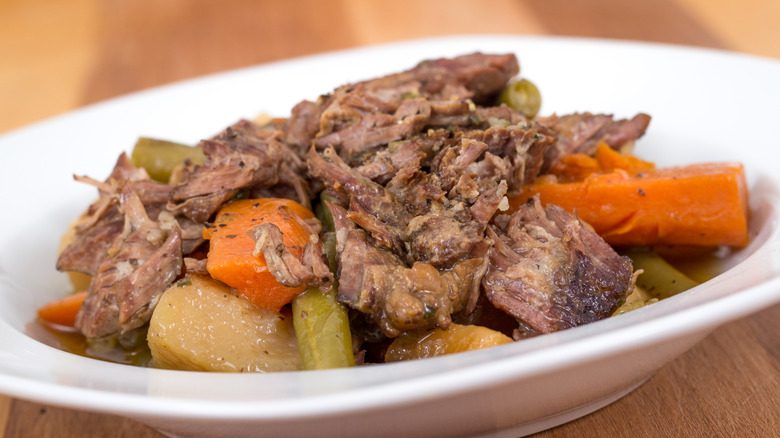
Collagen (a protein found in connective tissue) is the unsung hero of pot roast. Cuts of meat marked by visible seams respond well to low, slow heat, shifting from sturdy muscle to mouthwatering tenderness. As it melts, collagen turns into gelatin, enriching the surrounding liquid with a naturally thickened base that coats every portion.
The connective tissue also preserves moisture. As the strands dissolve, a supportive cushion forms around muscle fibers, helping them remain soft throughout the entire cook. Leaner cuts of meat often lack structural support, leading to dryness, even with careful handling. A collagen-forward cut offers assurance for anyone seeking consistency and warmth in a tasty, slow-cooked masterpiece.
As the adage goes, first impressions matter. When it comes to choosing pot roast meat, the surface cues reveal everything. Lines, folds, and subtle crinkles indicate fibers that transform gracefully under patient heat. A roast built around strong connective architecture produces cohesive slices of meat and a luscious gravy.
Buy a whole roast rather than stew meat
Lara Hata/Getty Images
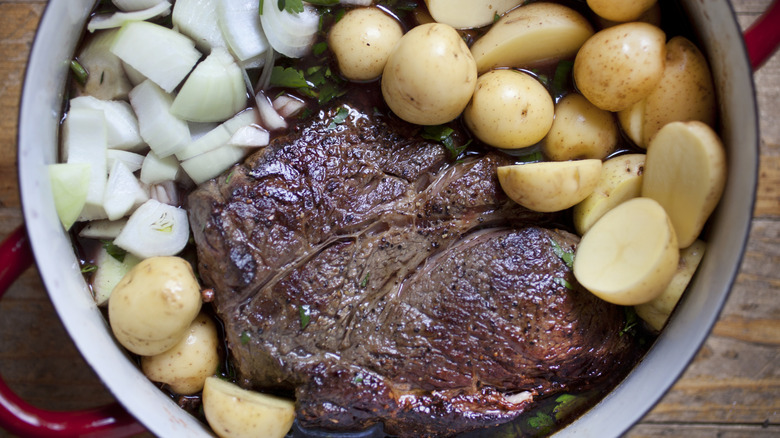
Selecting a whole roast ensures comfort in every forkful. Pre-cut stew meat may seem like a convenient time-saver, but extended cooking reveals an important drawback. Cubes packaged together often originate from several regions of the animal, each carrying unique ratios of fat and collagen. Hours of heat magnify those differences. Some cubes soften quickly while others resist, creating an uneven distribution of tenderness despite identical treatment. Meanwhile, a single, intact cut removes variability because every section behaves uniformly throughout the entire cook.
A whole roast also excels during the searing process. A wider surface area encourages deep caramelization due to the Maillard reaction, building a color and complexity that influences the braising liquid. On the other hand, small cubes release moisture instantly when they come into contact with a hot pan, preventing the same meaningful browning and weakening the base. A whole cut keeps its structure as it browns, then softens as it simmers.

 English
 Arabic
 French
 Spanish
 Portuguese
 Deutsch
 Turkish
 Dutch
Dutch
 Italiano
 Russian
 Portuguese (Brazil)
 Greek
Greek