


 PUBLISHED
Of the more 6,000 planets that have so far been discovered, most are deeply unsuited to life – at least life of the forms we are familiar with or can plausibly imagine. A substantial minority look like they might be able to support something limited, a planet of bacteria or slime molds. A handful hold prospects of being quite Earth-like, although in every case there are some big unknowns that might ruin the whole thing.
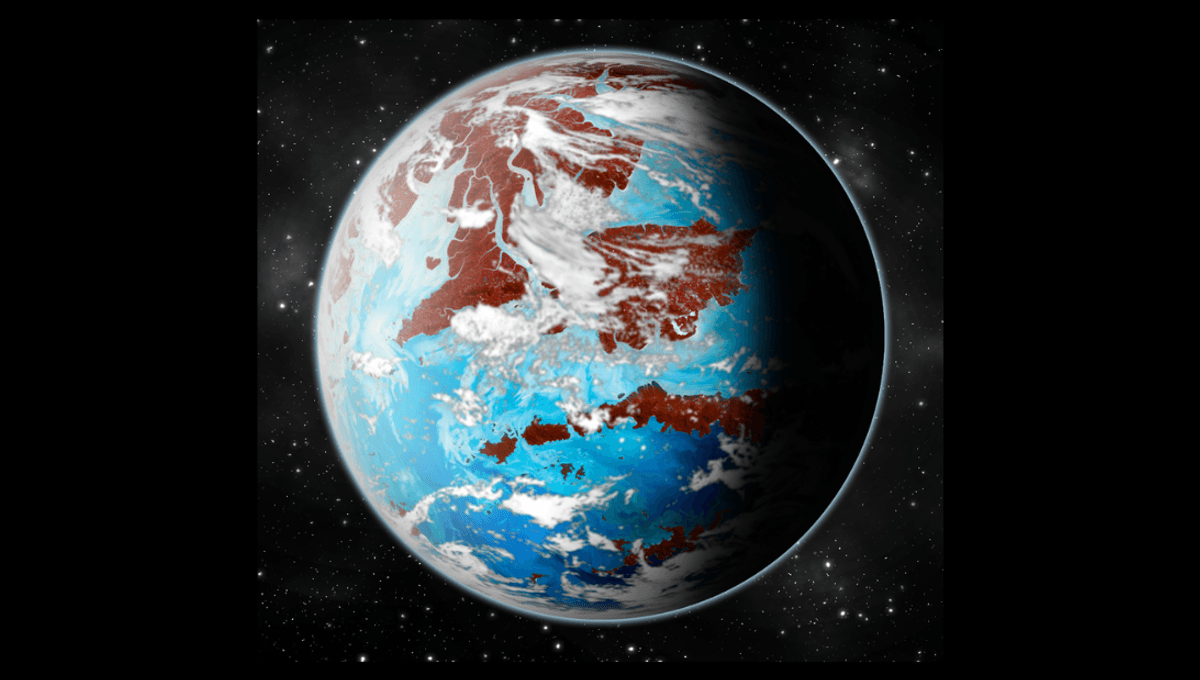
The rest of this article is behind a paywall. Please sign in or subscribe to access the full content. However, a few of the scientists taking part in the search for worlds that could support life have bigger dreams. They’ve created the concept of “superhabitable planets”, those that are, or at least might be, more suited to life than Earth is. Given we know Earth is very capable of hosting life, the idea of superhabitability needs some explaining. Although we can’t rule out the possibility that life could exist in a manner very different from any we have seen, no plausible scenario has been proposed for this. Therefore, the search for life assumes the need for liquid water, and therefore a substantial atmosphere and temperatures within a relatively narrow range. It is also assumed there must be a rocky core that is not buried so deep that atmospheric pressure would crush any proto-life. Stability of these features is particularly critical. A little change can be good, but a planet whose temperatures vary too dramatically is not likely to be habitable long enough for life to evolve very far, if it gets started at all. Consequently, planets on unstable orbits or circling stars that progress quickly to the red giant phase are ruled out. We might also reject planets like Uranus with too much axial tilt, but that’s not something we can currently measure. Along with the essential features above, some others are considered desirable. A mix of land and sea, for example seems better than a planet dominated by one. It’s often argued that a large moon like our own may contribute to the prospects for life, or at least an advanced civilization, in several ways. Plenty of space is also good. Many of the planets that meet the criteria above are expected to be tidally locked. They might have a zone where conditions are temperate, but it would be a thin ribbon, pushing them to the bottom of the pile. When watching a documentary about the stunning abundance of Earth’s most biologically rich locations – a tropical rainforest, coral reef, or vast nutrient-rich upwellings – it seems hard to imagine that anywhere could be more habitable than Earth. Surely, if Earth was not initially perfect for life, organisms have molded it to their liking? Nevertheless, in 2014 Dr René Heller of McMaster University and Dr John Armstrong of Weber State University pointed out that while Earth may be perfect for the life-forms here, it’s likely there are planets in such a large universe that have more life. Whether measured by number of species, or the combined mass of living organisms, these would exceed Earth and deserve the superhabitability title Heller and Armstrong invented, even if not quite as well suited to us. Earth is hard to beat on many measures, but Heller and Armstrong argued there is room for improvement. For example, they noted that orange-colored stars slightly cooler and less massive than our own Sun are stable for longer, and therefore might be better suited to truly abundant life. Unlike M-type red dwarfs, however, these mostly K-type stars are still hot enough that planets orbit at a distances that reduce their exposure to damaging flares or risk of tidal locking. Lower ultraviolet radiation emissions from orange stars would also reduce a planet’s dependence on an easily damaged ozone layer. A PhD completed last year explored whether K-type stars really are likely to have superhabitable planets. A more contentious superhabitability feature is being more massive than Earth, and therefore larger. Just think of how much more life the Earth could support if it had a 40 percent greater radius, and therefore double the surface area. The downside of this is that a larger planet would have more gravity, making it harder to fly. Considering the likely effect of greater mass on plate tectonics, Heller and Armstrong proposed the ideal radius for a planet is about 20-30 percent larger than Earth’s. The short answer is we don’t know. Our knowledge about the planets we have found is always limited by current technology, and sometimes quite brief observations. In 2020 astronomers identified a list of 24 potentially superhabitable planets based on what we knew at the time. Our list of planets orbiting other stars has grown by a third since that, so a similar list made today would be longer. However, it’s important to note that at the time, 22 of the 24 planets on the list were not even confirmed planets. Astronomers were awaiting more data to see if the dips in starlight were from a planet passing in front, or some overly large sunspots. Since then, some of the candidates have probably been confirmed, but if an updated list has been published we can’t find it, although many papers have cited this research. For example, one study this year did look at the prospects of the JWST checking out certain potentially superhabitable planets, including some from that list. Even for those planets that turn out to be real, many unknowns might render them barely habitable or uninhabitable. For example, some might share their star systems with gas giants on much more disruptive orbits than our tame Jupiter and Saturn. Most earned their place on this list by orbiting stars older and cooler than the Sun, and many were also larger. However, those advantages count for little if the temperatures are wrong, and some of the planets on the list are likely to be dangerously hot, if their atmospheres are much like Earth’s. A little more warmth is probably good (it’s the speed of global heating that is our problem, not the direction) but if an extra 30 degrees is too much – which seems plausible – a third of the list fails on that test alone. Moreover, many of these candidates (if real) probably have radii close to twice that of Earth’s. If it’s true the sweet spot for planetary size is only a little larger than our own, these planets could have too much of a good thing. So far, therefore, the best we can say is we’ve identified some planets that might be superhabitable, but only a few of those definitely exist, and none of them are definitely superhabitable. All “explainer” articles are confirmed by fact checkers to be correct at time of publishing. Text, images, and links may be edited, removed, or added to at a later date to keep information current.First, what do we mean by a planet’s habitability?
How could a planet be more habitable than Earth?
Have we found any superhabitable planets?



 English
 Arabic
 French
 Portuguese
 Deutsch
 Turkish
 Dutch
Dutch
 Italiano
 Russian
 Romaian
 Portuguese (Brazil)
 Greek
Greek