


Scientists Make First-Ever Airborne Detection Of Toxic Chemical In Western Hemisphere
Scientists Make First-Ever Airborne Detection Of Toxic Chemical In Western Hemisphere
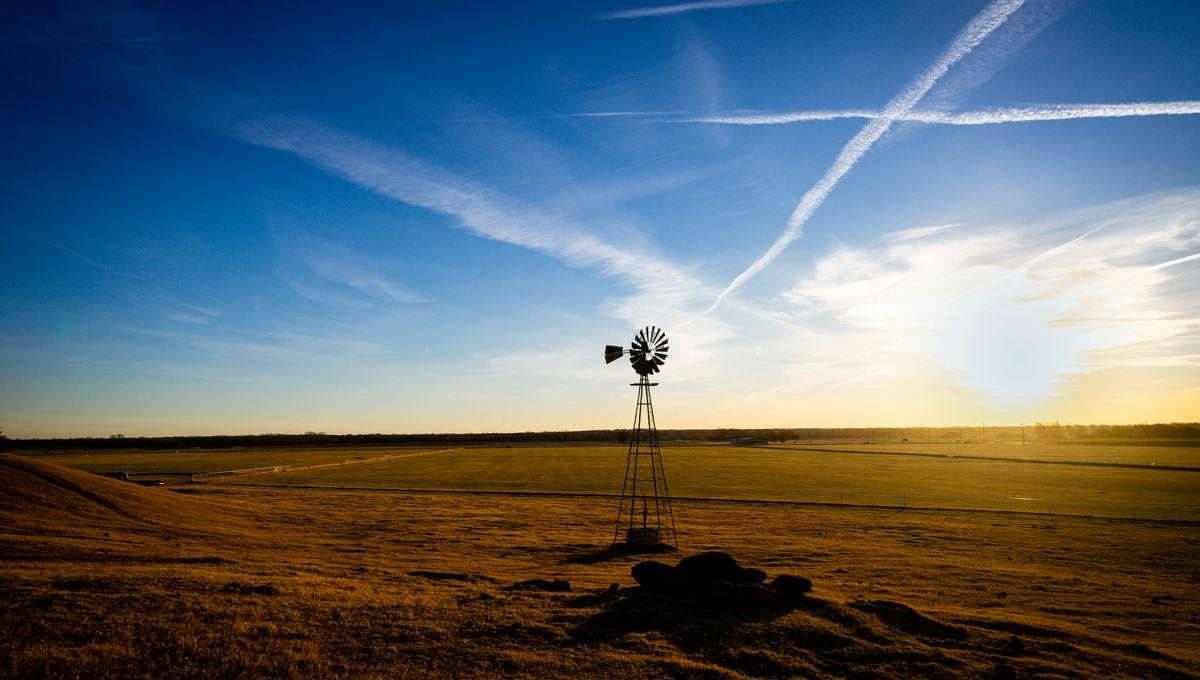
Over the fields of Oklahoma, a little-known, toxic, organic pollutant has been reported for the first time. Its impacts are currently unknown, but researchers believe it’s something that governmental agencies should keep a close eye on.
Chemists at the University of Colorado Boulder were recently toying around with high-tech instruments in Oklahoma with the hopes of learning about how aerosol particles form and grow in the atmosphere. Unexpectedly, they noticed the presence of medium-chain chlorinated paraffins (MCCPs) in the atmosphere. These awkwardly named substances are used in fluids for metalworking and the manufacturing of PVC and textiles. They have a tendency to trickle into wastewater and eventually end up in biosolids, processed human sewage sludge used as fertilizer. The biosolids are then sprinkled on agricultural fields, which is thought to be the source of this pollution in the atmosphere. "When sewage sludges are spread across the fields, those toxic compounds could be released into the air. We can't show directly that that's happening, but we think it's a reasonable way that they could be winding up in the air. Sewage sludge fertilizers have been shown to release similar compounds," Daniel Katz, lead author of the study and PhD student at CU Boulder, said in a statement. MCCPs have been reported in the atmosphere of Asia and Antarctica before, but it’s the first time they’ve been officially logged in North America, or the Western Hemisphere in general. Since it is early days, their precise impact on human health and natural ecosystems is not fully understood. However, preliminary research suggests they have the potential to cause real harm, and environmental health groups are already calling for them to be banned. Their close relatives, short-chain chlorinated paraffins (SCCPs), are regulated by the US Environmental Protection Agency and the Stockholm Convention, a global treaty to control persistent organic pollutants. The regulation of MCCPs is currently under consideration by the Stockholm Convention. In a slightly ironic twist, the tight regulation of SCCPs may have actually increased the production of the newfound MCCPs. "We always have these unintended consequences of regulation, where you regulate something, and then there's still a need for the products that those were in, so they get replaced by something, explained Ellie Browne, CU Boulder chemistry professor and co-author of the study. With that in mind, the researchers say their findings suggest that authorities should start looking into levels of MCCPs in the atmosphere and evaluating the risks. "We identified them, but we still don't know exactly what they do when they are in the atmosphere, and they need to be investigated further. I think it's important that we continue to have governmental agencies that are capable of evaluating the science and regulating these chemicals as necessary for public health and safety,” Katz said. The study is published in the journal ACS Environmental Au.

 English
 Arabic
 French
 Spanish
 Portuguese
 Deutsch
 Turkish
 Dutch
Dutch
 Russian
 Romaian
 Portuguese (Brazil)
 Greek
Greek