


Rare Core Samples Provide "Once In A Lifetime" Opportunity To Study The Giant Line That Slices Through Scotland
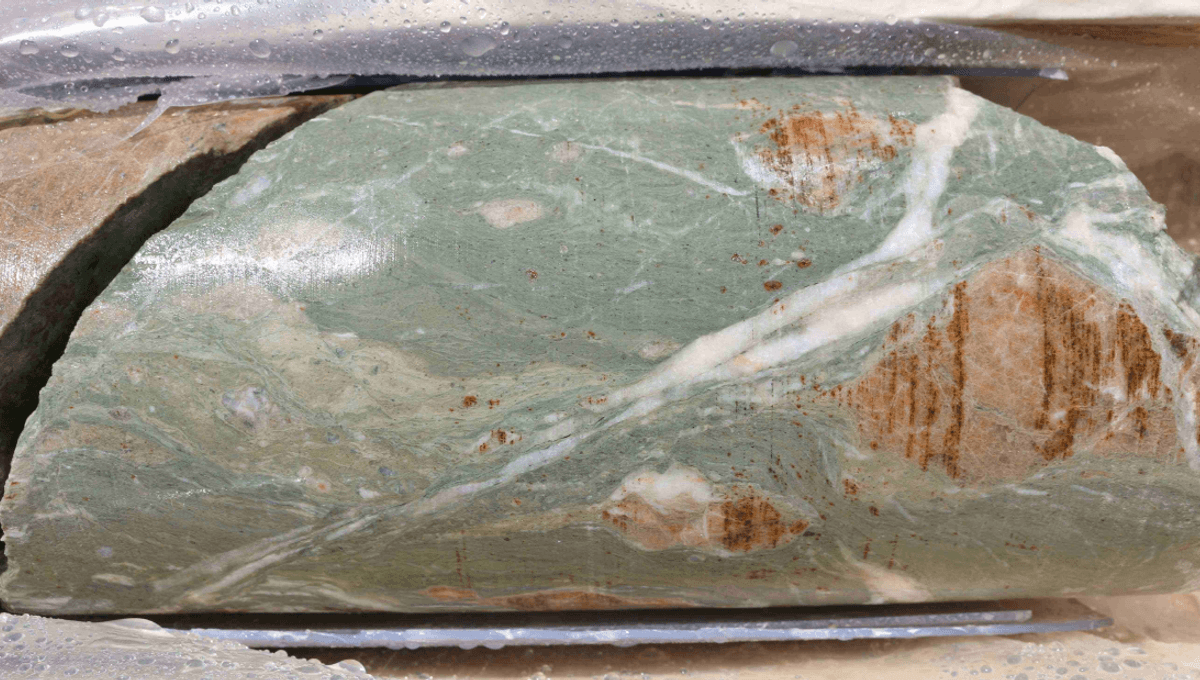
Scientists Get Their Hands On Extremely Rare Core Samples, Providing A "Natural Laboratory" To Model Seismic Hazards
Scientists with the British Geological Survey (BGS) have been given a unique opportunity to study rock core samples taken from deep inside the Great Glen Fault – the United Kingdom’s largest fault zone that slices through Scotland. At around 1,000 kilometers (62.1 miles) long and 40 kilometers (24.9 miles) deep, it runs from Ireland through Scotland and on to Norway.
The rest of this article is behind a paywall. Please sign in or subscribe to access the full content. Its incredible depth has historically made getting samples near impossible. Everything from lochs to glacial deposits and mountains tend to be in the way; but now first-of-their-kind core samples have been obtained from Scotland, giving scientists a “once in a lifetime” opportunity to study how Scottish Highlands formed. The new drill core provides a natural laboratory to study everything from the geological history of the UK to understanding the geological processes that occur in major fault zones. Romesh Palamakumbura The core samples were harvested as part of SSE Renewables’ proposed pumped hydro storage scheme at the Coire Glas site on the shores of Loch Lochy in the Highlands. During their engineering work, over 1,500 meters (4,921 feet) of core were extracted from depths of up to 650 meters (2,131 feet). BGS scientists were then invited to study these cores, marking the first ever retrieved from deep inside the Great Glen Fault Zone. BGS geologists studying the core in the National Geological Repository. Image credit: BGS © UKRI “This has been an incredible opportunity to look at drill core from the centre of the Great Glen Fault,” said BGS Geologist Romesh Palamakumbura to IFLScience. “To hold rare samples from a fault zone like this, that very few scientists have had access to before, is a real privilege, and one of the standout highlights of my career to date.” This work will be important for a wide range of applications including derisking major renewable energy projects, understanding potential energy storage sites, and modelling of seismic hazards. Romesh Palamakumbura The core samples are packed full of unprecedented insight into not only how the Great Glen Fault formed, but also crustal-scale faults worldwide. According to Palamakumbura, they have already provided a new understanding of fundamental geological processes, including how fluids (that probably come from deep inside the Earth) move through rocks, altering their strength and changing the way faults behave. The Great Glen Fault formed around 400 million years ago during a massive mountain-building event that shook the Caledonian Orogeny – the result of ancient continental plates colliding. It’s been pretty inactive recently, and yet at one time it moved by hundreds of kilometers. Understanding why could help us get a better grip on the activity of other major faults, like the more active San Andreas Fault in the United States. Mineral map image of Great Glen Fault rock generated using a scanning electron microscope. The pale purple-pink areas are formed by interconnected networks of weak clay minerals formed due to alteration of the host rock, which shearing has localized. Pale and dark blue areas are regions of later carbonate veins and cement. Image credit: BGS © UKRI “The new drill core provides a natural laboratory to study everything from the geological history of the UK to understanding the geological processes that occur in major fault zones, which is relevant to understanding faults across the planet,” said Palamakumbura. “This work will be important for a wide range of applications including derisking major renewable energy projects, understanding potential energy storage sites, and modelling of seismic hazards.” “At the end of the project the core will be made available to the wider research community through the National Geological Repository, creating exciting opportunities for future generations of scientists to use new analytical techniques to delve even further into geological processes that are happening deep in the earth.”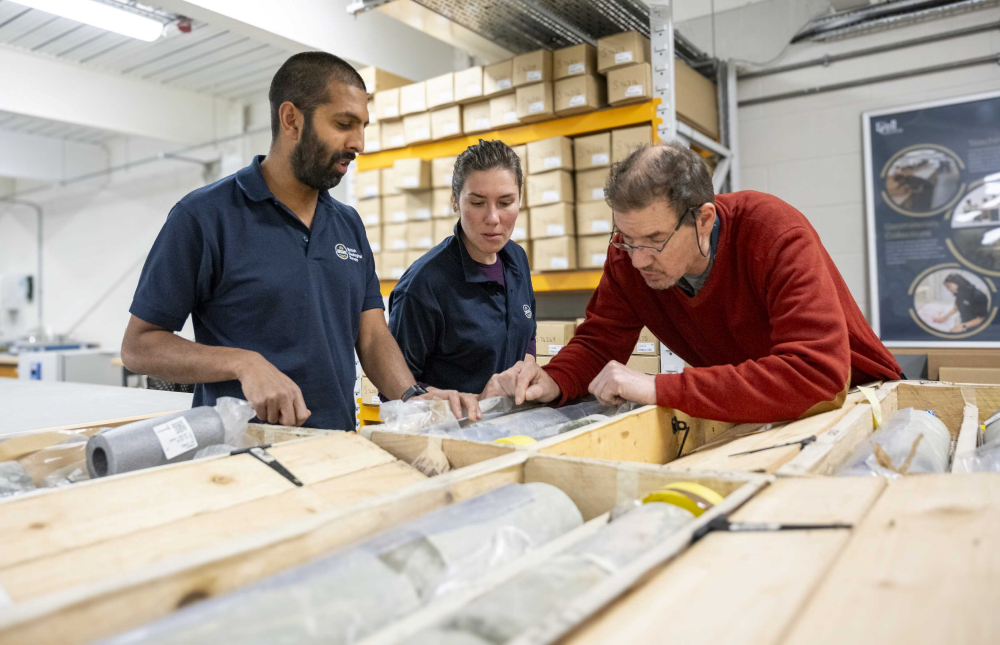


 English
 Arabic
 French
 Spanish
 Portuguese
 Deutsch
 Turkish
 Italiano
 Russian
 Romaian
 Portuguese (Brazil)
 Greek
Greek