


7,000-Year-Old Atacama Mummies May Have Been Created As "Art Therapy"
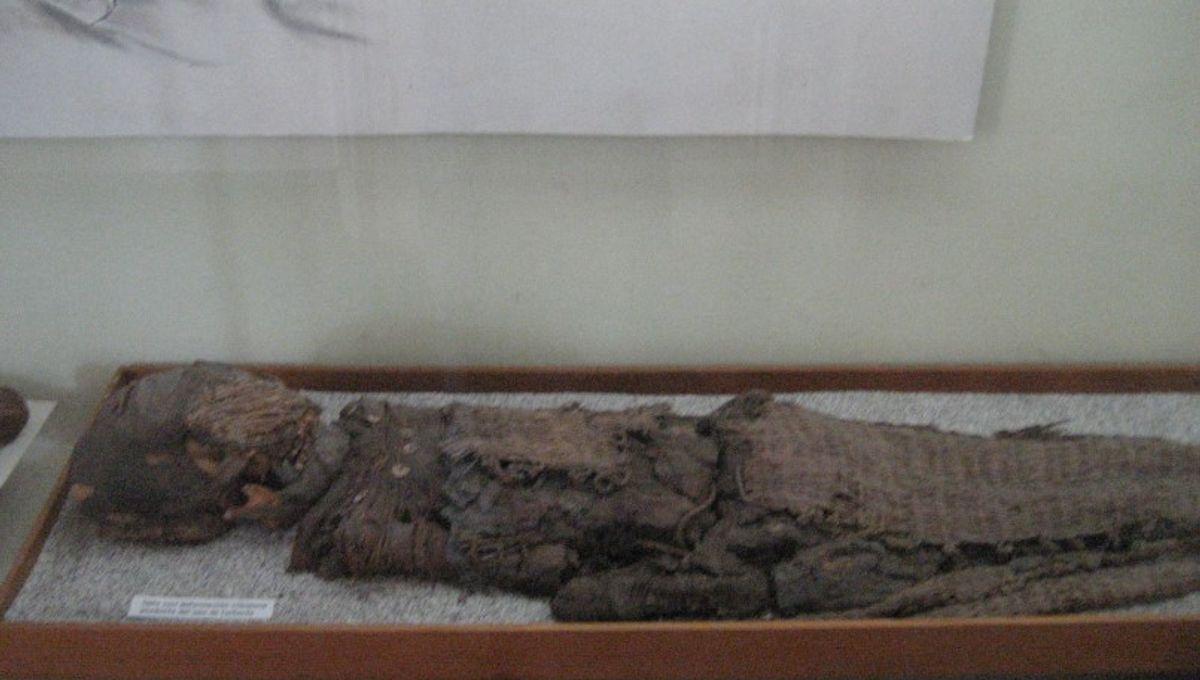
7,000-Year-Old Atacama Mummies May Have Been Created As "Art Therapy"
Ancient hunter-gatherers in the Atacama Desert may have begun mummifying their dead as a form of “art therapy” to help them process their grief following the loss of a loved one. More specifically, the 7,000-year-old tradition might have been initiated by bereaved mothers struggling to come to terms with miscarriages, stillbirths or infant mortality.
The rest of this article is behind a paywall. Please sign in or subscribe to access the full content. Known as the Chinchorro culture, the group responsible for this striking mortuary practice occupied the coast of what is now northern Chile, choosing to settle in one of the harshest environments on Earth. In addition to the extreme scarcity of rainfall in the region, several Chinchorro sites – including those near the Camarones river – were heavily contaminated with arsenic. Noting that the earliest Chinchorro mummies are all infants and newborns, Bernardo Arriaza from the University of Tarapacá hypothesizes in a new paper that arsenic poisoning may have resulted in high rates of pregnancy loss and caused the deaths of young children. “I have argued that this unexpected departure led to the development of artificial mummification as an emotional response to cope with the loss of babies,” he writes. “To cope with the sorrow of losing their fragile infants, I argue that Chinchorro parents began transforming and ornamenting their beloved children with earth and sticks, essentially keeping them present,” continues the author. “Over time, with subsequent generations, the decorating of the dead (painting, adding wigs, facial mask, etc.) became increasingly lavish and applied to all age categories.” Drawing parallels between this ancient mummification process and modern art therapy, Arriaza posits that the Chinchorro may have achieved “catharsis” and found “emotional release” through their artistic creations. “Visual art provides a non-verbal outlet for processing intense emotions experienced after the loss of a loved one,” he explains. “Through artistic creative expressions, individuals can find a narrative or give existence to their life after a significant loss.” Ironically, however, the very process that soothed these grief-stricken parents may have been the thing that led to the Chinchorro’s demise, as the creation of these mummies required the use of manganese as a pigment. However, exposure to highly toxic manganese dust is known to trigger an array of nasty health conditions, including a type of psychosis known as manganese madness. Despite maintaining their mummification tradition for around 3,500 years, the Chinchorro ultimately vanished, and Arriaza theorizes that manganese poisoning may have been the thing that “prompted them to gradually shift away from and eventually abandon their elaborate preparation of the dead.” For a long time, it was thought that the Atacama mummies were the oldest in the world, as the earliest known Egyptian mummification dates back around 4,500 years. However, it was confirmed earlier this year that 14,000-year-old "smoke-dried" mummies in South East Asia are the world's oldest example of mummification. Do people still get mummified? You may be surprised. The study is published in the Cambridge Archaeological Journal.

 English
 Arabic
 French
 Portuguese
 Deutsch
 Turkish
 Dutch
Dutch
 Italiano
 Russian
 Romaian
 Portuguese (Brazil)
 Greek
Greek