


 PUBLISHED
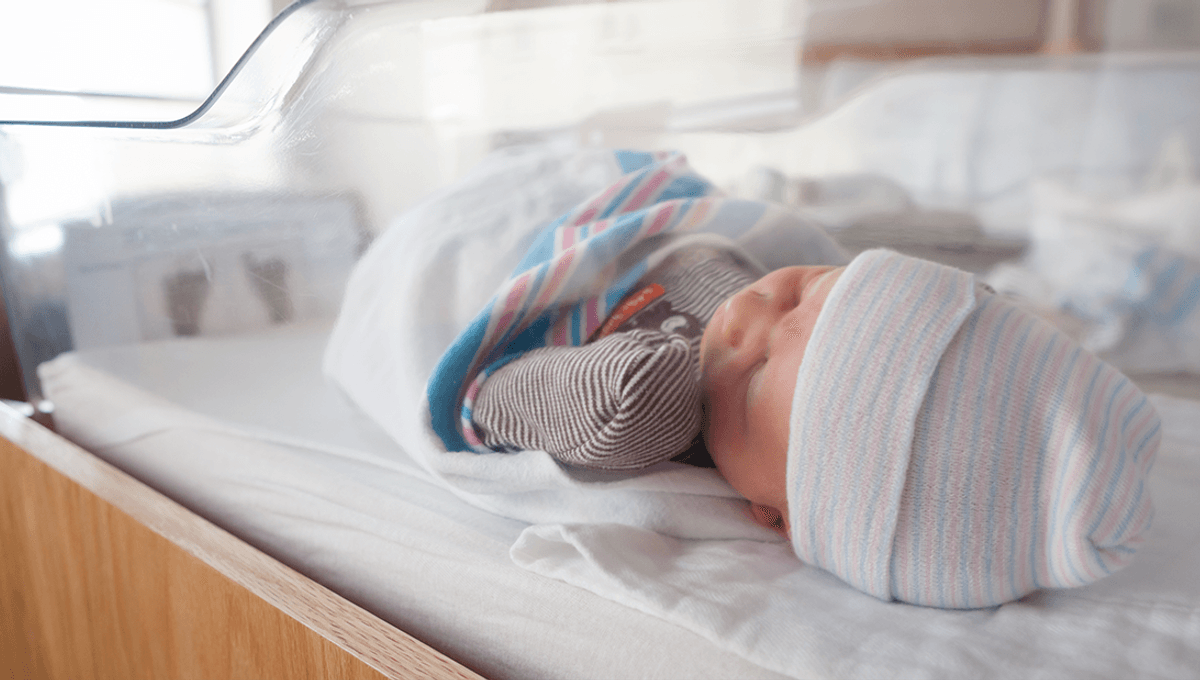
In February 1985, Jill Lawson went into labor at just 26 weeks pregnant, giving birth to her son Jeffrey Lawson when he weighed just 680 grams, or one-and-a-half pounds. Like many premature babies (but by no means all), Jeffrey developed patent ductus arteriosus (PDA), and was booked in for open heart surgery at a local surgery in Washington D.C.
The rest of this article is behind a paywall. Please sign in or subscribe to access the full content. Surgery for the condition today has significantly improved through new, minimally invasive techniques. Back then, it involved cutting holes into the side of the neck and chest to fit a catheter, as well as opening up the breastbone and pulling the ribs aside. This, unfortunately, is not the horrifying bit. "What made this particular surgery noteworthy was the fact that Jeffrey was awake and conscious throughout the entire procedure," writes Corinne Masur, PsyD for Psychology Today. "The anesthesiologist had administered only Pavulon, a paralytic that has no effect on pain." This was no oversight, a simple "whoopsie, we forgot to add the painkiller", but had happened because even up to the 1980s, doctors and surgeons were taught that newborn babies could not feel pain. The advice at the time was that this drastic surgery "could be safely accomplished with only oxygen and a paralytic". This odd view may not have been an ancient belief which lasted into the 20th century, but an idea that became mainstream sometime shortly prior to the 19th century. Back in the 17th century, pediatricians at least appeared to know that babies can experience pain. "If the skin in old people be tender, what is it you think in a new born Babe? Doth a small thing pain you so much on a finger, how painful is it then to a Child, which is tormented all the body over, which hath but a tender new grown flesh?" pediatric surgeon Franz Wiertz wrote in 1656, according to a 2013 review. "If such a perfect Child is tormented so soon, what shall we think of a Child, which stayed not in the wombe its full time? Surely it is twice worse with him?" By the latter half of the 19th century, this view had changed somewhat. "The evaluation of pain in the human fetus and neonate is difficult because pain is generally defined as a subjective phenomenon. Early studies of neurologic development concluded that neonatal responses to painful stimuli were decorticate in nature and that perception or localization of pain was not present," a review in the New England Journal of Medicine in 1987 explains. "Furthermore, because neonates may not have memories of painful experiences, they were not thought capable of interpreting pain in a manner similar to that of adults. On a theoretical basis, it was also argued that a high threshold of painful stimuli may be adaptive in protecting infants from pain during birth. These traditional views have led to a widespread belief in the medical community that the human neonate or fetus may not be capable of perceiving pain." Any visual cues in babies that appeared to be a response to pain were put down to being a reflex. A horrifying result of this was that throughout the 19th and 20th centuries, until the late 1980s, babies undergoing surgery were merely given neuromuscular blocks, and no pain relief even during extremely painful surgeries. Since then, there has been much more research into the topic, finding that infants do in fact experience pain. "Up until recently people didn't think it was possible to study pain in babies using MRI because, unlike adults, they don’t keep still in the scanner!' said Dr Rebeccah Slater of Oxford University's Department of Paediatrics, lead author of a study in 2015 said on the topic. "However, as babies that are less than a week old are more docile than older babies, we found that their parents were able to get them to fall asleep inside a scanner so that we could study pain in the infant brain using MRI." The team placed babies and adults inside an MRI machine, before poking their feet with a specialized rod to inflict a little pain into the babies and adult volunteers. Unsurprisingly to 21st century doctors and 17th century pediatricians, the team found a similar pain response in the brains of adults and babies. Eighteen of the 20 brain regions active in adults experiencing pain from the poking stick were also active in the infants. In fact, the babies were thought to have a much lower pain threshold than the adults. "This is particularly important when it comes to pain: obviously babies can’t tell us about their experience of pain and it is difficult to infer pain from visual observations," Slater added. "In fact some people have argued that babies' brains are not developed enough for them to really 'feel' pain, any reaction being just a reflex – our study provides the first really strong evidence that this is not the case." So where did this odd view that babies could not feel pain spring from? Surely it would be better to assume that babies can feel pain until we learned otherwise, rather than the other way around? One school of thought blames the application of Darwinism (not Darwin himself) for part of the problem. While Darwinism encouraged the study of children and infants, it was not ultimately to their benefit. "In his writing Darwin regularly used the behavior of infants as evidence of inherited traits or reflexes, and recapitulationist theory emphasized the importance of understanding children’s development," the 2013 review explains. "Darwin’s theory of evolution would ultimately contribute to infant pain denial. In Darwin’s view children were lumped together with animals, savages, and the insane as primitives whose emotional expression was simply reflex actions reinforced by habit, making them less reliable markers of pain." What little study there was of infant pain response in the 19th century pointed to mixed results. One researcher who was testing taste responses in the 1870s stopped the research when he noticed the infants displayed discomfort. But another scientist, Alfred Genzmer, publishing in 1873, managed to push through and prick nearly 60 children with pins. "During the first days I pricked premature infants with fine pins in the most sensitive parts [of their] noses, upper lips and hands so intensely that small drops of blood oozed from these openings. They gave no evidence of discomfort – not even a slight quivering," he wrote, per the 2013 review. "Although Genzmer acknowledged that the 'wetness of their eyes' sometimes increased when pricked, he dismissed this as unrelated, concluding that pain is 'exceptionally poorly developed in the neonate'," the review added. In short, infants pricked with a pin show no signs of pain if you ignore the obvious signs of pain. Five weeks after Jeffrey Lawson's open heart surgery, he died, and it was only after this that his mother Jill learned he had gone through the surgery without pain relief. She went on to become an advocate for the (correct) idea that young babies can in fact feel pain. "If I had been told by a physician, no matter how senior, that infants don’t feel pain, I would never have believed it," she wrote during this time. "What constitutes the difference between my reaction and that of the thousands of physicians who did believe it?" In 1987, this began to turn around, with physicians accepting the horrifying truth that they had been giving no pain relief, and plenty of pain, to newborns.



 English
 French
 Spanish
 Portuguese
 Deutsch
 Turkish
 Dutch
Dutch
 Italiano
 Russian
 Romaian
 Portuguese (Brazil)
 Greek
Greek