


Why Do Seals Slap Their Belly?
Why Do Seals Slap Their Belly?
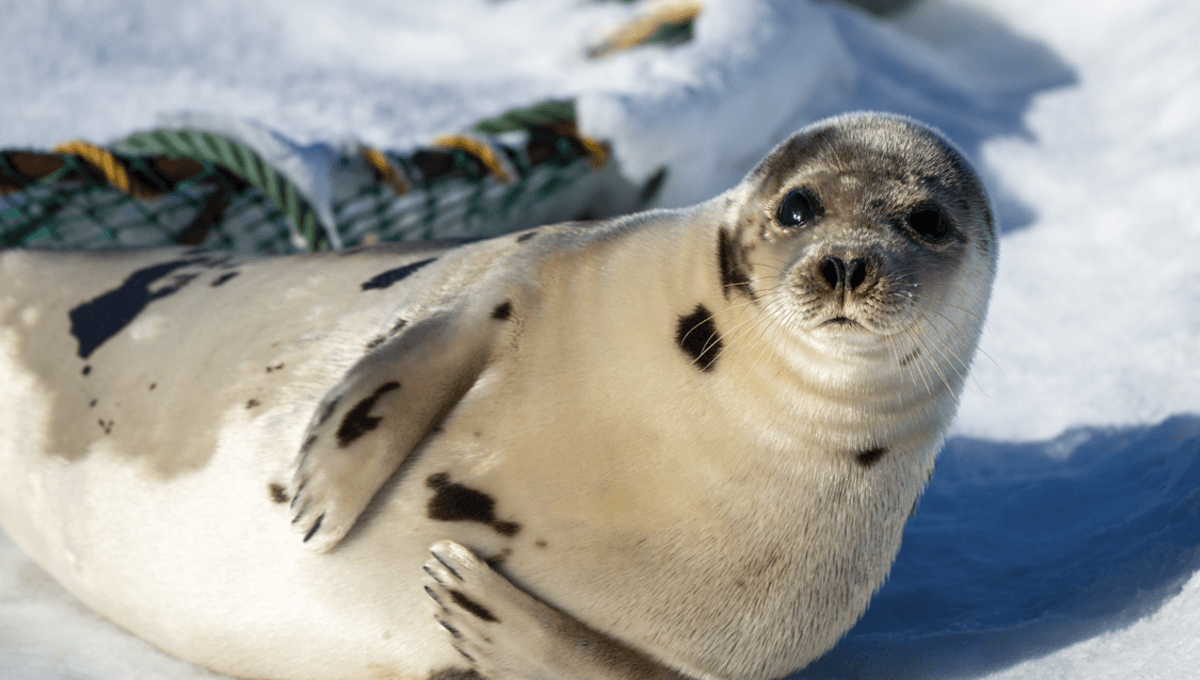
Seals, the blubbery dogs of icy oceans, have a curious habit of flipping on their backs and slapping their bellies like a drunken uncle after Thanksgiving dinner. While it may look silly, this behavior is actually a subtle and sophisticated form of communication.
The rest of this article is behind a paywall. Please sign in or subscribe to access the full content. Seals “speak” through a system of grunts, growls, snorts, hisses, whistles, and other vocalizations, used to coordinate hunts, build bonds, and simply socialize with pals. They also have the ability to communicate by clapping their flippers against each other or, if their blubber gets in the way, their belly. When displayed underwater, this seemingly playful behavior can carry serious meaning. A 2020 study captured the first footage of a male seal clapping its front flippers underwater and found that it produced a loud, high-frequency noise capable of cutting through background sounds. Combined with decades of other research on the topic, the scientists concluded that the clapping was a “show of strength” by the males, used in competitive breeding grounds to warn rivals and woo potential mates. “Depending on the context, the claps may help to ward off competitors and/or attract potential mates,” Dr David Hocking, lead study author from the School of Biological Sciences at Monash University in Australia, said in a statement. "Think of a chest-beating male gorilla, for example. Like seal claps, those chest beats carry two messages: I am strong, stay away; and I am strong, my genes are good.” It’s unclear why seals might belly slap when on land or in captivity, especially if it’s at the behest of a zookeeper, since there are very few studies into the matter. However, it’s possible it could be used for a similarly confrontational purpose. But it doesn’t necessarily mean the seal is intimidated or scared. As one wise soul on Reddit pointed out, dogs will bark when they’re threatened or want to "flex their muscles,” but they can also be taught to woof in innocuous circumstances, especially if a treat is at stake. Perhaps seals are the same. Indeed, seals and dogs are relatively closely related, a connection you can often catch a glimpse of in their behavior and appearance. They’re both members of the taxonomic suborder known as Caniformia (meaning dog-like) alongside wolves, foxes, raccoons, mustelids, walruses, and so on. While seals might not have the same cognitive prowess as domestic dogs, their behaviors may be just as nuanced and deep.

 English
 Arabic
 French
 Spanish
 Portuguese
 Deutsch
 Turkish
 Dutch
Dutch
 Italiano
 Russian
 Portuguese (Brazil)
 Greek
Greek