


Catch The Last Supermoon Of The Year This Week
Catch The Last Supermoon Of The Year This Week
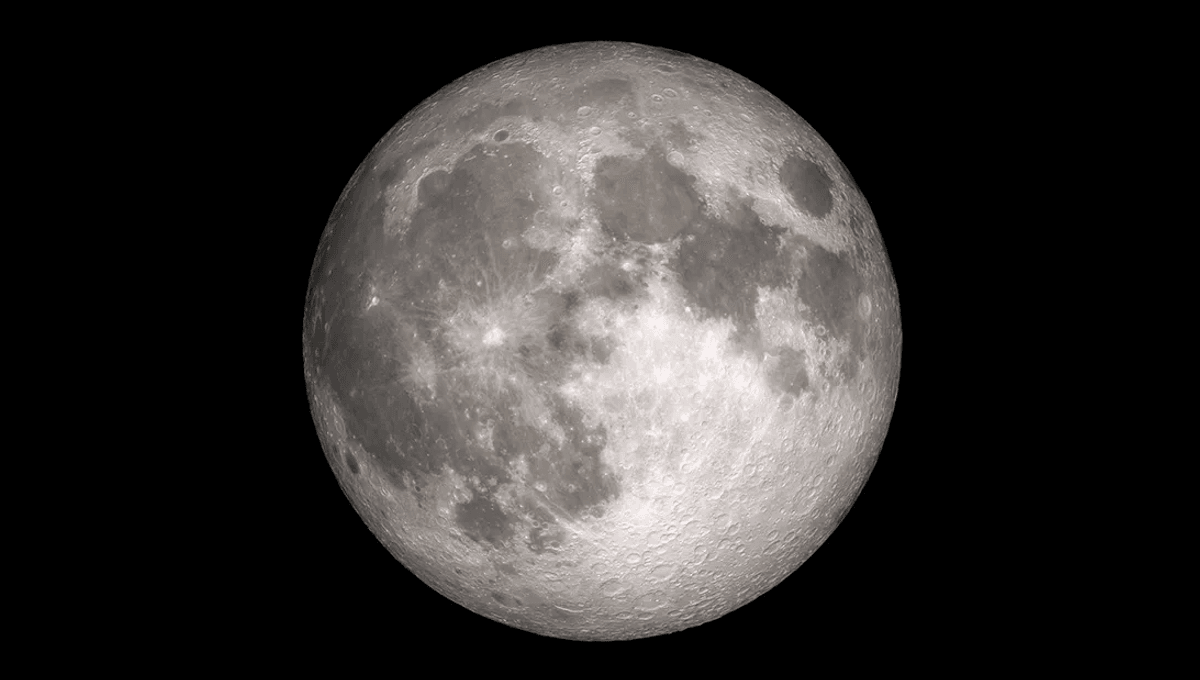
Be ready, werewolves and witches, as well as general lovers of the night sky. The last full Moon of the year is happening on Thursday, December 4, and it will be a supermoon, meaning that it will appear brighter and larger in the sky. This effect is due to the proximity of the Moon as it enters its fullness.
The rest of this article is behind a paywall. Please sign in or subscribe to access the full content. This time the full Moon will happen when our natural satellite is just 357,219 kilometers (221,965 miles) away, just a few hundred kilometers from its record low in November, which was the closest and thus the brightest full Moon of the year. The next supermoon is only about a month away, on January 3, and it will be a few thousand kilometers farther still. Usually, there are three or four supermoons every year. These last three, in October, November, and now December 2025, are special because they're all happening within one season, which is a rarer coincidence. The next sequence like this will be during the winter of 2028, with supermoons on January 12, February 10, and March 11. There is no formal definition of a supermoon. The term was coined by an astrologer, and in an ironic twist, it has been appropriated by the astronomy community to intrigue more people about the beauty of the Moon. The Moon's orbit is not a circle. While the average distance between the Earth and the Moon is 384,400 kilometers (238,900 miles), as the Moon travels around it can get a couple of tens of thousands of kilometers closer or farther away. The definition that we and many others have embraced is that if the full Moon happens within 90 percent of the Moon's closest approach to Earth, then it’s a supermoon. In terms of distance, that’s within 367,607 kilometers (228,420 miles) away. The Moon can get as far as over 405,000 kilometers (250,000 miles), so the difference is noticeable if you consistently look at the Moon – up to a 14 percent increase in size and a 30 percent increase in brightness, according to NASA. “It’s very rare that an orbiting body follows an exactly circular path. The Moon has a slight ‘eccentricity’, meaning it travels in an elliptical path around the Earth – so it’s sometimes nearer and sometimes further away,” explains Professor Sara Russell, a planetary scientist at the Natural History Museum, London. There will be plenty of photos online of the beautiful full Moon, and while smartphones do not seem to be the ideal camera equipment to capture a bright moon, there are a few simple tricks that can help.What even is a supermoon?

 English
 Arabic
 French
 Spanish
 Portuguese
 Deutsch
 Turkish
 Dutch
Dutch
 Italiano
 Russian
 Romaian
 Greek
Greek