


We Finally Understand Why We “Feel” It When We See Someone Get Hurt
We Finally Understand Why We “Feel” It When We See Someone Get Hurt
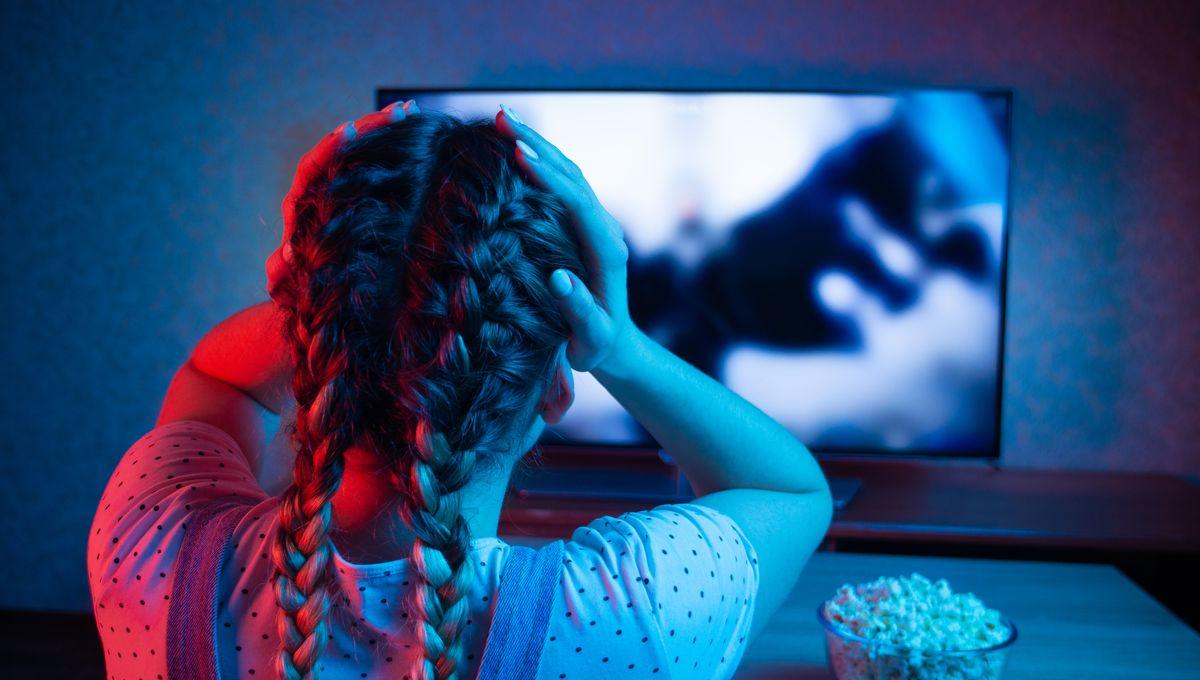
Watching on-screen action makes our brains respond in a very specific way, a new study has uncovered. We don’t just see what’s happening – our brains’ touch-processing regions get activated too, so in a way, we also feel it.
The rest of this article is behind a paywall. Please sign in or subscribe to access the full content. When you’re next at the movies, if there’s a particularly gnarly scene where a character gets hurt, take a quick glance at the people around you. You’ll probably notice them flinching in sympathy. Heck, you’ve probably done it yourself – it’s almost like you can feel the pain through the screen. This is one of those almost universal human experiences, so it might surprise you – as it did us – to learn that until very recently, scientists had little idea why it happens. In a new study, a team led by Dr Nicholas Hedger of the University of Reading demonstrated that visual information alone is enough to stimulate regions of the brain involved in processing physical touch. “When you watch someone being tickled or getting hurt, areas of the brain that process touch light up in patterns that match the body part involved,” Hedger explained in a statement. “Your brain maps what you see onto your own body, ’simulating’ a touch sensation even though nothing physical happened to you.” So, when a fictional character falls off a horse, gets knocked out cold, or is kicked in the balls, we “feel” it right along with them. The team analyzed this effect with the help of 174 volunteers who watched short video clips while having their brains scanned. The 1-to-4.3-minute scenes were taken from six Hollywood movies: The Social Network, Inception, Oceans 11, Home Alone, Erin Brockovich, and The Empire Strikes Back (lots of scope for vicarious pain in that one *grimaces*). Scan data revealed that the brain’s visual and touch-processing systems are intertwined. In the dorsal regions of the visual system, sections of the brain map to locations on our bodies, and these also matched locations on screen – the “face” sections of the brain were tuned to upper parts of the screen, and “feet” sections of the brain to the lower parts of the screen. In addition to this, the ventral regions of the visual system mapped to whatever part of a body the participant was looking at at the time, regardless of where it actually appeared on screen. You might not immediately be seeing the utility of all this, but Hedger explained how this interconnectedness actually helps us out a lot. “This cross-talk works in the other direction too. For example, when you navigate to the bathroom in the dark, touch sensations help your visual system create an internal map of where things are, even with minimal visual input. This ‘filling in’ reflects our different senses cooperating to generate a coherent picture of the world.” “This discovery could transform how we understand conditions like autism,” Hedger continued. “Many theories suggest that internally simulating what we see helps us understand other people's experiences, and these processes may work differently in autistic people.” Scanning someone’s brain while they watch a movie could provide a much more pleasant way of studying this than traditional sensory tests, which Hedger says can be “exhausting”, especially for kids or those with sensory processing difficulties. “Ultimately,” the authors conclude in their paper, “these findings reveal a fundamental principle of brain organization” – and finally give us the answer to something that’s always made us go “Hmm?” The study is published in Nature.

 English
 Arabic
 French
 Spanish
 Deutsch
 Turkish
 Dutch
Dutch
 Italiano
 Russian
 Romaian
 Portuguese (Brazil)
 Greek
Greek