


Meet The Thresher Shark, A Goofy Predator That Whips Up Cavitation Bubbles To Stun Prey
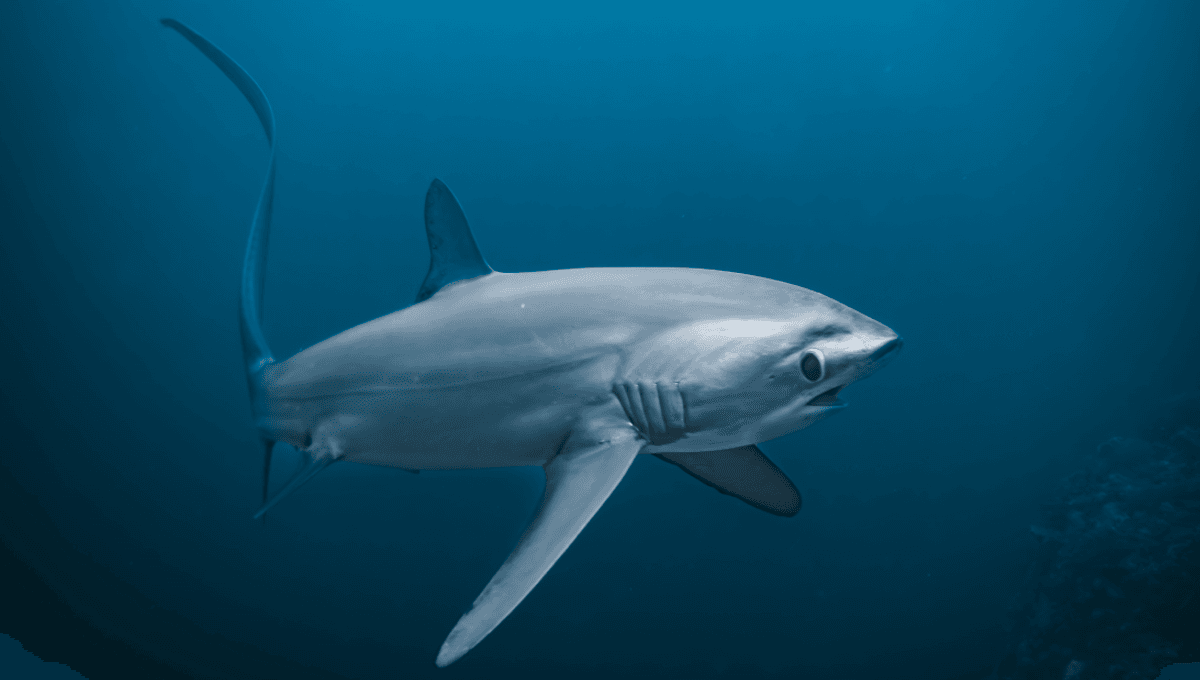
Yes Thresher Sharks Look Funny, But Wait Until You See What They Can Do With Their Tails…
Thresher sharks are among the goofiest of Chondrichthyes. With big googly eyes, they seem sweet enough at the head end, but their tails? Now they’re all business.
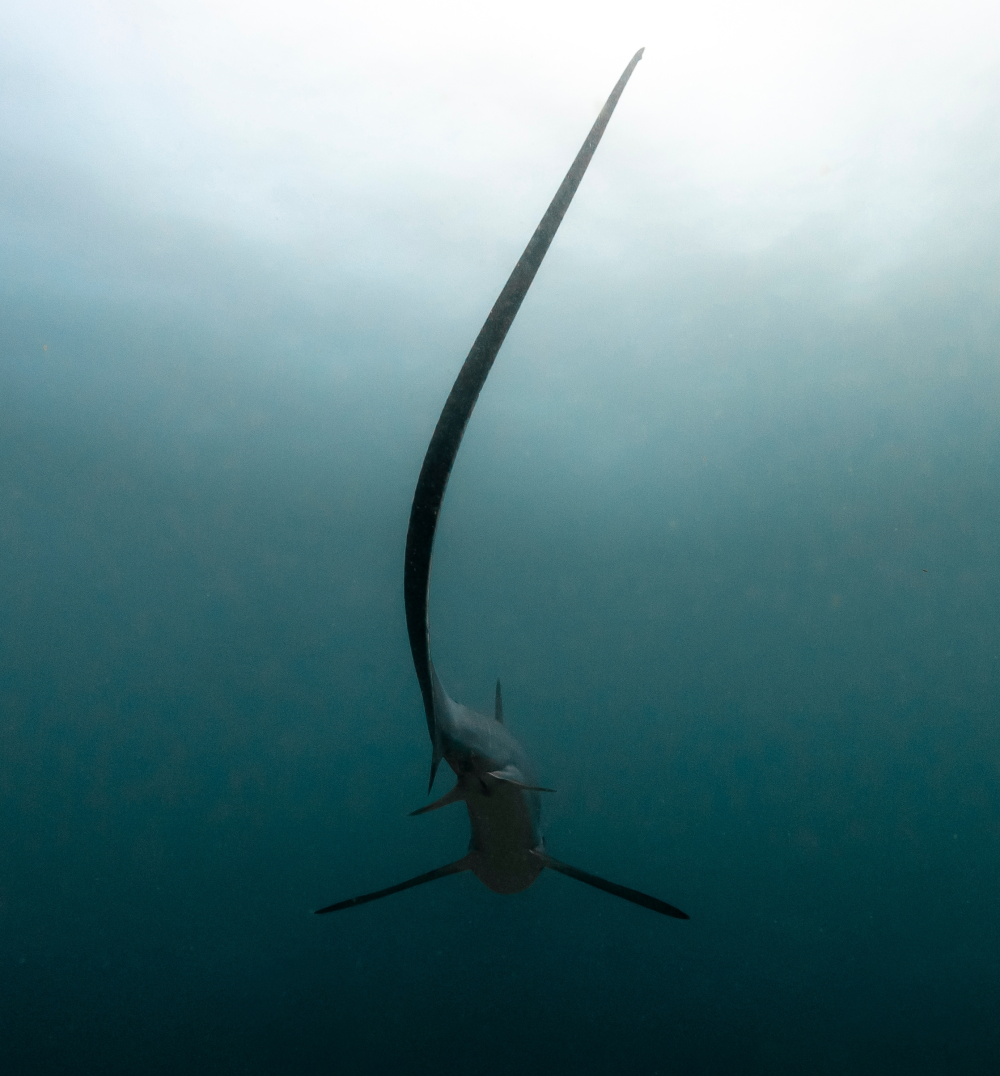
The rest of this article is behind a paywall. Please sign in or subscribe to access the full content. Their enormous tails can be 3 meters (10 feet) long, accounting for around half their body length. They look like whips, and they act like whips, creating changes in pressure so drastic that it generates cavitation bubbles – pockets of vaporized water that generate light, sound, and heat. Most of the time, a thresher shark's tail is gently swishing side to side to move through the water, but it's capable of a drastically different maneuver when it's time to feed. Known as “tail-whipping”, a thresher shark attack can be broken down into four stages: The anatomical adaptations that enable this tail whip were revealed in a 2024 study that looked at 10 common thresher shark specimens ranging from embryo to adult. Scans revealed there were significant changes to the mineralized microarchitecture of the thresher sharks’ vertebrae depending on their age. “We found that anatomy and microstructure significantly varied along the body and among developmental groups – embryonic, juvenile and adult common thresher sharks,” said Jamie Knaub, first author from Florida Atlantic University, in a statement. “Based on our results, we believe that thresher shark vertebrae vary in anatomy, and the amount and arrangement of mineral, supporting the mechanical needs for tail-whipping.” For a long time, we only suspected that thresher sharks used their tails to hunt, but this wasn’t described in academic literature until 2013, when a study looked at 25 recordings of pelagic thresher shark attacks. The footage showed that they were indeed using their tails to hunt, debilitating sardines with tail whips at all times of the day. The authors wrote that the tail whips were occurring with such force that they appeared to cause dissolved gas to diffuse out of the water column, forming bubbles. This can occur through cavitation, whereby an object moves through water at speeds high enough to lower the localized water pressure to below its vapor pressure, forming bubbles. When these bubbles collapse, they can generate sound and light through sonoluminescence, something we see in pistol shrimp. Thresher sharks generally spend the day deep underwater searching for squid and octopus to eat, but when the Sun sets, they’ll rise close to the surface to whip up some dinner. Typically, that consists of shoaling fish like herring, mackerel, and sardines. These fish come conveniently packed close together, so a tail-whip may stun several at a time – easy pickings that a thresher shark can scoop up during the “prey collection” phase. There are three species of thresher shark: the common thresher shark (Alopias vulpinus), bigeye thresher shark (Alopias pelagicus), and pelagic thresher shark (Alopias pelagicus). The biggest of the three is the common thresher shark, which can be up to 5.8 meters long (19 feet), reports the Shark Trust. In second place is the bigeye thresher shark at 4.8 meters (15.7 feet), and then we have the pelagic shark at a more modest 3.6 meters (11.8 feet). They differ in their coloration and eye size (we don’t need to tell you who is the googliest), but they’re united in their distinctly whip-like tails. I, for one, would not like to get whipped by this. Image credit: Jonas Gruhlke/Shutterstock.com Thresher shark range also depends on the species, but the common thresher shark is the most widespread, found in tropical and temperate seas all over the world. The bigeye is also found across the world, but has a lower tolerance for cold water compared to the common thresher shark. Meanwhile, the smallest pelagic thresher sharks are found only in the Indo-Pacific Ocean. Across their various ranges, they’re found in both coastal waters and the open ocean and can dive to depths of up to 650 meters (2,133 feet). Then at night they return to the surface because – you guessed it – it’s tail-whipping time. Thresher shark “tail-whipping”
Hunting with tails?
Thresher shark diet
Thresher shark size
Where do thresher sharks live

 English
 Arabic
 French
 Portuguese
 Deutsch
 Turkish
 Dutch
Dutch
 Italiano
 Russian
 Romaian
 Portuguese (Brazil)
 Greek
Greek