


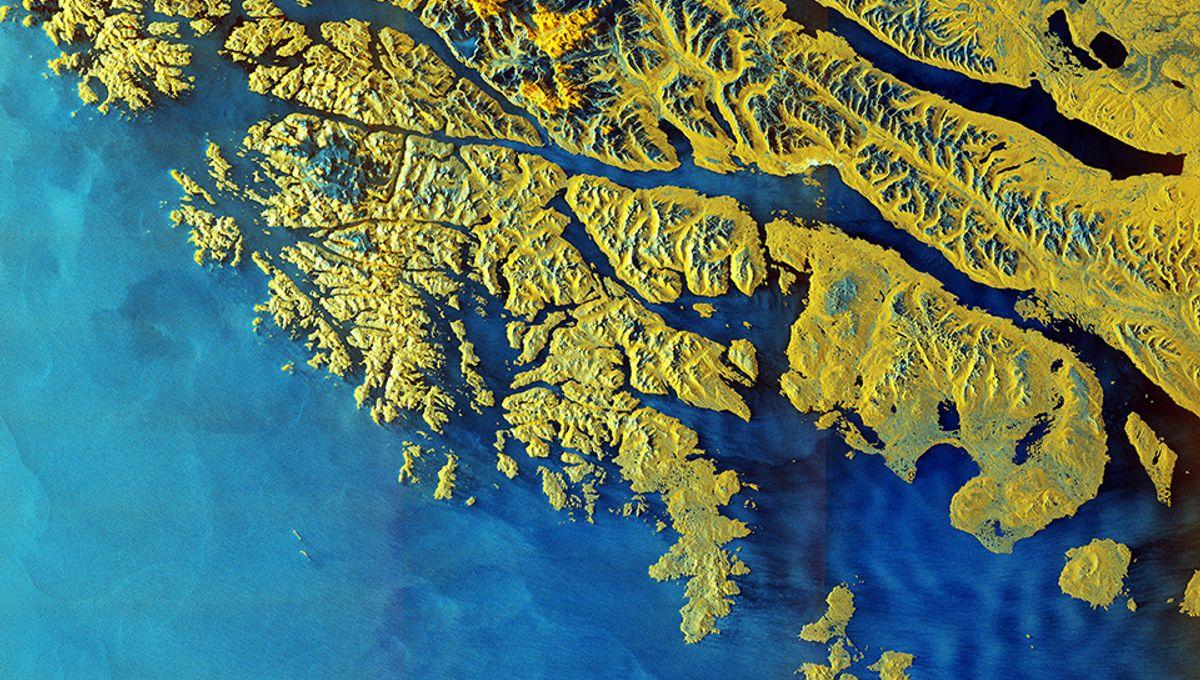

Studying Earth is built into the world’s space agencies’ directives. After all, Earth is a planet in the Solar System, and, unusually, it harbors life. It is, in fact, the only place in the entire cosmos that humans can live, so the more we know about it and try and secure its future, the better.
The rest of this article is behind a paywall. Please sign in or subscribe to access the full content. Monitoring Earth from space is fundamental for our way of living, and not just for telecommunication, navigation, or weather forecasts, though you probably used all three on your phone just today. The safety humans enjoy from climate events depends on the many eyes in the sky looking down at us, monitoring the air, the water, the ground, and far below that, tracking glaciers moving, lightning striking, wildfires raging, pollution, and more. These missions are crucial, and yet, in the US at least, they have been consistently under attack this year, seen as partisan instruments confirming the fact that Earth’s climate is changing and it is indeed our fault. Reporting from the European Space Agency’s (ESA) Ministerial Council for 2025, held in Bremen last week, IFLScience reveals how ESA is stepping up and doubling down on its commitment to monitoring our planet, while NASA and NOAA's commitment to Earth science appears uncertain. At the Ministerial Council, which approves ESA's budget and priorities, the agency received an increase in funding for the next three years to reach €22.069 billion. This works out to less than €15 per citizen of the 23 full member states (though states contribute differently) per year, and it covers all of ESA's operations from human exploration to deep space science missions. With this, the agency aims to strengthen its commitments to Earth monitoring, solar observations, and planetary defense. In the agency’s Strategy 2040, "protect our planet and climate" is the first of the five objectives set forward to take it through the next 15 years. ESA already has a fleet of Earth monitoring spacecraft with different but complementary skills, and the commitment sees them continue to grow. “The ministerial council overall was just amazing. We've got a record subscription, that means funding from the member states because ESA is cool, ESA delivers. We are delivering success to our member states across the board, from Earth observation, navigation, telecommunication exploration, astronauts, everything,” ESA Director General Dr Josef Aschbacher told IFLScience. The director general can feel emboldened by the success of the meeting; the space agency has been putting its money where its mouth is. Earlier this year, ESA launched Biomass, a mission to weigh all the world's forests and map woodlands and more from space. The recently launched Sentinel-1D and Sentinel-5A, studying ground changes and atmospheric gases respectively, debuted their first images just in the last few days. ESA and NASA also launched a new ocean monitoring satellite, Sentinel-6B. ESA has more satellites in the pipeline, and it plans to use all the data from the different satellites to create a digital twin of our planet. This would serve as a way to monitor the complex interaction between the planet’s many systems in real time, a potentially great tool when it comes to forecasting and preparing for the consequences of the unfolding climate crisis. Despite these positive developments from ESA, it has been a concerning year for Earth climate monitoring, given the profound changes in the US. The Trump administration's 2026 budget request, expected to be voted on by Congress in the coming days, sees unprecedented budget cuts for both NASA and the National Oceanic and Atmospheric Administration (NOAA), two of the most prominent Earth-monitoring agencies in the US. If it is approved, NASA would lose 17 missions that are designed to study our planet, such as Terra and Aqua, which have been studying Earth's atmosphere, land, and oceans for 30 years. Upcoming missions like PACE, set to study Earth's climate and oceans, are also on the chopping block. NOAA is set to lose a total of $1.52 billion, with the administration stating that new weather satellites would be taking “unnecessary climate measurements.” Keeping an eye on our planet is not just about looking down and keeping track of the climate. It's also about monitoring what is happening in space around us. An important part of this is space weather monitoring, studying the Sun and how solar events affect our planet. Keeping track of space weather events like solar flares and coronal mass ejections helps us keep satellites safe and inform people of when possible communication blackouts may occur. Trump’s budget wants to cut many solar-focused missions, such as ACE, HelioSwarm, Themis, WIND, IBEX, IRIS, Magnetospheric Multiscale Mission, GOLD, and TIMED. Discussions have been held to step out of international collaborations like the Hinode and EUVST missions, both led by the Japanese Space Agency (JAXA). ESA aims to have a comprehensive space weather monitoring network by mid-2030s, around the time of the next solar maximum. A flagship mission called Vigil, expected to fly in 2031, will specifically monitor unexpected events from the Sun. However, while many of NASA's critical space weather satellites are still in place, such as its Solar Dynamic Observatory, NASA/ESA’s SOHO, and NOAA’s GOES-19, many are concerned that we will have gaps in our observations of the Sun that will be difficult to fill. Another important aspect of planetary protection is monitoring near-Earth asteroids. ESA plans to build a network of survey telescopes on the ground as well as an infrared mission that aims to find those risky objects roughly the size of the Chelyabinsk impactor that we might miss due to being outshone by the Sun. This will be called NEOMIR. By the mid-2030s, ESA is also aiming to have the capabilities to deflect dangerous asteroids. A crucial test discussed in this council meeting is the launch of the RAMSES mission to encounter potentially hazardous asteroid Apophis in 2028, following the asteroid as it makes its very close, but safe, approach to Earth in 2029. “On a Friday the 13th in 2029, and I'm not joking, [Apophis] will come so close that we will see it with our naked eye. So what we have decided at the European Space Agency at this ministerial council is to build a mission that will be launched a year before. We will fly to the asteroid, we will measure it, and we'll see how it interacts with the Earth,” Dr Aschbacher told IFLScience about the scope of the mission and what’s at stake. RAMSES offers the opportunity "for us to learn, in case an asteroid would really come to planet Earth, to be prepared, have all the measurements, understand how it is composed, the structure, what we would eventually need to do to destroy it or to deflect it or something to protect our people on this planet,” he said. NASA's mission to meet with Apophis, OSIRIS-APEX, is also on the chopping block in the 2026 budget, despite already being in space and on its way. The final US budget might end up being very different from the one proposed by the administration, though there is evidence that some of the cuts may have already been implemented prematurely (and possibly illegally) during the recent government shutdown before Congress can vote on them, as a recent Space.com investigation of cuts to NASA’s Goddard Space Flight Center showed. In the corridors and among the discussions of this ministerial council, the specter of what is happening in the US was palpable but remained unanswered from more direct questions. The line remained that ESA always welcomes international partners, but it has its priorities and is capable and prepared to act independently.ESA commits to monitoring our planet
The future of US Earth monitoring is uncertain
Near-Earth object monitoring

 English
 Arabic
 French
 Spanish
 Portuguese
 Deutsch
 Turkish
 Dutch
Dutch
 Italiano
 Russian
 Romaian
 Portuguese (Brazil)