


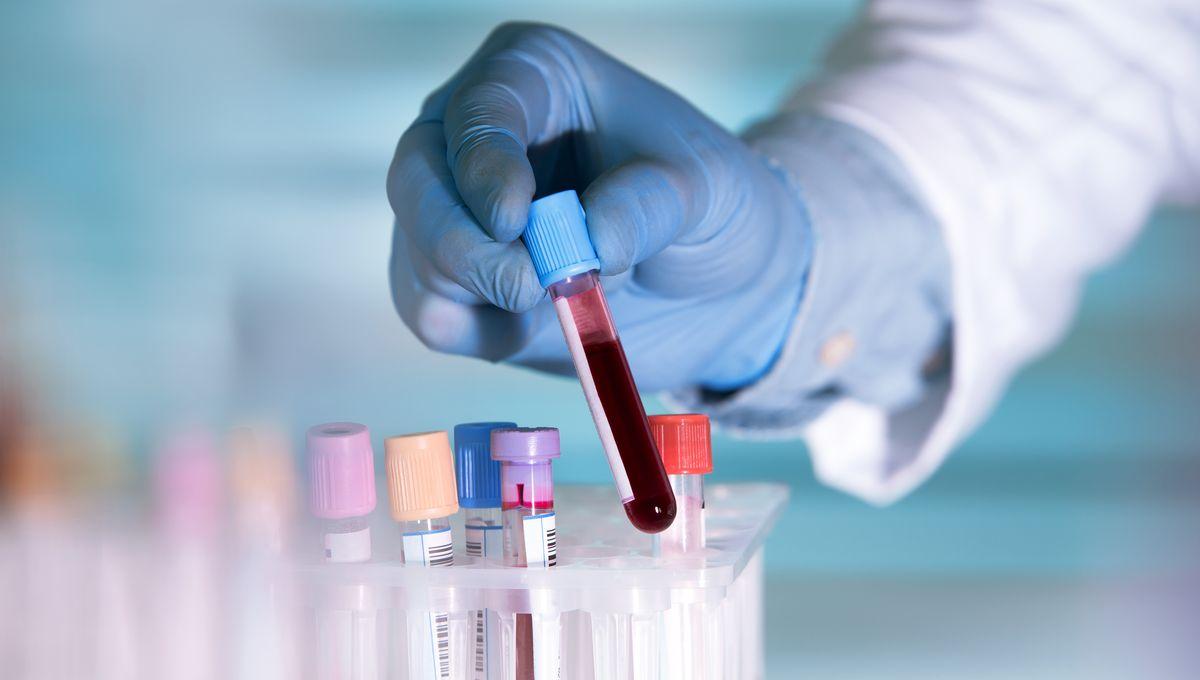
Imagine having a blood type so rare that only two other people in the entire world could match it. That’s the reality for three individuals uncovered in a recent study based in Thailand – and they were discovered almost by accident.
The rest of this article is behind a paywall. Please sign in or subscribe to access the full content. “We conducted a retrospective review of 285,450 donor and 258,780 patient samples for ABO discrepancies,” write the team, making an impressive total of more than half a million participants. And how many did they find? Fewer than 400 discrepancies – and just three lone cases of the new blood type, labelled B(A). So, uh, here’s a question: what does all that mean? Blood typing is a finicky thing. For a long time, we didn’t have any idea it even existed, which is why doctors used to do things like trying to inject sheep blood into humans. That changed with the dawn of the 20th century, when Karl Landsteiner figured out the ABO blood group system in 1901, and then, nearly 40 years later, the Rhesus factor – symbolized by the positive or negative symbol next to the letter classification – that completes our modern set of blood types. This is far from the only way to group blood, but it is the most popular – even if many of us don’t really know what it means. Basically, though, it’s just a way of describing which of a particular set of proteins and sugars we have coating our red blood cells: the presence of a sugar called N-acetylgalactosamine indicates blood that we call type A; the presence of a sugar called D-galactose gives us type B. So, if our blood cells have both of those sugars present, we call it AB blood, and if neither can be found, then it’s type O. All this is controlled by the ABO gene, which sits on our chromosome 9 and dictates which sugars are allowed to be there. Then there’s the Rhesus D protein – if it’s there, we have “Rhesus positive” blood; if not, it’s “Rhesus negative”. Combined together, these two systems give eight possible blood groups – the most common being O-positive, which about three-eighths of the US population has inside them, and the rarest being AB-negative, carried by only about one in every 167. With those discoveries, blood transfusions became much, much safer. Donors don’t have to be exact matches – somebody with type A blood can receive a donation from somebody with type O, for example – but you can’t donate blood to somebody whose blood doesn’t have an antigen that yours does. For example, “if a person is group A […] she should not receive group B or AB red cells,” explained Erica Wood, head of the Transfusion Research Unit at Monash University, and Lucy Fox, Clinical Research Fellow in Haematology at Monash University, in a 2017 article for The Conversation. That’s because “she has naturally occurring antibodies (proteins formed as part of the immune response) that will likely cause a transfusion reaction,” they wrote, “which may be serious – even fatal.” It’s a good system, and it’s very useful for medical purposes. But it’s not perfect. Every so often, blood types go a bit haywire – and to understand why, we have to explain a bit about how blood types are worked out in individual people. “Routine ABO testing is performed in two distinct (but usually simultaneous) stages, known as ‘red cell grouping’ (blood bankers more commonly call it ‘forward grouping’ or the ‘front type’) and ‘serum grouping’ (‘reverse grouping’ or the ‘back type’),” explains Joe Chaffin, a board-certified anatomic/clinical pathologist, specialist in blood banking/transfusion medicine, and founder of the Blood Bank Guy blog, in 2016. “Red cell grouping identifies which ABO antigens are present on the person’s red cells,” he explained, “while serum grouping identified which ABO antibodies the same person carries.” Normally, the results of these two tests will agree in a complementary way. If a person’s red blood cells have a strong reaction to an anti-A reagent, for example, then the serum (or the plasma) should have a strong reaction to type B cells – together, those results would indicate type A blood. But every so often, the forward and reverse typing tests give either inconclusive or contradictory results. It’s a phenomenon known as “ABO discrepancies” – and it is, according to the new paper, “one of the significant challenges encountered in transfusion medicine.” Understanding these mismatches can be a matter of life and death in a transfusion situation – so it’s no mystery as to why the researchers were investigating them. What’s impressive, though, is that they still managed to be surprised. Officially, the team was only aiming to measure and categorize the presence of ABO discrepancies in a population – and, fairly unsurprisingly, they found that these various blood type mismatches are very rare. “ABO discrepancies were identified in 396 patients (0.15 percent) and 74 blood donors (0.03 percent),” the paper notes, and half of the former group had to be excluded in any case – they came from stem cell transplant recipients, whose blood can be changed and mixed up by their donor’s type. But in one patient and two donors, the team found something they’d never seen before: type B blood, which nevertheless exhibited a small amount of A antigen activity in reverse testing. Evidently, it’s not common – three out of almost 550,000 people is hardly an epidemic of weird blood – but finding it thrice did at least make the researchers take notice. “The polymorphisms of genetic variants of B(A) phenotype have been previously reported in various ethnicities, including several Asian populations,” they note in the paper, “but not in the Thai population.” And the particular type that they found was unique from those earlier examples, they found: through genetic testing, the researchers isolated four specific mutations in the ABO gene that set it apart from all other known alleles. For the three patients in the study, this probably doesn’t affect much more than bragging rights. It might cause a headache for the doctors if they need a transfusion in future – but then, O-negative is always an option – but mostly, it’s just a weird quirk of their biology, passed down from their parents just like brown eyes or blonde hair might be. But for the researchers themselves, it’s a sign of just how much we have still to learn about the puzzle of blood typing. Since Landsteiner worked out the ABO grouping system more than 100 years ago, we’ve seen the discovery of countless exceptions to the rules: there’s Rhesus null, or “golden” blood, found in the veins of fewer than 50 people globally; there’s “Gwada negative” blood, known so far in just one person in the entire world. That a perusal of comparatively few people, globally speaking, turned up three examples of a blood type literally never seen before in science suggests that we still have far more to uncover. “ABO discrepancies must be investigated and clarified before labeling the donor blood unit and transfusion to recipients,” write the researchers. “To the best of our knowledge, this is the first large-scale report of ABO discrepancies in the Southeast Asian region.” “Future studies are required to elucidate the structural and functional consequences of the mutated [enzyme] AB transferase.” The study is published in the journal Transfusion and Apheresis Science.The ABOs of blood
A bloody mess
A new blood type

 English
 Arabic
 French
 Spanish
 Portuguese
 Deutsch
 Turkish
 Dutch
Dutch
 Italiano
 Russian
 Portuguese (Brazil)
 Greek
Greek