


The Fastest Speed That Humans Have Traveled Is 39,937.7 Kilometers Per Hour
The Fastest Speed That Humans Have Traveled Is 39,937.7 Kilometers Per Hour
On December 24, 2024, NASA's Parker Solar Probe traveled at the fastest speed that any human-made object has ever traveled, clocking in at a zippy 692,000 kilometers per hour (430,000 miles per hour) on its closest approach to the solar surface, relative to the Sun.
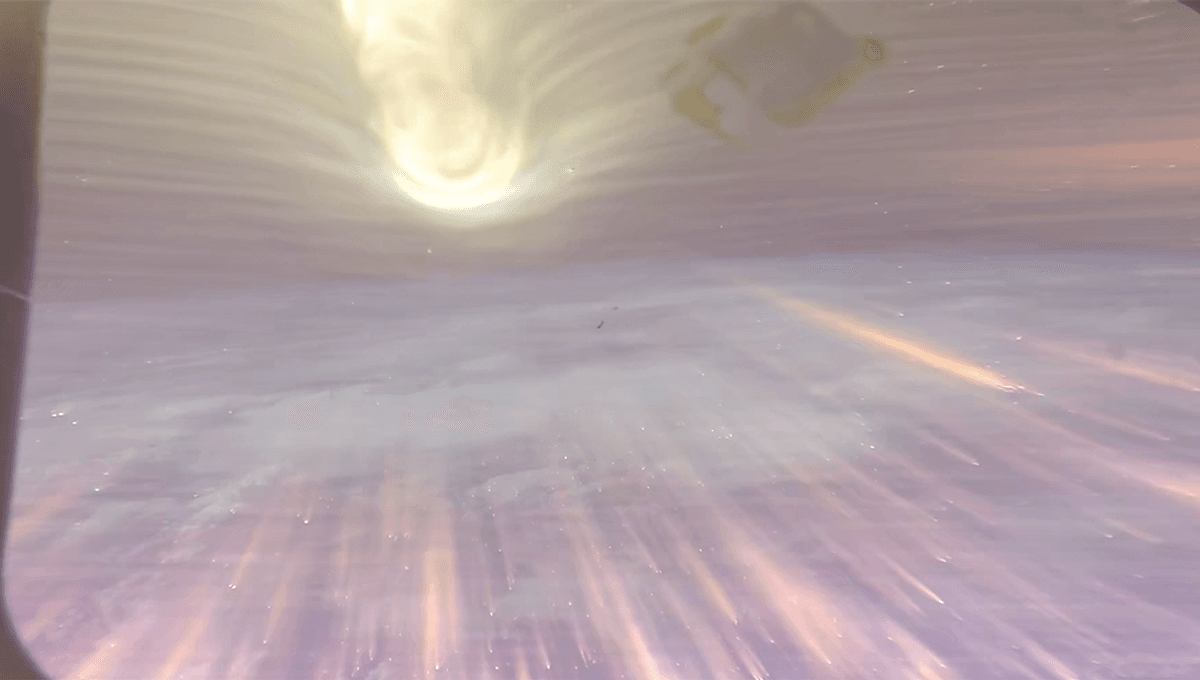
At these speeds, it would take around 23.4 seconds to cross the US from coast to coast. The Parker Solar Probe beat its own record, set in 2023, when it clocked in at a comparatively pathetic 635,266 kilometers (394,736 miles) per hour. But what about humans themselves? How fast have we traveled? The cheat answer is that relative to the Sun, we all reach a peak of around 152,100,000 kilometers per hour (94,510,000 miles per hour) as our planet orbits our star. But relative to Earth, the fastest that humans have ever traveled is 39,937.7 kilometers per hour (24,816.1 miles per hour), a record set back on May 26, 1969. That record was not set by the crew of Apollo 11 as they headed to/from their historic Moon landing, but during the "dress rehearsal" two months prior. Apollo 10, the fourth piloted mission of NASA's Moon landing program, was aimed at testing all procedures and equipment for the Moon landing, without actually doing the Moon landing part. Astronauts Thomas Stafford, John Young, and Eugene Cernan left Earth on May 18, 1969. Arriving in lunar orbit three days later, Stafford and Cernan entered the Lunar Module, nicknamed Snoopy, and descended to around 14.4 kilometers (47,400 feet) while Young remained in orbit around 97 kilometers (60 miles) above the lunar surface. Despite a brief wobble – the result of a faulty switch setting in the Lunar Module – the crew was able to return to the Command Module, nicknamed Charlie Brown. After taking a trip around the Moon and witnessing Earthrise, the crew returned to Earth. It was on the journey home during reentry, around 121.9 km (75.7 miles) from Earth, that the crew set the record for the fastest human spaceflight, reaching a top speed of 1,093.8 meters per second (36,397 feet per second). Cernan described reentry as like being in “a ball of white and violet flame.” What reentry looks like, as seen from Artemis 1 Orion. The record set by Apollo 10 has not been broken since, and the fastest human spaceflight remains 39,937.7 kilometers per hour (24,816.1 miles per hour). The spacecraft used the Earth's atmosphere to slow its descent, as well as deploying three large parachutes, before landing in the Pacific Ocean.

 English
 Arabic
 French
 Spanish
 Portuguese
 Deutsch
 Turkish
 Dutch
Dutch
 Italiano
 Russian
 Portuguese (Brazil)
 Greek
Greek