


Why Do Barnacles Attach To Whales?
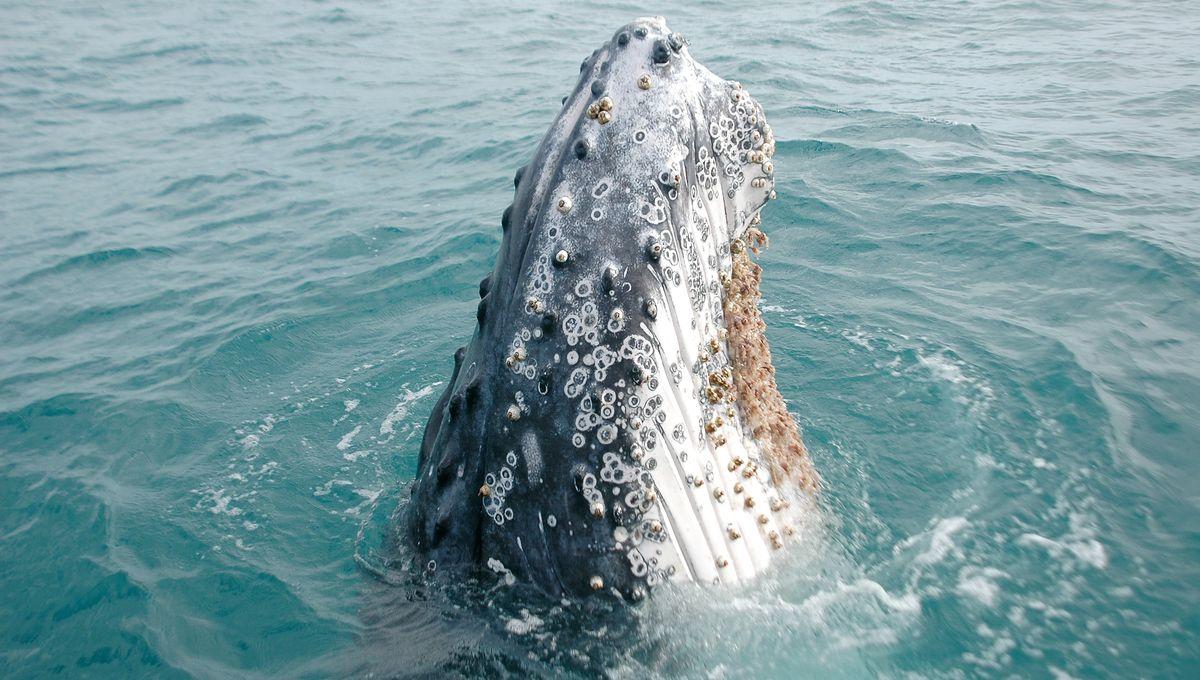
Why Do Barnacles Attach To Whales?
Why do so many barnacles end up hitching a ride on whales? Speaking to IFLScience, Professor Geoffrey Boxshall, an expert on tiny crustaceans at the Natural History Museum London and Fellow of the Royal Society, explained several intriguing reasons behind the unlikely alliance between marine mammals and small, shelled sea beasts.
The rest of this article is behind a paywall. Please sign in or subscribe to access the full content. Firstly, it might have something to do with the behavior of the whales. Boxshall explained it: “Cruising around the well-lit and productive surface waters of the oceans where small plankton, the food of the barnacles, is abundant.” Secondly, he added, “the large size of the whales provides plenty of surface area for attachment.” Lastly, the social habits of many whale species may also play a role, offering barnacles more opportunities to spread to others. “Whales aggregate for mating and feeding, and they often travel in large groups. This provides plenty of opportunity for the larvae of the barnacles to find and attach to the whales. Otherwise, it is a big ocean for the barnacle larvae, just 1 to 2 millimetres long, and they need to find their ‘host’ before their larval food supply is used up,” Boxshall told IFLScience. Barnacles are taxonomically crustaceans, meaning they’re related to crabs, lobsters, shrimps, and prawns. However, they don’t look like many other members of this branch of the family. Close-up of barnacles on a beached minke whale. Image credit: Imagarium/Shutterstock.com Comprising over 2,000 different species, their defining feature is their hard calcareous shells that often appear like a ridged dome. Inside the shell, they look like tiny, feathery-legged creatures, with jointed appendages called cirri that they use to sweep plankton and detritus from the water into their mouths. Unlike most crustaceans, barnacles are sessile, permanently attaching themselves to fixed structures, like rocks, ship hulls, or – of course – whales. Barnacles also colonize other marine creatures, most notably the shells of sea turtles, which offer an ideal surface to settle upon. They’ve even been spotted on sharks and dolphins, though less frequently. No, barnacles do not hurt whales. Fortunately, the barnacles are largely harmless and simply hitch a ride on their bodies. They are not parasitic, as they are not causing significant damage to the whale. Professor Geoffrey Boxshall “Their feeding biology is essentially the same as a typical acorn barnacle attached to a rock along the coast. The difference is that they attach to a ‘moving rock’ that transports them around so they have access to plentiful fresh supplies of plankton for feeding,” commented Boxshall. “They are not parasitic, as they are not causing significant damage to the whale,” he continued. However, the same can't be said for other marine creatures. Boxshall remarked: "Sharks occasionally carry barnacles, but these are parasitic and take nutrients from the host." Some species of whale are more prone to barnacles than others. Gray whales are arguably most prone to infestation, with some individuals carrying over 180 kilograms (400 pounds) of barnacles and whale lice each. Blue whales and orca (which are technically dolphins) scarcely have any barnacles, most likely because of their rubbery, slick skin. It’s also known that killer whales groom each other with branches of sea kelp, which might ease the problem of skin-latching critters. “Barnacle loads do vary between different host species – almost certainly driven by differences in host behaviour: feeding preferences, geographical distributions, depth distributions, migration timing, etc,” concluded Boxshall. Certain barnacles are species-specific, meaning they evolved alongside a particular species of whale and never stray from the plan. For instance, Tubicinella major lives almost exclusively on right whales, while Coronula diadema pretty much only settles for humpbacks. There are also species that are closely associated with sea turtles and even sharks. It’s likely that the relationship between whales and barnacles goes back millions upon millions of years. It’s impossible to know without hard evidence, but it’s easy to imagine that this convenient alliance emerged not too soon after the first whales ventured back into the oceans 50 million years ago.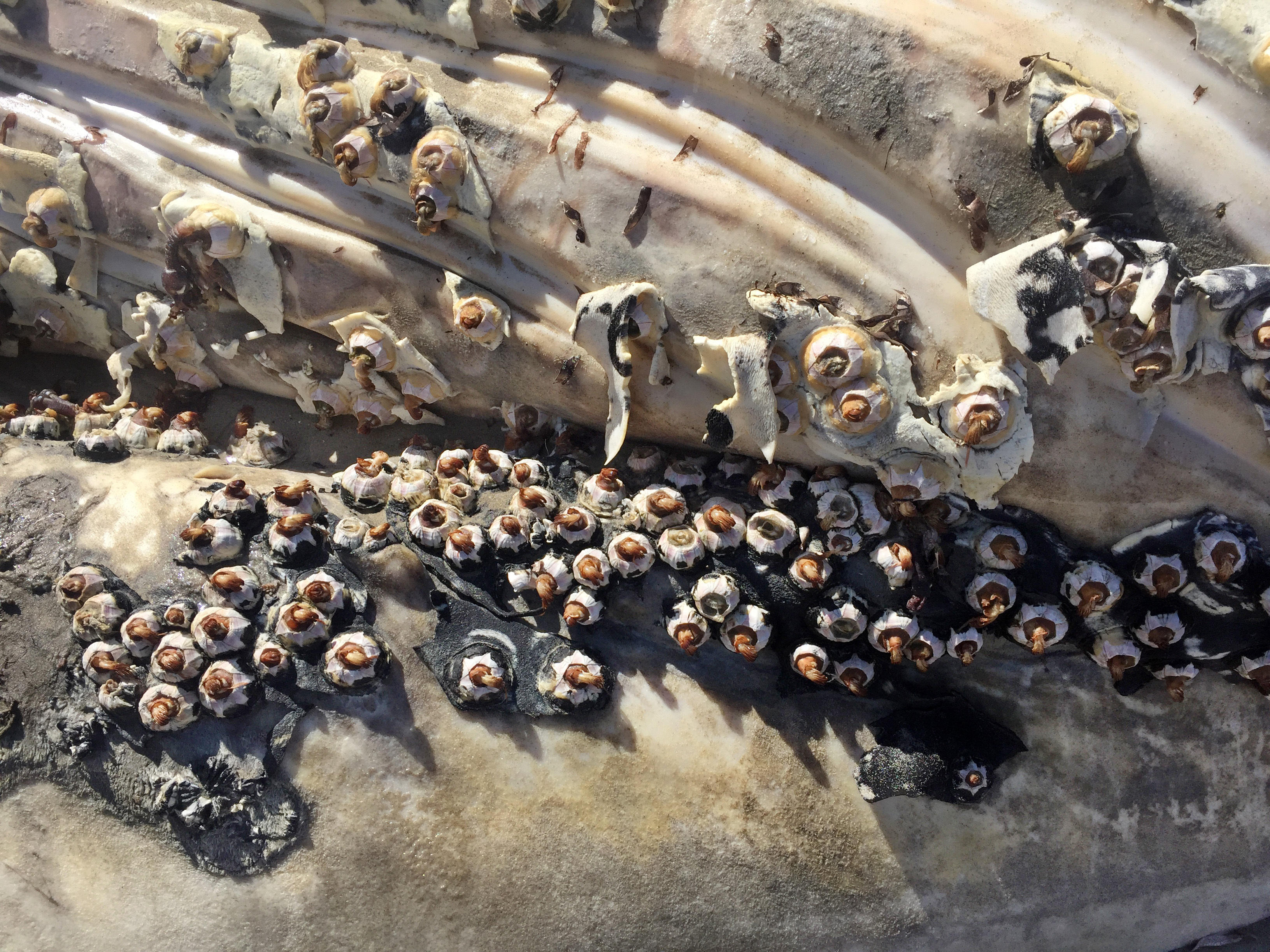
Do barnacles hurt whales?

 Arabic
 French
 Spanish
 Portuguese
 Deutsch
 Turkish
 Dutch
Dutch
 Italiano
 Russian
 Romaian
 Portuguese (Brazil)
 Greek
Greek