


NASA Finally Reveals Comet 3I/ATLAS Images From 8 Missions, Including First From Another Planet's Surface

NASA Finally Reveals Comet 3I/ATLAS Images From 8 Missions, Including First From Another Planet's Surface
NASA has finally published several observations of interstellar comet 3I/ATLAS that were taken during the long government shutdown. In a special press conference, the space agency released images from eight different missions that add to the Hubble, JWST, and SPHEREx observations from the summer, as well as those from NASA-funded ATLAS (Asteroid Terrestrial-impact Last Alert System) telescope, which discovered 3I/ATLAS on July 1.
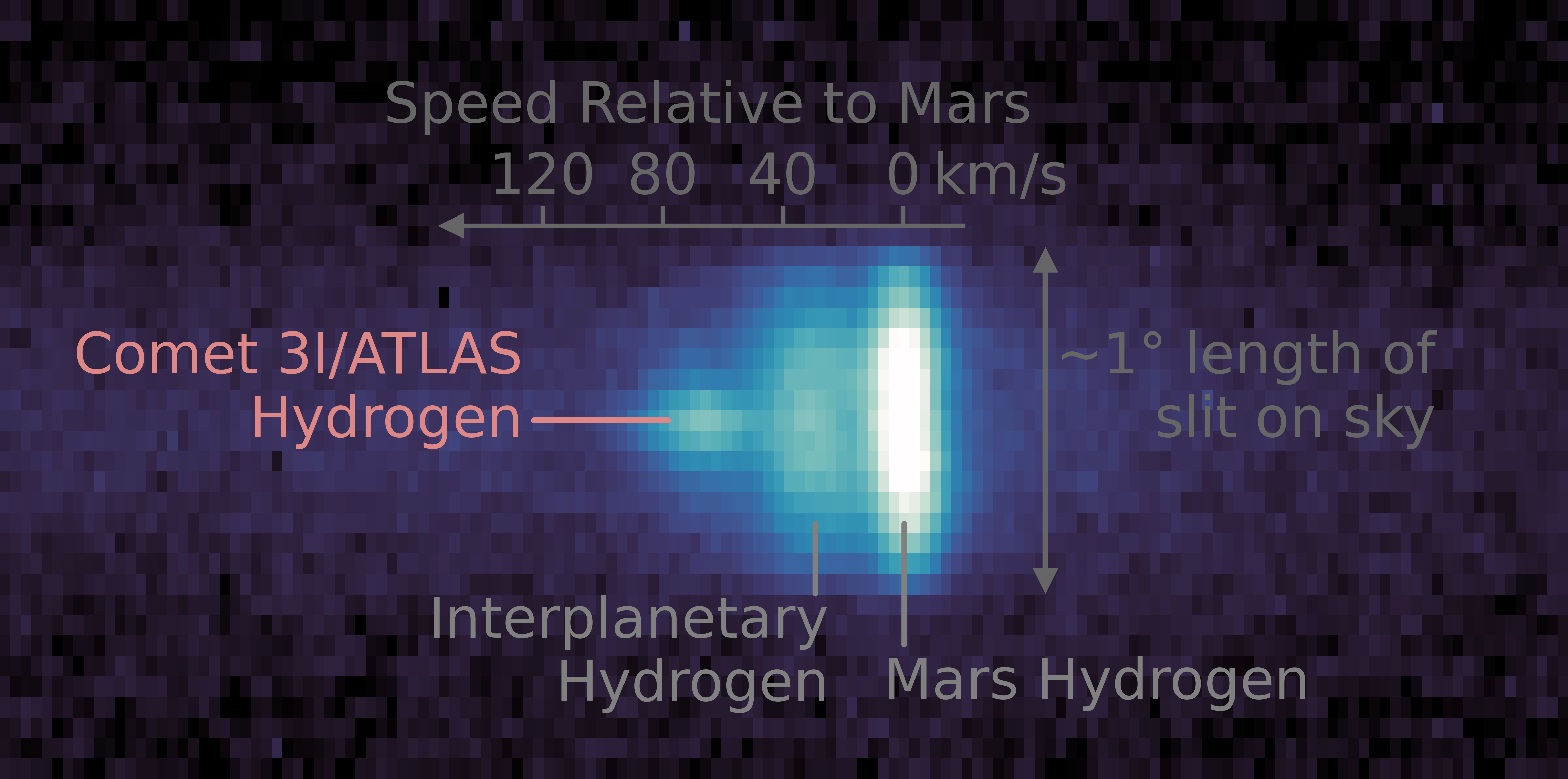
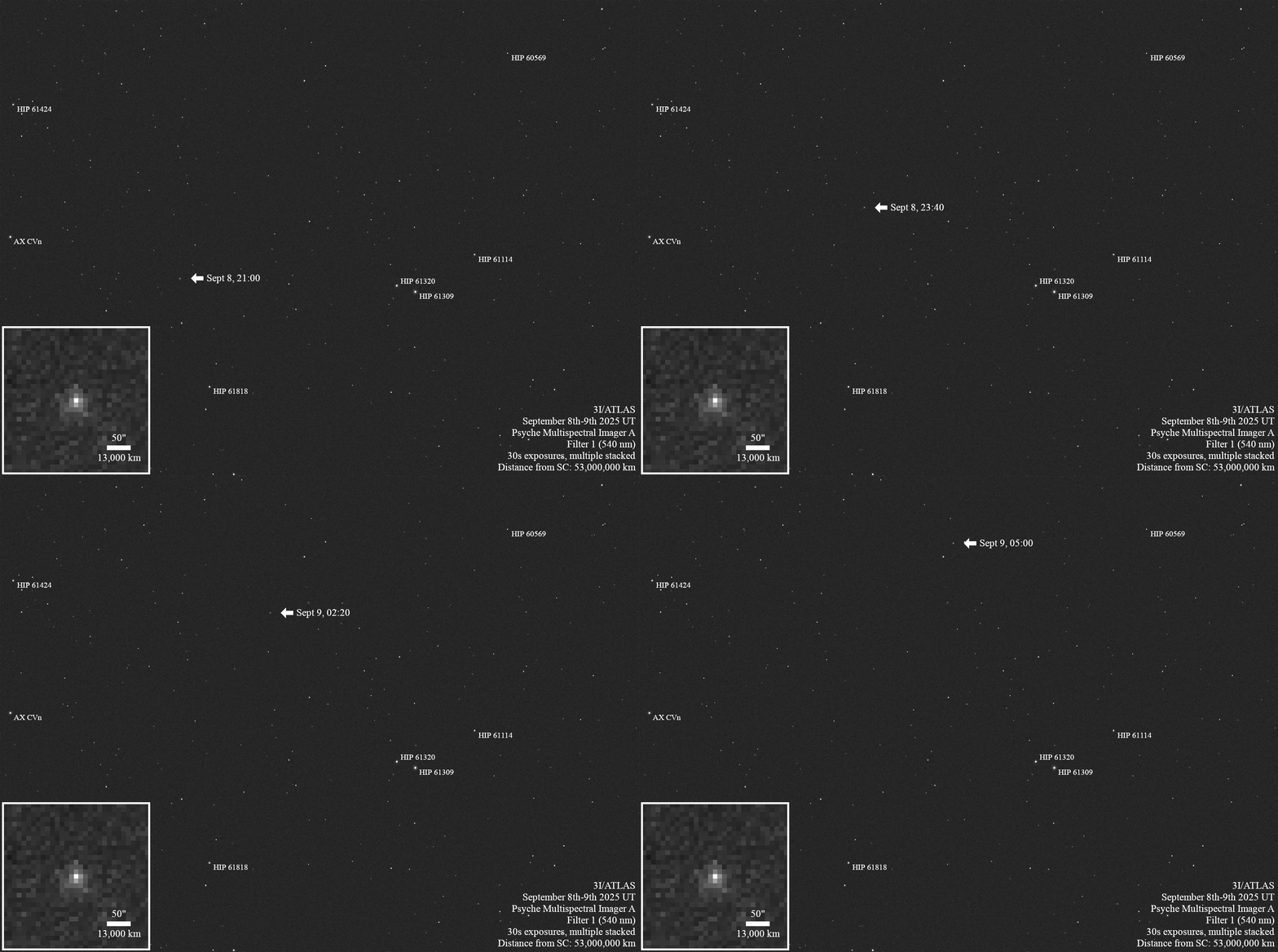
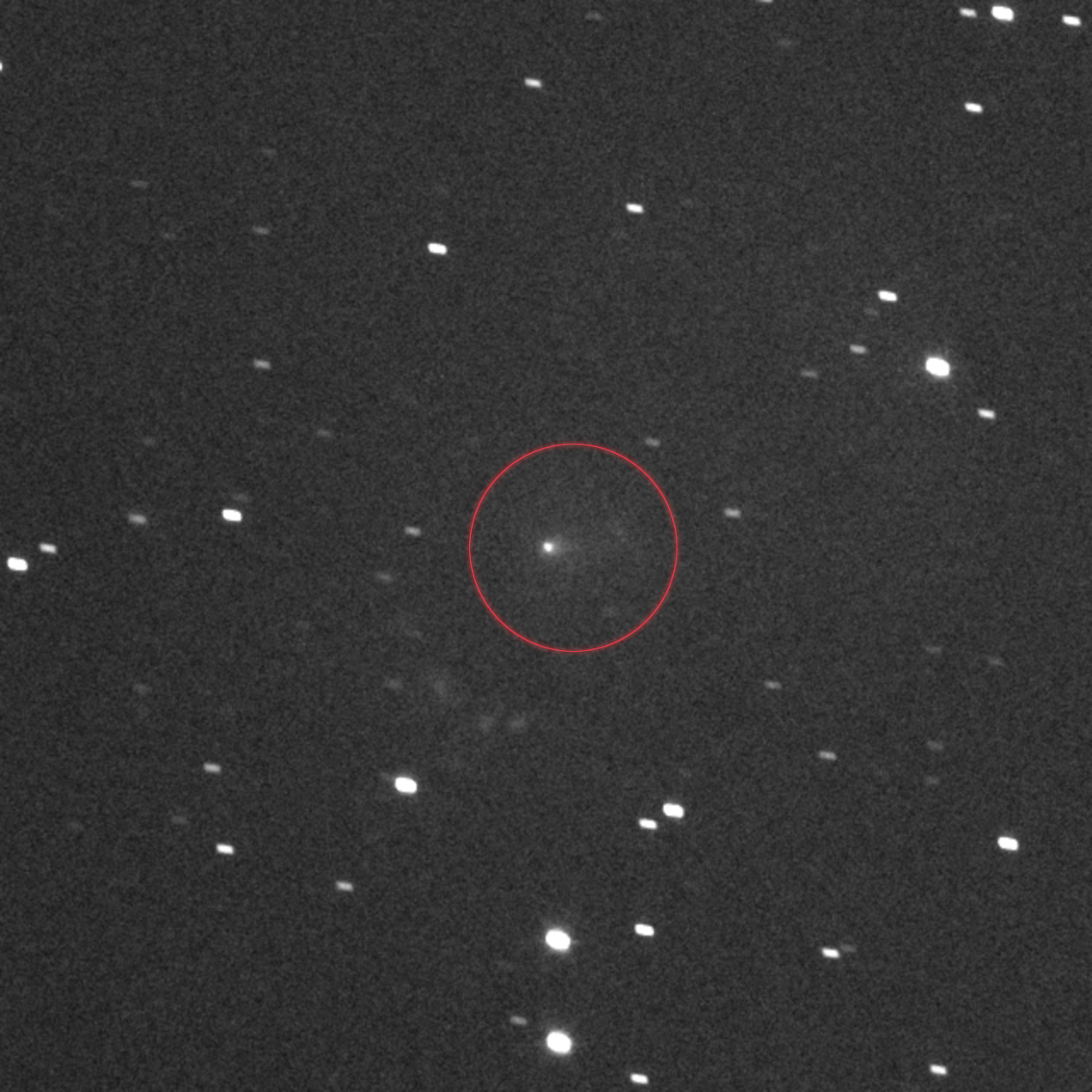
The rest of this article is behind a paywall. Please sign in or subscribe to access the full content. There are some pretty unique images in this exceptional haul. The confirmation that NASA’s Perseverance actually saw the comet is extraordinary: these were the very first observations of a comet from another planet in the Solar System. The observations happened around October 3, when the comet was 30 million kilometers (18.6 million miles) from the Red Planet. Perseverance Mars rover spots 3I/ATLAS on October 4, 2025. Image credit: NASA/JPL-Caltech/ASU/MSSS The European Space Agency (ESA)’s Trace Gas Orbiter has seen 3I/ATLAS from the orbit of Mars, and so has the Chinese Tianwen-1. Now, two more spacecraft can join the fray. MAVEN (Mars Atmosphere and Volatile EvolutioN) obtained ultraviolet images and data about the emission of hydrogen from the comet. The Mars Reconnaissance Orbiter also took an image of the comet, probably the best taken from Mars. MAVEN's observations of 3I/ATLAS. Image credit: NASA/Goddard/LASP/CU Boulder “[3I/ATLAS] a really exciting object. It’s an interstellar visitor to our planetary system. Right now, we cannot travel to other planetary systems, but luckily, pieces come to us! So in terms of actually studying the materials that they're made out of, that's one of the best and most confident ways of getting materials from another planetary system,” Dr Matthew Genge, Associate Professor in Earth and Planetary Science at Imperial College London, told IFLScience. The comet's closest passage to Earth will happen in one month. The closest approach will be on December 19, when the comet is 269 million kilometers (167 million miles) away. It was therefore important to get observations from Mars as the comet was much closer, even if the spacecraft there are not as good as our telescopes. But NASA did more than that. Straight on! SOHO seeing 3I/ATLAS when the comet was on the opposite side of the Sun. Image credit: Lowell Observatory/Qicheng Zhang Missions that observe the Sun were able to track it as the comet disappeared behind our star over the last few months, adding to the treasure trove of data we are building up on this space rock. NASA’s STEREO mission, the joint ESA/NASA SOHO mission, and the PUNCH mission caught images of the object. Animated image showing the multiple photos of 3I/ATLAS by Psyche. Image credit: NASA/JPL-Caltech/ASU ESA has tasked its Jupiter-bound mission JUICE to collect observations in November, but it seems that NASA has the record for the first interplanetary probe observations of the comet, with both the Psyche and Lucy missions – both bound to asteroids – tracking the comet. Across September 8 and 9, Psyche snapped images from a distance of 33 million miles. A few days later, on September 16, Lucy snapped 3I/ATLAS from 240 million miles away. Lucy in the sky with the interstellar comet. Image credit: NASA/Goddard/SwRI/JHU-APL There has been a bit of grumbling online that these images do not match the expectations of comet images we have seen in the past. One reason is that the comet is a lot further from the Sun than an object like Hale-Bopp, the Great Comet of 1997. It is also the case that these spacecraft are looking at an object that they are not designed to study, and yet, scientists were clever enough to find a way “That's like trying to take a photograph of your mum at a distance of a hundred kilometers: you’ll see how fuzzy she looks… and then imagine that she's producing steam! So actually, it's a pretty good picture for a comet. It's the best that NASA could possibly hope to do,” Dr Genge explained. It's behaving like a comet, it looks like a comet, it moves like a comet, thus it's a comet. Dr Matthew Genge There are also claims that NASA is doing a cover-up, related to the totally debunked idea that the comet is an alien ship that was going to use the time behind the Sun to maneuver towards Earth. You’ll be happy to know that no such maneuver was actually expected by serious scientists, and they were not surprised that the comet continued to orbit on its expected path. What is exciting, though, it that ESA’s Mars observation improved our knowledge of 3I/ATLAS' path by 10 times. So we can expect that these observations from NASA will be an important contribution to our knowledge of this fascinating object. And regarding its nature, the observations speak for themselves. “They pretty much confirm, as we thought all along, that it's behaving like a comet, it looks like a comet, it moves like a comet, thus it's a comet,” Dr Genge told IFLScience. 3I/ATLAS is not a regular comet. It remains an interstellar comet, the third interstellar object known to humans after 1I/’Oumuamua, discovered in 2017, and Comet 2I/Borisov in 2019. But it is older than those two, maybe twice as old as the Solar System. It is a relic from another age of the galaxy and everything we can learn from it, even if the photos are a bit pixelated, will increase our understanding of the past and where we come from.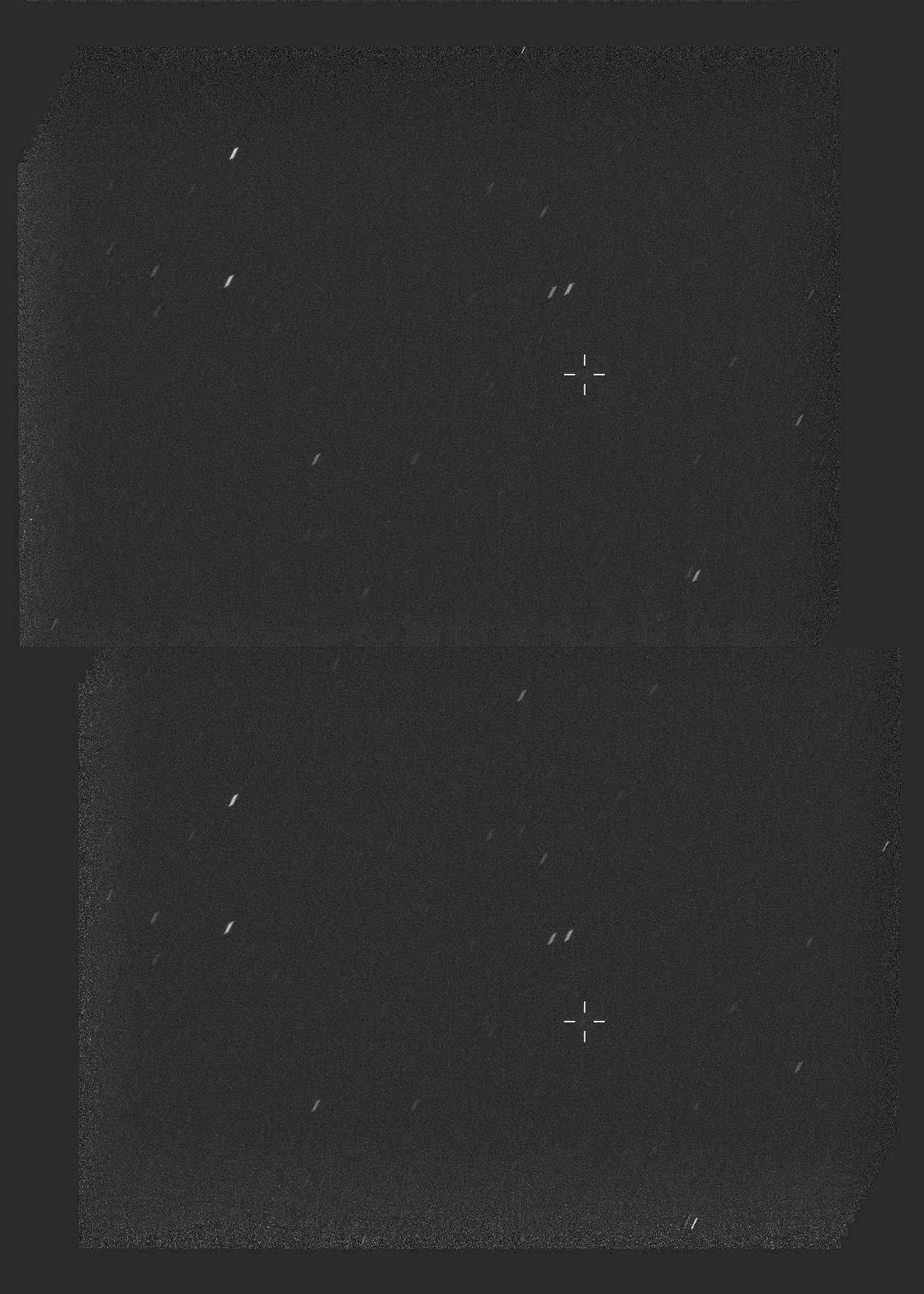


 English
 Arabic
 French
 Portuguese
 Deutsch
 Turkish
 Dutch
Dutch
 Italiano
 Russian
 Romaian
 Portuguese (Brazil)
 Greek
Greek