


Key Takeaways
- Pots made of ceramic, terra cotta, or concrete should be emptied to prevent cracking.
- Plastic and wood containers are more frost-resistant and don't need emptying in the fall.
- Perennial pots don't need to be emptied, but are safest in a frost-free location.
After the first frosts have killed the annual plants in your outdoor pots, should you empty out your containers before winter sets in, or can you leave them be until spring? The answer, like much in gardening, is that it depends. Some pots will be fine over winter, while others may not. Here's what you need to know to get your pots and planters ready for winter.
Why Empty Outdoor Planters?
The most important reason to empty outdoor planters is to prevent them from cracking and breaking. Even if the plants are dead and you stop watering, the potting soil retains moisture from rain, sleet, or an early snowfall.
Water expands by about 9% when frozen, and that extra volume can create a tremendous force. It's enough to explode cans of soda left in the freezer, crack sidewalks, and heave up asphalt roads. Most garden containers don't stand a chance at resisting it. Not every pot will break, but if you have cold winters, some will, and they aren't cheap to replace.
Empty pots are also easier to move around, stack, and store. If you aren't going to leave them in place over the winter, they are much lighter without the soil inside. You'll also prevent overwintering pests from making a home in your pots.
Since it's generally not recommended to reuse exhausted potting soil, you'll have to empty your pots before reusing them next spring. Before planting, you should also clean and sanitize the pots, and having them already empty makes that job much easier. You are much less likely to skip that step if the containers are already empty. Otherwise, in the frenzy of spring planting, you might be tempted to just replant them.
Related
Which Types of Pots to Empty
While it's a good idea to empty all your outdoor planters and clean them up for spring, other things compete for our time and bandwidth in autumn and early winter. If you can't get around to all of them, here's what to prioritize:
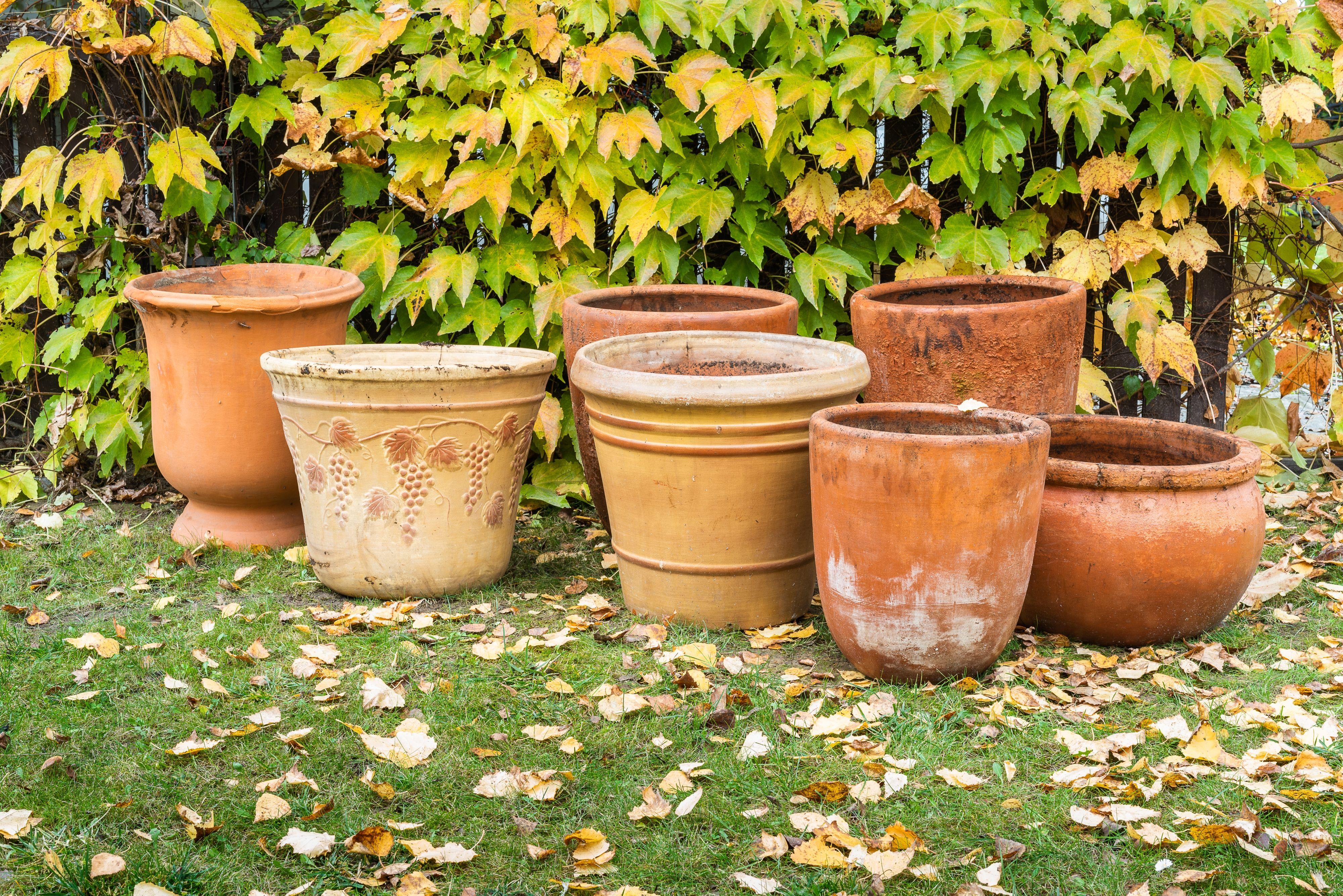
- Planters made from materials that may crack, like ceramic, terra-cotta, or concrete, should always be emptied. It doesn't take much moisture in the potting soil to cause enough expansion to crack these pots, since they can't flex or give.
- Containers made from plastic, especially more rugged plastics, will usually survive the winter intact, provided the soil wasn't waterlogged. As a precaution, store these pots where they won't receive additional precipitation or runoff from gutters.
- Wood planters and barrels are usually flexible enough to withstand freeze-and-thaw cycles. However, the longer they hold moist soil, the more quickly they will degrade.
What About Perennials in Pots?
Containers with perennials that aren't emptied still need their own pre-winter care. Rugged plastic and wooden planters can remain outdoors over winter, which is handy for large, heavy pots with a lot of soil. Pots made from rigid materials like clay, terra-cotta, ceramic, or concrete can't expand to relieve pressure. They should be sheltered indoors or in a frost-free garage or shed.
Perennials whose hardiness is two zones below your USDA Hardiness Zone are good candidates to remain outdoors in their pots overwinter because they can withstand harsher conditions. However, the soil in pots is exposed to airflow on all sides, exposing the roots to the cold without sufficient insulation. Pots are also more susceptible to freeze-thaw cycles, which are also harder on plants. As an additional precaution, wrap the pots in bubble wrap or other insulating material, such as burlap.
Should You Empty Raised Beds?
Raised beds are typically not emptied. Most raised beds are constructed of wood or metal, neither of which is likely to crack, though metal may shift or bow a bit when the soil is moist. Even raised beds made out of brick or stone and mortar are fine to leave filled over winter.
While there could be some freezing damage to your raised beds, it's unlikely, and they'll continue to function just fine. There's no need to shovel them out just because winter is coming. In the spring, however, the soil should be amended to replenish nutrients and maintain good drainage.

 English
 Arabic
 French
 Spanish
 Portuguese
 Deutsch
 Turkish
 Dutch
Dutch
 Italiano
 Romaian
 Portuguese (Brazil)
 Greek
Greek