


Key Points
- Sod establishes faster than grass seed when filling in a bare spot in your lawn.
- Grass seed is easier to work with than sod, and is more cost-effective, especially when filling in larger patches.
- Before seeding or sodding, deal with causes of the dead, bare spot, such as pet damage, fertilizer burn, or turf diseases.
When you've got a patchy brown spot in your lawn, should you use sod or grass seed to repair it? Both options have their place in restoring your lawn to the lush, green carpet you want, but there are a few key factors to consider to help you make the best choice for your situation. Here’s how to choose the right fix for your lawn's bare spots.
Consider Your Timeline
Aesthetics, foot traffic, and outdoor events and activities all influence your timeline for repairing a bare spot in your lawn. Sod can almost instantly restore lushness to a dead patch, compared to waiting several weeks for grass seed to grow. Take a critical look at the role the damaged area of lawn plays in your landscape.
Is the dead spot in an area that is infrequently used and not part of your immediate entertaining space? If so, several weeks of repair time might be acceptable.
Is the dead patch in a prominent spot in your lawn that detracts from the landscape’s overall appearance? Then you might want a quicker re-greening timeline. Perhaps the dead spot is in a high traffic area that receives a lot of use. If that’s the case, a short repair window will be helpful to bring the turf back into essential service.
If a dead spot in your lawn is smaller than the size of your fist, there is no need to do anything. The spot will likely fill in from the surrounding grass in a few weeks. Spots larger than your fist will benefit from reseeding or sod.
Carson Downing
When to Use Sod vs. Seed
Consider the following pros and cons for using sod or seed to repair your lawn so you can pick the best option for your needs.
Choosing Sod
Seed requires at least 8 weeks—sometimes longer depending on growing conditions—to achieve a thick stand of grass. So if you want instant green-up, sod is the way to go. Lay a strip of sod and the ugly bare patch is immediately gone.
While the area is visually pleasing in short order, it won't be ready for foot traffic for about two weeks. Regular care is critical to the sod’s survival. It must be watered daily for the first 7 to 10 days after installation. During warm weather, plan to water new sod twice a day.
After 10 to 14 days, the sod will be rooted into the soil and is ready for light foot traffic. Limit frequent foot traffic until at least 4 weeks after installation when the turf will be more firmly rooted into the soil.
Related
Choosing Seed
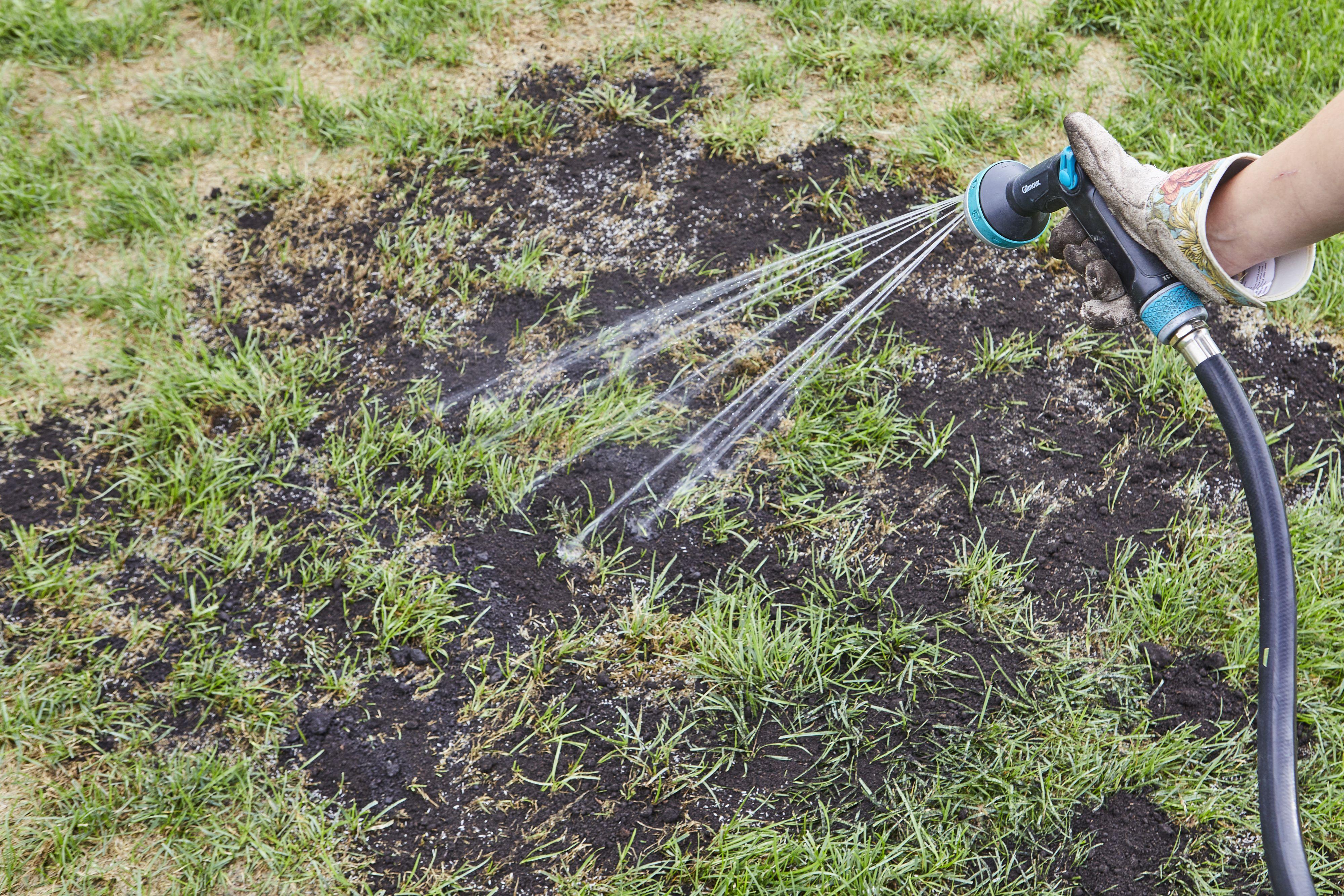
You can repair several dead patches in your lawn for the cost of a single bag of grass seed. Plus it's easy to apply: Simply rake away dead turf, rough up the soil surface with a stiff garden rake, scatter grass seed, cover lightly, and water well. and requiring minimal care. However, be prepared to wait for two months or more before the dead patch has filled in with grass again.
If you have time to wait, seed is the best way to repair dead patches in a lawn. Not only is it cost effective, but the resulting grass will also have a stronger root system both initially and long term, which will lead to a healthier lawn overall.
Carson Downing
Fixing Causes of Bare Spots
For lasting lawn repair success, it's essential to determine why the grass died and take steps to remedy the situation so it doesn't continue to happen. For example, a common cause of dead patches of grass is the high concentration of nitrogen in dog urine. Soak these spots with plenty of water before reseeding or sodding to decrease the nitrogen concentration.
Shovels or snowplows over the winter also may cause bare spots on the edges of lawn. No special treatment is needed in these cases, but if de-icing salt or a fertilizer spill is the cause, the high salt concentrations in these products can burn grass. Before reseeding or sodding such areas, drench them with water to wash the salts out of the soil.
Finally, fungal or bacterial turf diseases or insect pests like grubs might be at work. Identify and address these problems before repairing your lawn.

 English
 Arabic
 French
 Spanish
 Portuguese
 Deutsch
 Turkish
 Dutch
Dutch
 Russian
 Romaian
 Portuguese (Brazil)
 Greek
Greek