


Meet The Peacock Spiders: Secretive, Small But Oh So Special
Meet The Peacock Spiders: Secretive, Small But Oh So Special
Some species capture the internet's attention more than most, from feisty pygmy hippos to giant penguin chicks. One group of spiders, however, has mesmerized those on the World Wide Web with their hypnotic dance moves.
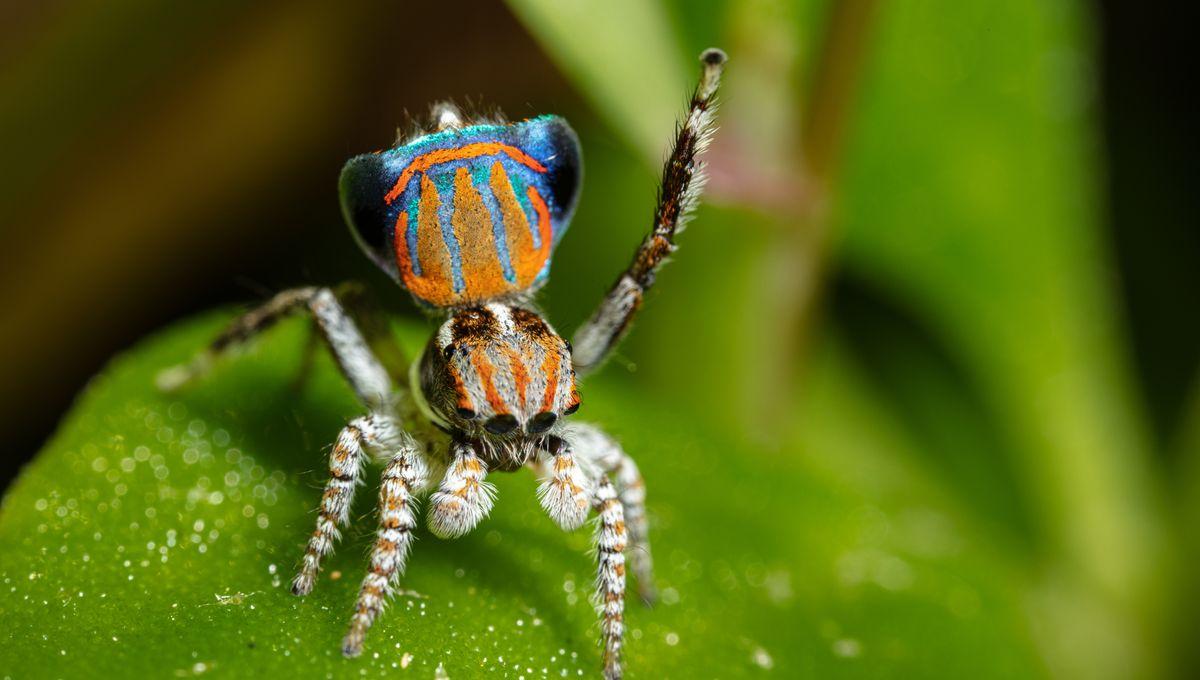
The rest of this article is behind a paywall. Please sign in or subscribe to access the full content. In a world of spider haters, even the most staunch arachnophobe could be won over by a tiny dancing peacock spider. These tiny jumping spiders (family Salticidae) are in the genus Maratus, and can be found only in Australia, where they number roughly 100 species. They are usually roughly 2 to 6 millimeters long (> 0.2 inches), and the males lend the species their nickname as they display their magnificent colors in courtship dances. Back in 2011, just seven species were known to mainstream science. However, due to their captivating appearance and their popularity on social media (dancing to a soundtrack by the Bee Gees), scientists were able to describe more than 80 species between 2011 and 2024. Jürgen Otto is the man behind the peacock spiders' viral video dancing to the Bee Gees’ hit "Stayin' Alive", which features multiple species. He himself has described at least 47 species of peacock spider. In fact, he filled his house with them to get that crucial peacock dancing picture. "I had other hobbies; I used to play guitar and surf. I gave all this up, basically, for these spiders," he told Museums Victoria. These dances are to impress females and see the males waving their legs and lifting their abdomens in a bid to win them over. These spiders don’t make webs but rely on their stealth to catch prey of grasshoppers, ants, flies, and moths; in fact, they are capable of jumping extreme distances to ambush their dinner. Peacock spiders are not dangerous to humans, but they do possess venom to help them subdue their prey. These tiny critters only have a lifespan of a year and are most active in the spring during the breeding season. More recent peacock spider research has revealed that they have portions of “dark DNA”; this could help to explain why there are now more than 100 peacock spider species in Australia, as scientists believe this helps them evolve into more species. They have three times as much “dark DNA” as humans. "It is early days, but one of the tantalising things we have discovered is that it may not only be the genes that are responsible for the diversity, but the bits in between, the so-called 'dark DNA', that may influence how spiders evolve," Jonah Walker, of the Sanger Institute, told BBC News. "When I told friends and family that I was going to study spiders in Australia, I got some worried looks, and I was obviously apprehensive myself. But just a few seconds of watching them dance was enough for any fears to be washed away."

 English
 Arabic
 French
 Spanish
 Portuguese
 Deutsch
 Turkish
 Dutch
Dutch
 Italiano
 Russian
 Romaian
 Portuguese (Brazil)