


Why Does Africa Have So Many Of The World's Largest Land Animals?
Why Does Africa Have So Many Of The World's Largest Land Animals?
While Europe and North America might be home to bears and wolves, they are lacking in the even larger species that roam across the continent of Africa. Even Asia and Australasia, with their freaky-looking marsupials, can’t compete with the size and volume of the world’s largest land animals. But why are there so many in Africa? Let's take a closer look.
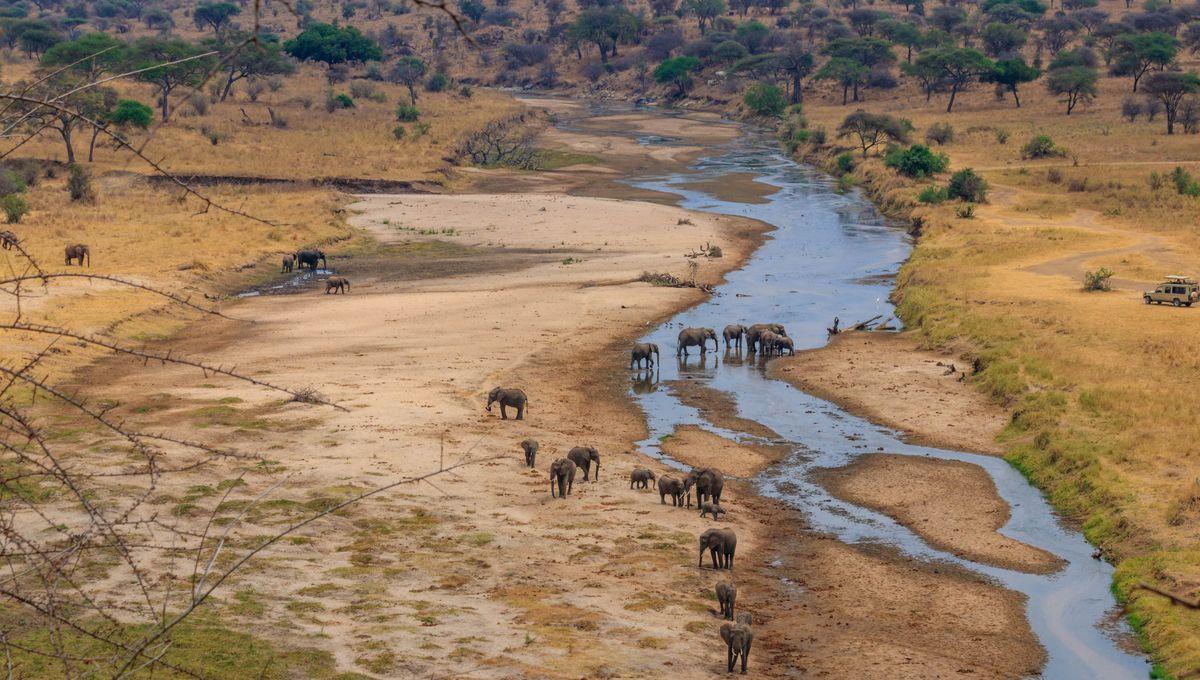
The rest of this article is behind a paywall. Please sign in or subscribe to access the full content. Africa boasts the largest living land animal in the form of the African bush elephant, the largest bird in the form of the ostrich, and the largest primate in the form of the eastern gorilla. It also contains the tallest land animal, the giraffe, as well as the rhinoceros and the hippopotamus, which both clock in at well over a ton. However, these are relatively recent accolades when you consider the vast history of Earth’s creatures. One of the largest terrestrial animals ever to live, if not the largest, is Patagotitan mayorum, an enormous sauropod that roamed around 100 million years ago in what is now Argentina. The largest birds ever to live were the downright humongous elephant birds that strutted about in Madagascar before going extinct about 1,000 years ago. So why has Africa ended up with all the modern-day giants? Well, Africa, though impacted by mass extinctions of megafauna, did not have quite the same level of die-off as other parts of the world. As Homo sapiens came to the fore in the late Quaternary period, it began to kill off large numbers of megafauna across the world. Africa's megafauna, however, evolved alongside early human ancestors, and that might have made all the difference. Animals in the Paleotropics (Sub-Saharan Africa and tropical Asia) were found to have a lower incidence of extinction compared to megafauna elsewhere, a study published in 2024 found. Species in other places that were more closely related to those Palaeotropical species also had lower extinction rates. However, species found on islands, those with large bodies, and flat-footed species, were all found to have much higher rates of extinction as early humans spread out from Africa. “Older, hominin-driven extinctions in the Palaeotropics (before the Late Pleistocene) may have filtered out species with vulnerable trait combinations, rendering Palaeotropical species and their non-Palaeotropical relatives more resistant to later human impacts,” explain the authors. The coevolution of humankind and the African megafauna worked to their advantage, making the animals more cautious of early humans and better adapted to keeping out of their way, helping them evolve into the species that survive today.

 English
 Arabic
 French
 Spanish
 Deutsch
 Turkish
 Dutch
Dutch
 Italiano
 Russian
 Romaian
 Portuguese (Brazil)
 Greek
Greek